Build a Sparkling Iced Hibiscus and Ginger Drink by Brewing a Concentrate First
Pouring sparkling water directly over loose hibiscus and ginger produces uneven colour, patchy flavour, and immediate fizz loss as the carbonation reacts with warm or room-temperature ingredients. Brewing a measured concentrate first, then chilling it completely before combining with sparkling water, gives you a consistent ruby drink with controlled tartness and intact bubbles every time you pour.
Read the note ↓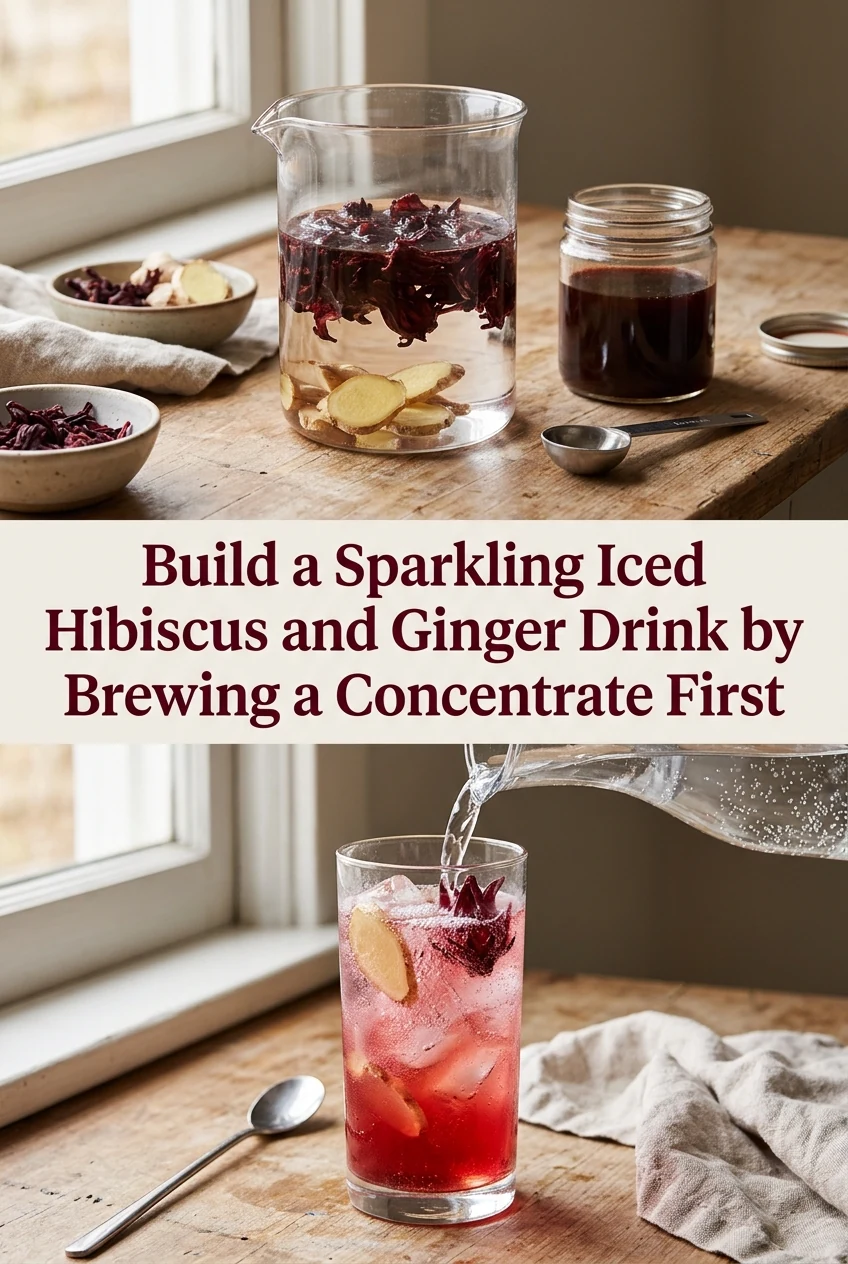
AI-generated editorial concept created for this article. The image is not a technical diagram or a tested result.
Measure the concentrate ingredients before heating
Use 10 g dried hibiscus flowers, 15 g fresh ginger sliced thin, 60 g white sugar, and 480 ml cold water. Combine everything in a small saucepan. Measuring before the heat goes on prevents guessing mid-brew and keeps the concentrate repeatable. The ratio here produces a tart, deeply coloured liquid that dilutes well when sparkling water is added later at roughly a one-to-one pour.
Bring to a gentle simmer, then steep off the heat
Set the saucepan over medium heat and bring the mixture to a gentle simmer, not a rolling boil. Once small bubbles appear consistently, remove the pan from the heat and steep for 12 minutes with a lid on. Steeping off the heat preserves the floral top notes in hibiscus that prolonged boiling tends to flatten. Set a timer so the steep does not run long and push the flavour toward bitter.
Strain and cool the concentrate correctly
Pour the concentrate through a fine mesh strainer into a heatproof jug, pressing the solids lightly to extract liquid without forcing bitter compounds through. Discard the spent flowers and ginger. Allow the jug to cool at room temperature for no more than 30 minutes, then transfer it to the refrigerator. Refrigerate until the concentrate reaches 4 C or below before using it. Do not add sparkling water to a warm concentrate.
Combine with sparkling water at the glass, not the jug
Fill a tall glass with ice, pour 120 ml of chilled concentrate over the ice, then add 120 ml of chilled sparkling water by pouring slowly down the inside of the glass. This order keeps fizz loss minimal. Stirring vigorously after adding sparkling water releases carbonation quickly, so use one gentle pass with a long spoon if mixing is needed. Taste and adjust concentrate volume in the next glass if you prefer stronger flavour.
Store remaining concentrate safely and use within a practical window
Transfer leftover concentrate to a clean lidded jar and keep it refrigerated at 4 C or below. Use it within three days for best flavour. Because the concentrate contains no preservatives, do not leave it at room temperature between uses. If you notice any off smell or cloudiness before three days, discard it. This batch of roughly 400 ml finished concentrate makes approximately three to four standard glasses when combined one-to-one with sparkling water.
A little more
to know.
Can I use ground ginger instead of fresh sliced ginger in the concentrate?
Ground ginger disperses into the liquid and is difficult to strain cleanly, leaving a slightly cloudy, sometimes gritty result. Fresh sliced ginger strains out neatly and gives a cleaner, brighter heat without muddying the colour.
Why does the concentrate sometimes look darker after refrigeration?
Hibiscus pigment deepens as the liquid cools and the colour compounds concentrate slightly. This is a normal visual change and does not indicate spoilage. The colour typically brightens again once diluted with sparkling water and poured over ice.
Original editorial guidance and recipe formulations, not independently kitchen-tested. Times are estimates and depend on equipment and product directions. Cooked bases need additional cooling and refrigeration before cold serving. Images are AI-generated illustrations; appearance and yield may vary. Check actual ingredient labels, allergens, and any certification you require. We do not certify products. Read our approach.
Save to Pinterest ↗ANOTHER IDEA FOR THE COUNTER