Build a Simple Iced Coffee Bar on One Shelf
Hunting through a crowded refrigerator for milk, then a cabinet for syrup, then a drawer for a long spoon adds enough friction that most people skip making iced coffee at home and buy it instead. Consolidating every component onto one dedicated refrigerator shelf changes that. When everything is in one place and ready to pour, assembly takes under two minutes. This guide covers which components belong on that shelf, how to store them safely, and how to sequence the pour for a consistent drink.
Read the note ↓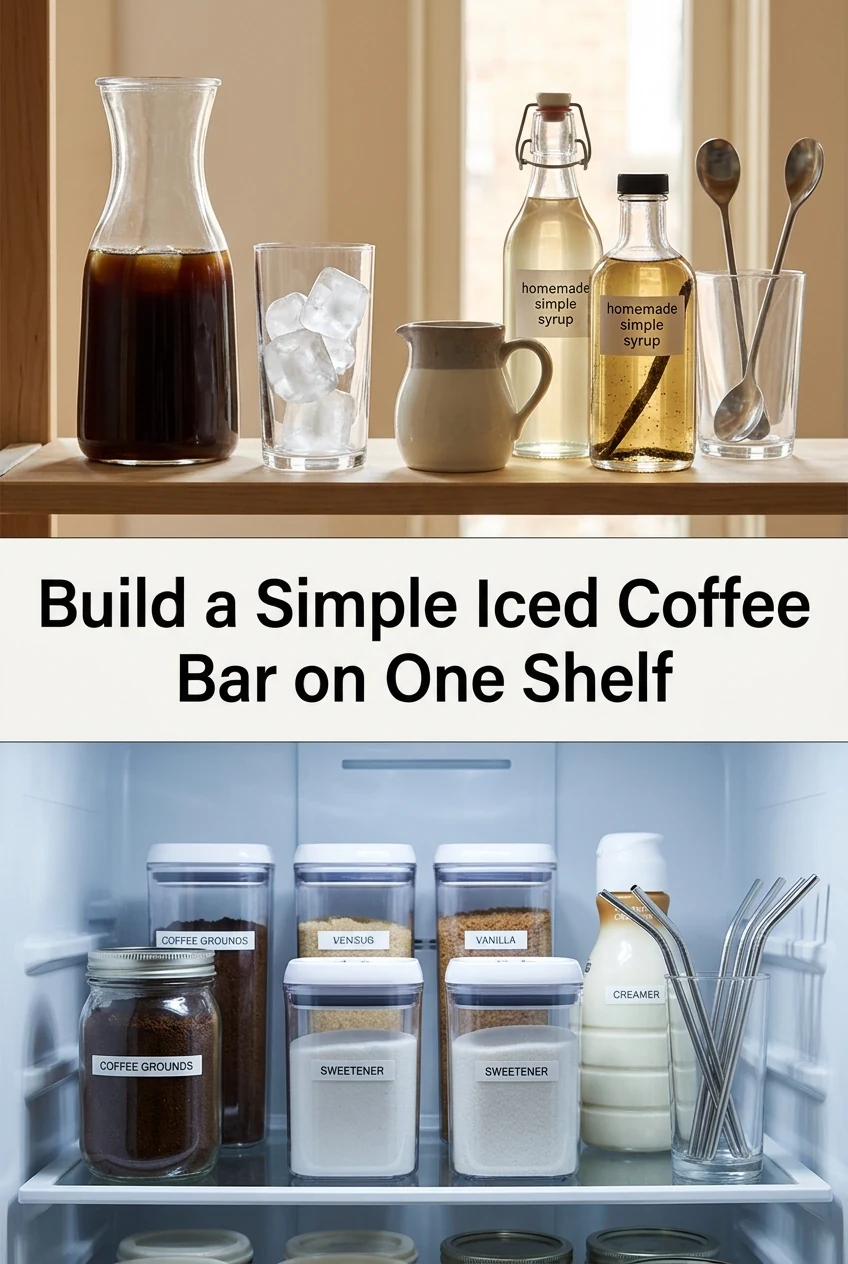
AI-generated editorial concept created for this article. The image is not a technical diagram or a tested result.
What Belongs on the Shelf
The shelf needs four things: a sealed container of brewed coffee, your milk or creamer of choice, a small squeeze bottle of simple syrup or flavored syrup, and a covered cup or pitcher of ice if your freezer is not conveniently located. Keep a long-handled spoon in a clean jar on the same shelf so you never search for one. Anything that does not directly go into the drink, such as filters or extra beans, belongs elsewhere. The shelf works because it is complete and uncluttered.
Brewing and Storing the Coffee Safely
Brew a batch of coffee using your usual method, allow it to cool at room temperature for no more than 30 minutes, then transfer it to a sealed glass or BPA-free plastic container and refrigerate it promptly. Brewed coffee stored at 4 degrees Celsius or below is generally best used within three to four days for flavor quality. Label the container with the brew date. Do not leave brewed coffee sitting at room temperature for extended periods before refrigerating, particularly in warm kitchens above 32 degrees Celsius.
Preparing a Simple Syrup for the Shelf
Combine equal parts granulated sugar and water by volume in a small saucepan, for example 120 ml sugar and 120 ml water. Heat over medium, stirring until the sugar fully dissolves, then remove from heat and cool completely before transferring to a clean squeeze bottle. Refrigerate and use within two weeks. A squeeze bottle gives you portion control: a single squeeze of roughly 10 ml adds a measured amount of sweetness without the mess of spooning syrup from a jar into a cold drink.
The Assembly Sequence for a Consistent Cup
Fill a 350 to 400 ml glass with ice first. Add your measured syrup over the ice, pour in 150 to 180 ml of chilled brewed coffee, then add 60 to 90 ml of milk. Because simple syrup is denser than coffee, it naturally sinks toward the bottom of the glass. Stir thoroughly from the bottom up for five seconds to evenly distribute the sweetness throughout the drink. Adding milk last lets you see the coffee-to-milk ratio before stirring and adjust if the color looks off before committing to the mix.
Keeping the Shelf Organized Over Time
The shelf degrades when items get pushed to the back or replaced with unrelated food. Assign the shelf a fixed location in your refrigerator, ideally at eye level, and return every item to it after each use. Check the brew date label each morning and discard coffee that is past four days. Rinse and refill the syrup bottle before it empties completely so you are never caught with an empty bottle mid-assembly. A two-minute routine only works if the shelf is reliably stocked.
A little more
to know.
Can I keep milk alternatives like oat or almond milk on the same shelf?
Yes. Store opened cartons of oat, almond, or other pasteurized plant-based milks sealed on the same shelf and follow the manufacturer's use-by guidance after opening, typically seven to ten days refrigerated. Check the carton for the specific recommendation.
What if I want to use flavored syrups from a bottle rather than homemade?
Commercial flavored syrups often do not require refrigeration before opening but should be stored according to the label after opening. Many recommend refrigeration after opening. Check the bottle and follow those instructions rather than assuming they match homemade syrup storage.
Original editorial guidance and recipe formulations, not independently kitchen-tested. Times are estimates and depend on equipment and product directions. Cooked bases need additional cooling and refrigeration before cold serving. Images are AI-generated illustrations; appearance and yield may vary. Check actual ingredient labels, allergens, and any certification you require. We do not certify products. Read our approach.
Save to Pinterest ↗ANOTHER IDEA FOR THE COUNTER