Brew a Small Pot of White Tea for Hot Service Using the Tin Temperature Guide
White tea is more sensitive to water temperature than most other tea types because its minimally processed leaves release bitter compounds quickly when exposed to water that is too hot. Many home brewers use boiling water out of habit and then assume the tea itself is the problem when the result tastes sharp or flat. The temperature range printed on the tin exists specifically to prevent this, and pairing that guidance with a thermometer or a variable-temperature kettle removes the guesswork entirely before a single leaf hits the pot.
Read the note ↓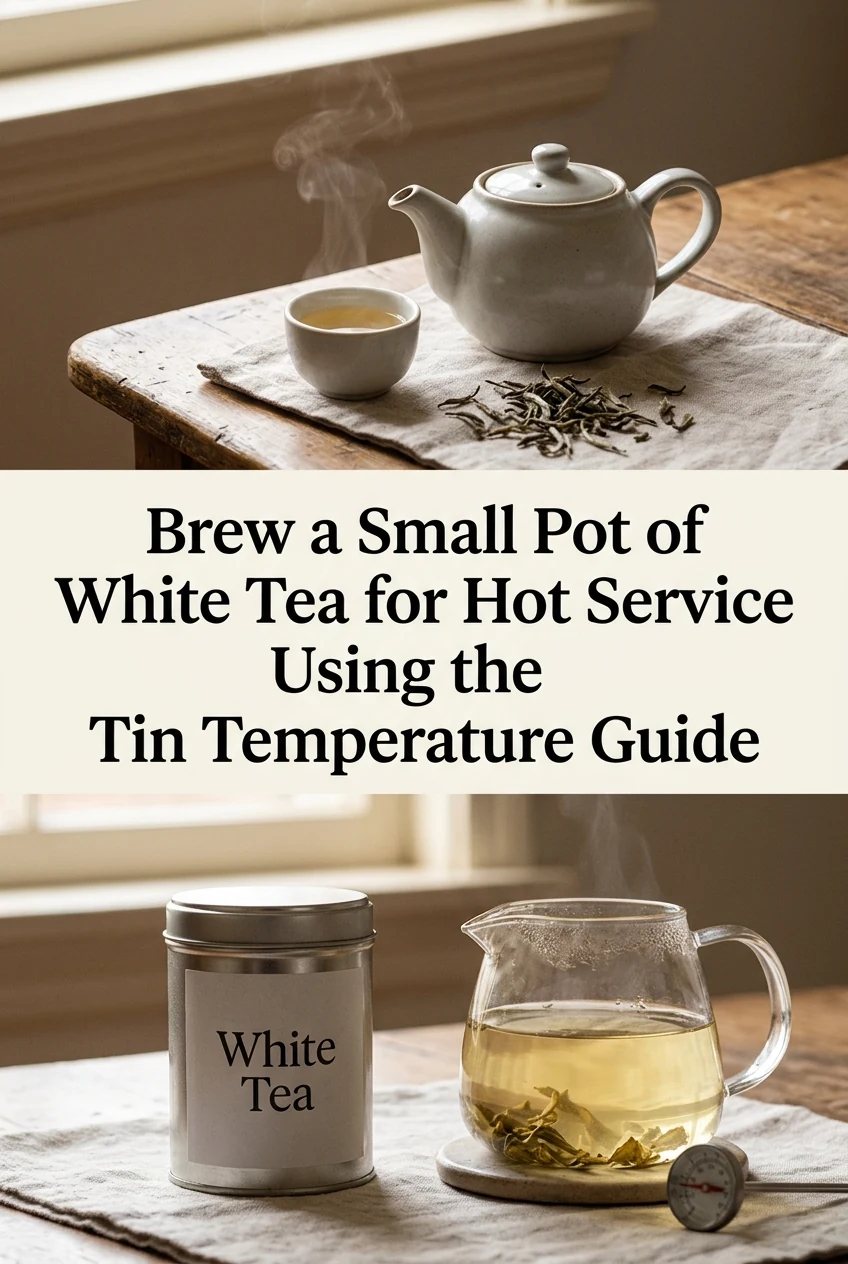
AI-generated editorial concept created for this article. The image is not a technical diagram or a tested result.
Read the Tin Before Filling the Kettle
White tea tins from different producers print different temperature ranges because leaf grade, processing style, and origin all affect how the tea responds to heat. One tin might state 70 to 80 degrees Celsius while another recommends 75 to 85 degrees Celsius. Reading the specific range on your tin before you begin means you are working with the producer's actual guidance rather than a general rule. If the tin provides no temperature guidance, contact the producer or retailer rather than assuming a universal figure applies.
Use a Thermometer or Variable Kettle to Hit the Range
A kitchen thermometer placed in the kettle water after it has cooled from a boil gives you a precise reading before pouring. Alternatively, a variable-temperature kettle with a dial or digital setting lets you select the target temperature directly, which is faster and more repeatable for regular service. If you use the cool-down method, allow the boiled water to rest uncovered and check the temperature every two to three minutes. Pouring at the correct moment is more reliable than timing alone, which varies with kettle material and room temperature.
Warm the Pot Before Adding Leaves
Pour a small amount of hot water into the ceramic or glass pot, swirl it briefly, and discard it before adding the tea leaves. This pre-warming step reduces the temperature drop that occurs when cool pot walls absorb heat from the brew water, helping the water stay within the target range during steeping. A cold pot can pull the water temperature down by several degrees in the first thirty seconds, which is enough to affect extraction even when you measured the water correctly at the kettle.
Measure Leaves and Water for a Small Pot
For a 400-millilitre pot serving two small cups, a starting point of two to three grams of loose white tea leaves is a reasonable illustrative range, though your tin's guidance takes precedence over this figure. White tea leaves are often large and light, so volume measurements can be misleading; a small kitchen scale gives a more consistent result than a teaspoon count. Add the measured leaves to the warmed pot, pour the correctly tempered water in one steady pour, and place the lid on immediately to retain heat during steeping.
Time the Steep and Serve Promptly
Follow the steeping time on your tin, which typically falls between two and four minutes for white tea at the recommended temperature. Set a timer rather than estimating, because even one extra minute at the upper end of the temperature range can introduce bitterness that was not present at the two-minute mark. Once the timer ends, pour all the brewed tea out of the pot into the serving cups or a second warmed vessel to stop extraction. Leaving brewed tea sitting on the leaves continues steeping and changes the flavour progressively.
A little more
to know.
Can I re-steep white tea leaves a second time during the same service session?
Many white teas tolerate a second steep, often with a slightly longer time than the first. Check whether your tin mentions re-steeping guidance. If it does not, add thirty seconds to one minute to the original steep time and use water at the same temperature.
What if my kettle only boils and has no temperature setting?
Boil the water, remove the kettle from the heat source, and allow it to cool uncovered while you check with a kitchen thermometer. Pouring into the pre-warmed pot when the reading enters the tin's stated range is accurate enough for consistent results without specialist equipment.
Original editorial guidance and recipe formulations, not independently kitchen-tested. Times are estimates and depend on equipment and product directions. Cooked bases need additional cooling and refrigeration before cold serving. Images are AI-generated illustrations; appearance and yield may vary. Check actual ingredient labels, allergens, and any certification you require. We do not certify products. Read our approach.
Save to Pinterest ↗ANOTHER IDEA FOR THE COUNTER