Brew a Small Pot of Lemongrass Tea for Hot and Iced Service From One Steep
Lemongrass releases its bright citrus flavour quickly but turns bitter if left to steep too long, so timing and water temperature matter more than they might with a forgiving black tea. Brewing one small pot correctly and splitting it between a warm mug and an iced glass immediately after straining lets you serve two different presentations from a single steep without any re-brewing or quality loss.
Read the note ↓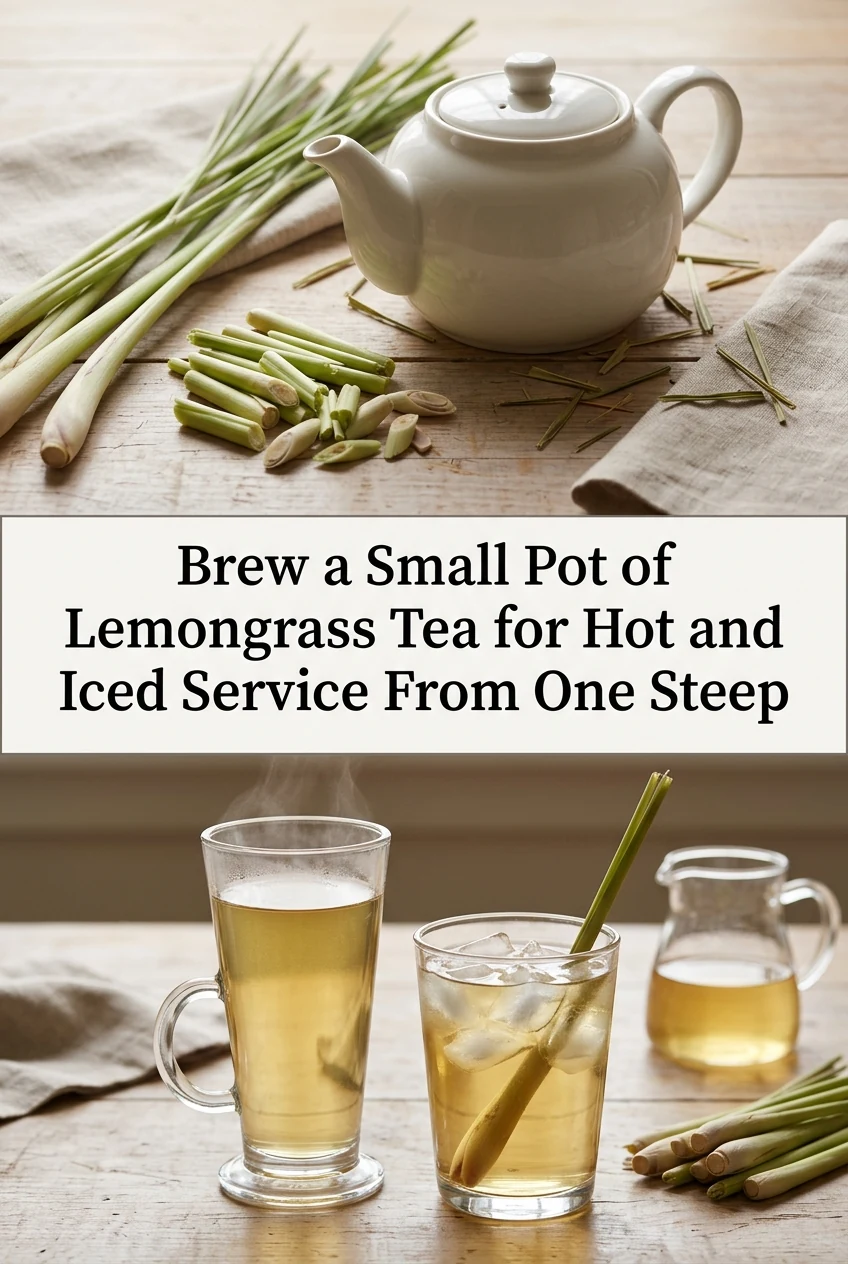
AI-generated editorial concept created for this article. The image is not a technical diagram or a tested result.
Prepare the lemongrass
Use two fresh lemongrass stalks or six grams of dried lemongrass pieces for a 500 millilitre pot. For fresh stalks, trim the dry top third and the root base, then bruise the lower pale section firmly with a rolling pin or the side of a knife. Bruising breaks the cell walls and releases the aromatic oils without requiring a long steep. Cut each bruised stalk into three or four short sections so they fit inside a standard teapot or heatproof jug.
Use the right water temperature and steep time
Heat water to approximately 90 to 95 degrees Celsius rather than a full rolling boil. Boiling water can push the bitterness out of lemongrass faster than the pleasant citrus notes develop. Pour 500 millilitres over the prepared lemongrass, cover the pot to retain heat, and steep for exactly five minutes. Set a timer. At five minutes the tea is bright, lightly sweet, and aromatic. Beyond seven minutes, bitterness becomes noticeable in most fresh lemongrass varieties.
Strain immediately and split the pot
After five minutes, strain the full 500 millilitres through a fine-mesh strainer into a heatproof jug. Do not leave the lemongrass sitting in the liquid while you prepare the glasses, as it continues to steep and the flavour shifts. From the 500 millilitres, pour approximately 200 millilitres into a warmed mug for the hot serving and reserve the remaining 300 millilitres for the iced glass. These are working proportions; adjust to your cup and glass sizes.
Serve the hot mug and prepare the iced glass
The hot mug is ready to serve immediately. For the iced glass, fill a tall glass with ice cubes, then pour the reserved 300 millilitres of strained tea directly over the ice. The tea cools rapidly on contact and dilutes slightly as the ice melts, which actually softens any remaining sharpness. Serve the iced glass promptly rather than letting it sit, as extended contact with melting ice over-dilutes the flavour. Add honey or sugar to either serving at the table if desired.
Avoid re-steeping the spent lemongrass
Once strained, discard the spent lemongrass. Re-steeping the same stalks produces a flat, grassy liquid with little of the original citrus character and a more pronounced bitter edge. If you need a second round of drinks, start with fresh lemongrass and a new steep. This is a practical limitation of lemongrass compared to some other botanicals, and working with it rather than against it produces a noticeably better result in both the hot and iced servings.
A little more
to know.
Can I sweeten the tea before splitting it into the hot and iced servings?
Yes, and it is more efficient to sweeten the full jug while the tea is still hot so the sugar or honey dissolves evenly. Add it gradually and taste, as lemongrass tea has a natural mild sweetness that means less added sugar is usually needed.
How long can I keep the strained lemongrass tea before serving?
Refrigerate any unused strained tea promptly and use within 24 hours for best flavour. Store in a covered container at 4 degrees Celsius or below. The citrus brightness fades noticeably after the first day even when properly chilled.
Original editorial guidance and recipe formulations, not independently kitchen-tested. Times are estimates and depend on equipment and product directions. Cooked bases need additional cooling and refrigeration before cold serving. Images are AI-generated illustrations; appearance and yield may vary. Check actual ingredient labels, allergens, and any certification you require. We do not certify products. Read our approach.
Save to Pinterest ↗ANOTHER IDEA FOR THE COUNTER