Blend a Mango Lassi-Style Drink Without Overworking the Yogurt
Plain yogurt breaks down quickly under a high-speed blade, releasing whey and producing a thin, foamy result that lacks the creamy body a lassi-style drink needs. The fix is not a weaker blender but a shorter, more deliberate pulse sequence combined with fruit that is cold before it enters the jar. This guide walks through quantities, timing, and the order of ingredients that keeps texture thick and dairy flavor clean.
Read the note ↓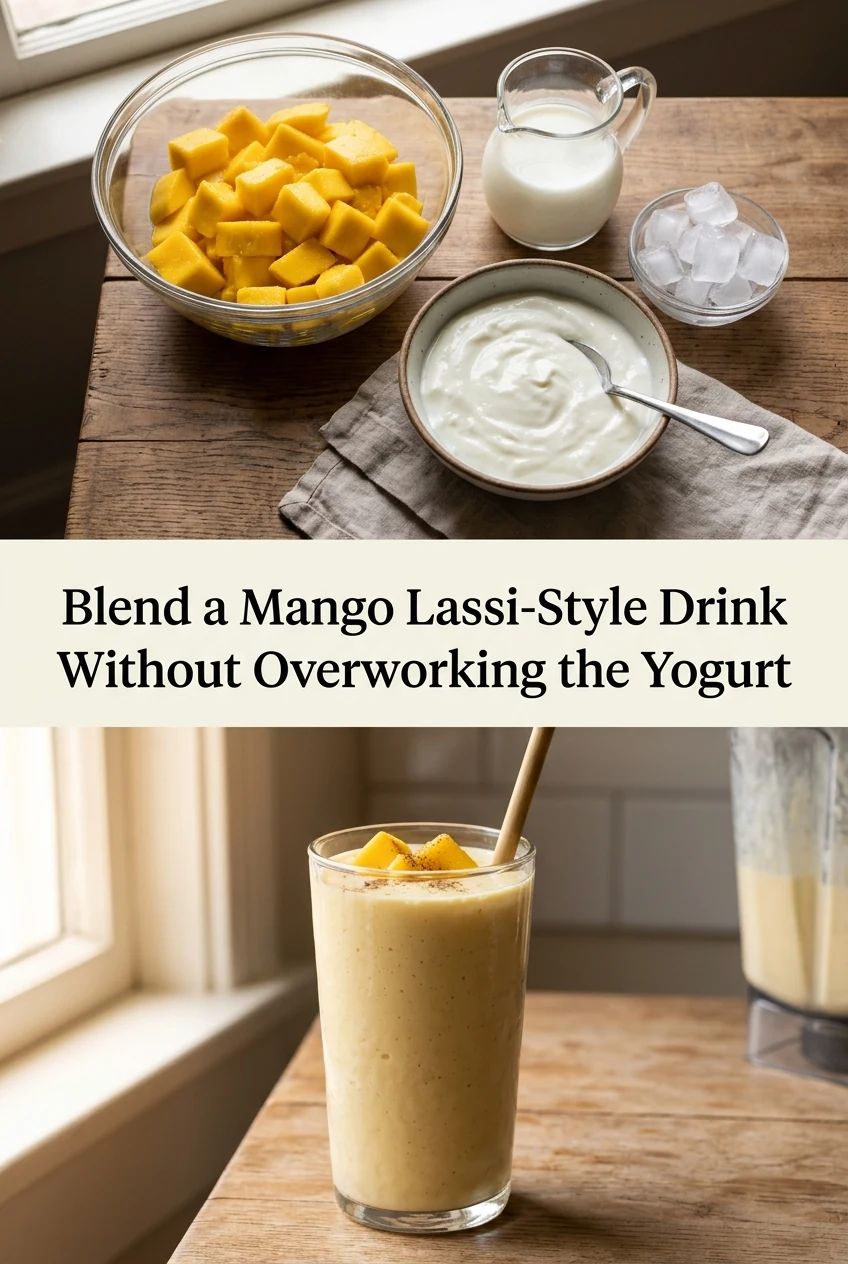
AI-generated editorial concept created for this article. The image is not a technical diagram or a tested result.
Choose and Chill Your Mango Pulp
Canned or fresh mango pulp both work, but the pulp must be cold before blending. Refrigerate canned pulp overnight or freeze fresh diced mango for 20 minutes until the pieces are firm but not solid. Cold fruit keeps the ingredients chilled against blade friction, preventing warmth that accelerates yogurt thinning. Measure 180 millilitres of pulp for a two-serving batch. Warm pulp encourages over-processing because the mixture moves too freely from the first pulse.
Measure Yogurt and Liquid Carefully
Use 240 millilitres of full-fat plain pasteurized yogurt and 60 millilitres of cold whole milk or cold water. Full-fat yogurt holds its structure longer than low-fat versions under blade contact. Add the liquid first so the yogurt does not sit directly against the blade before blending starts. A small pinch of ground cardamom and one teaspoon of sugar can go in at this stage. Keep all dairy refrigerated at 4 degrees Celsius or below until the moment you measure it.
Load the Blender Jar in the Right Order
Pour liquid into the jar first, then add yogurt, then place the chilled mango pulp on top. This layering lets the liquid cushion the blade contact and draws the yogurt down gradually rather than forcing the blade to shear through dense dairy immediately. Do not add ice at this stage; ice chips extend blending time and introduce extra water as they melt, both of which work against a thick result. Ice can be added to the serving glass instead.
Use a Short Pulse Sequence Instead of Continuous Running
Secure the lid firmly and pulse five times at one-second intervals, then pause for three seconds. Repeat this cycle twice more, for a total of three cycles and roughly 15 seconds of blade contact. Check the texture by tilting the jar gently; the mixture should move slowly and coat the sides. If large mango pieces remain, add one more two-pulse cycle. Stopping at this point preserves the yogurt proteins and keeps the drink pourable without becoming watery or aerated.
Pour and Serve Promptly
Pour immediately into two chilled glasses over ice. The drink will begin to separate if it sits in the blender jar, because sheared dairy proteins and dense fruit solids naturally split from the whey once movement ceases. Any portion not served within 20 minutes should be covered and refrigerated at 4 degrees Celsius or below. Consume refrigerated portions within the same day. Do not re-blend a stored portion, as the additional processing will thin it further.
A little more
to know.
Can I use Greek yogurt instead of plain yogurt?
Greek yogurt produces a noticeably thicker result because it contains less whey to begin with. Reduce the added milk to 30 millilitres and expect the drink to be closer to a smoothie consistency than a pourable lassi. Adjust to your preference.
Why does my lassi taste sour even with ripe mango?
Over-blending shears the yogurt's fat and protein network, thinning the rich texture that normally coats the tongue and softens tartness. Keeping pulse cycles short preserves this creamy body. Adding an extra half-teaspoon of sugar before blending also balances the acidity without masking the mango flavor.
Original editorial guidance and recipe formulations, not independently kitchen-tested. Times are estimates and depend on equipment and product directions. Cooked bases need additional cooling and refrigeration before cold serving. Images are AI-generated illustrations; appearance and yield may vary. Check actual ingredient labels, allergens, and any certification you require. We do not certify products. Read our approach.
Save to Pinterest ↗ANOTHER IDEA FOR THE COUNTER