Balance Thick Mango Pulp Viscosity in Cold Sparkling Soda
Pouring carbonated water directly into dense mango puree frequently triggers sudden foaming followed by an unblended, separated drink. The thick texture and insoluble fruit fibers provide abundant nucleation sites that cause dissolved carbon dioxide to escape rapidly. At the same time, the difference in density between heavy puree and light sparkling water makes thorough mixing difficult without vigorous stirring that flattens the soda. Pre-thinning the puree with a small portion of flat water before adding carbonation helps create a balanced, effervescent soda that mixes smoothly.
Read the note ↓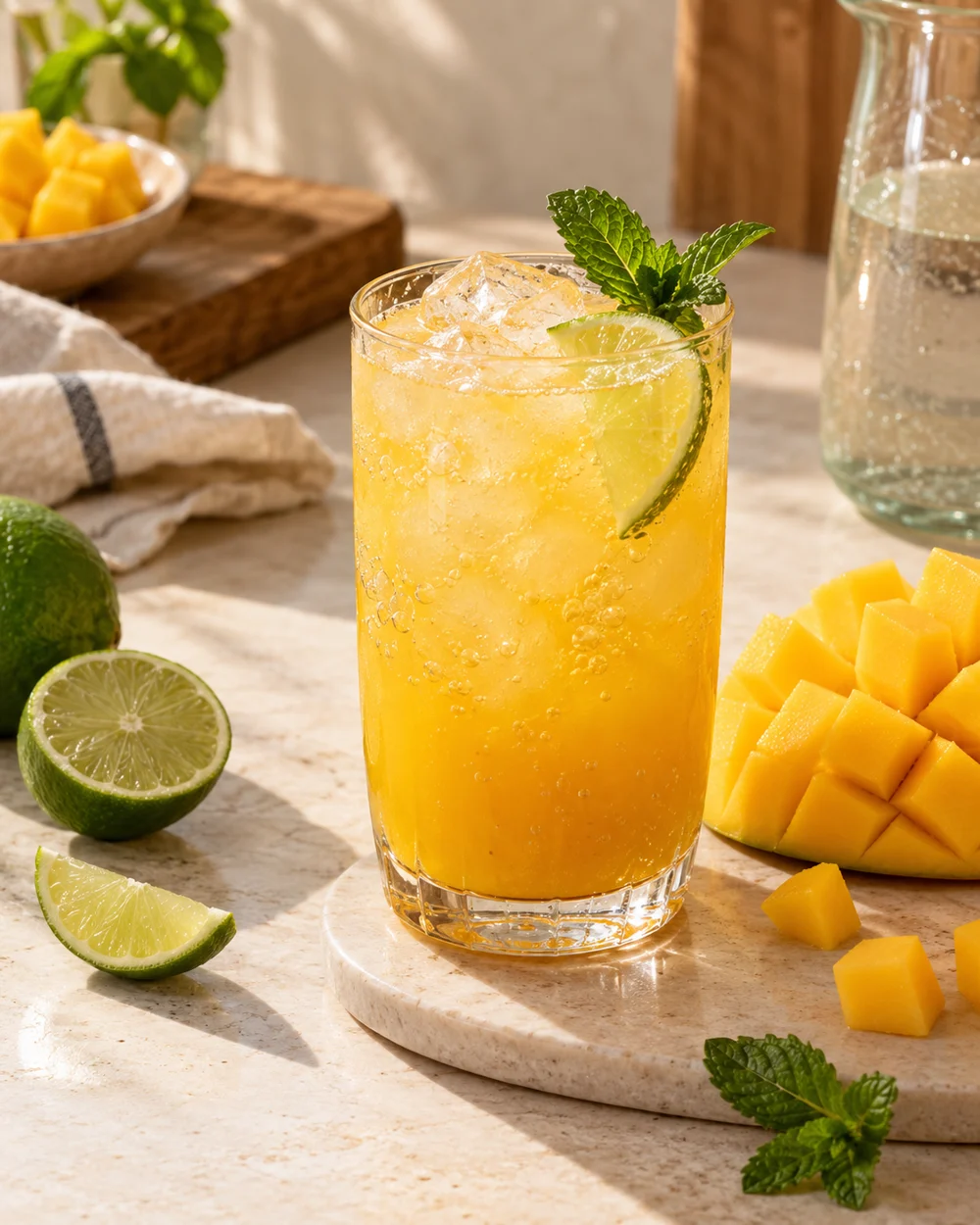
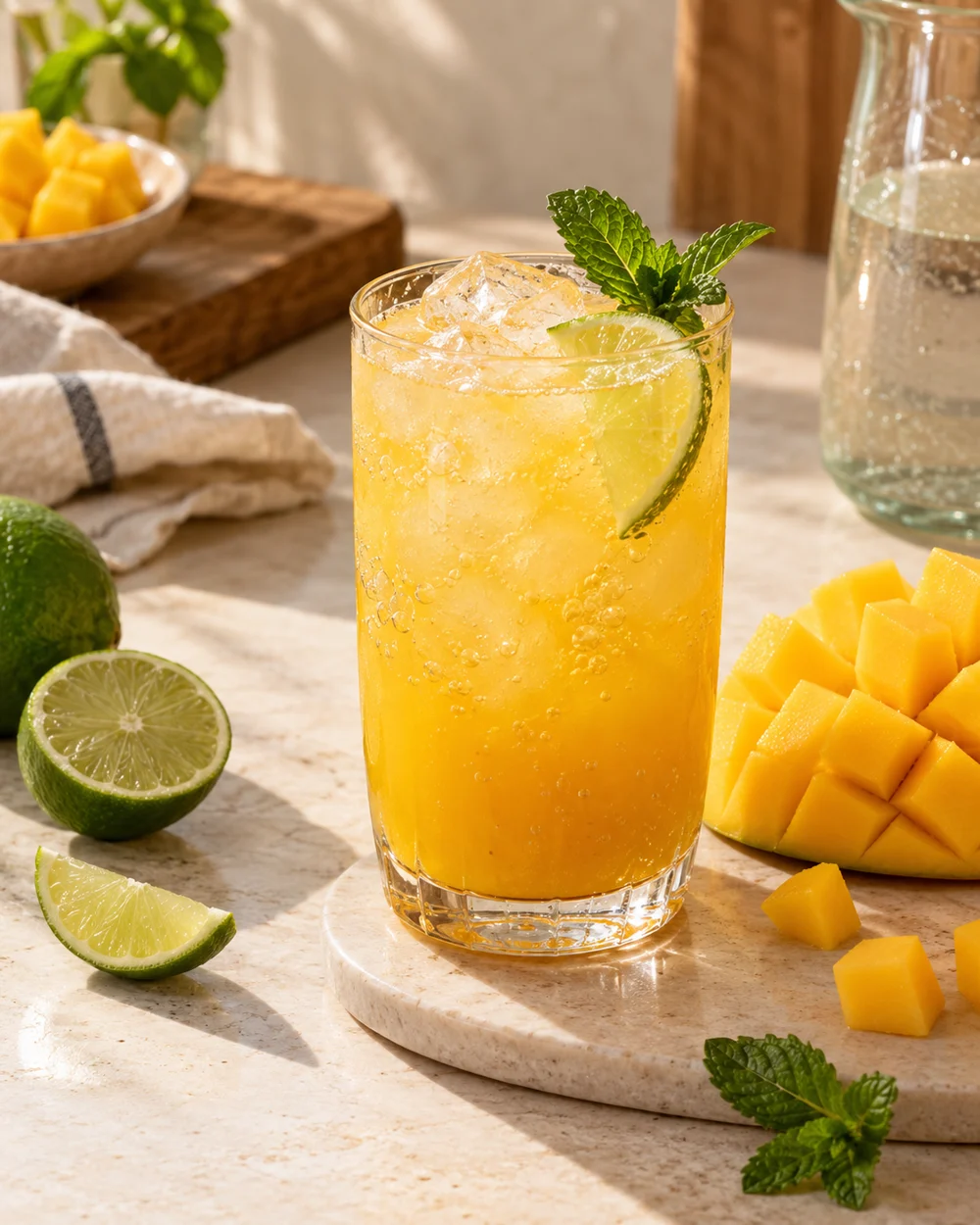
Representative category illustration reused from our editorial library; it does not depict this specific project or a tested result.
Viscosity Discrepancy and Carbonation Loss
Prepared mango pulp contains natural pectins and fruit solids that create a thick, nectar-like consistency. Carbonated water has a very light body, meaning the two liquids do not blend easily on contact. Stirring dense puree into sparkling water requires vigorous agitation that quickly knocks carbon dioxide out of solution. In addition, the fine fruit solids act as sites where bubbles rapidly form and expand, producing excess foam that can overflow the glass while leaving the drink underneath flat.
The Pre-Thinning Ratio
To prepare a balanced 300-milliliter sparkling drink, begin with 60 milliliters of cold, smooth pasteurized mango pulp. Place this base into a dedicated mixing beaker and add 30 milliliters of cold, flat filtered water along with 10 milliliters of simple syrup if additional sweetness is required. Stir this foundation thoroughly with a spoon until the mixture runs freely from the blade in a steady, thin ribbon rather than falling in heavy, viscous drops.
Chilling Requirements for Mixing
Temperature plays a major role in keeping carbonation dissolved. Ensure both the thinned mango base and the sparkling water are thoroughly chilled in the refrigerator before mixing, ideally below 5 degrees Celsius. Warmer liquids release dissolved gas far more quickly upon contact, leading to rapid flattening. Keep the sparkling water sealed in its bottle until the moment of pouring, and consider chilling the serving glass beforehand to minimize foam when the cold liquid hits the glass.
Layering and Controlled Assembly
Pour the 90 milliliters of thinned fruit base into the bottom of a tall, narrow glass. Tilt the tumbler to roughly a 45-degree angle and slowly pour 210 milliliters of cold sparkling water down the interior wall of the glass to reach the target 300-milliliter volume. Allowing the liquid to slide down the glass surface limits turbulence. Insert a long bar spoon straight down to the base and lift upward once with a slow, gentle motion to combine the fruit and soda without agitating the bubbles.
Hygiene and Residual Storage
Commercial canned or bottled pasteurized mango pulp degrades rapidly once unsealed. Transfer unused pulp out of metal cans into a clean glass or food-grade plastic container. Seal tightly and store in refrigeration held at 4 degrees Celsius or lower within two hours of opening. For peak flavor brightness and aromatic clarity, consume the remaining prepared puree within five days, always inspecting for changes in aroma before use.
A little more
to know.
Can I blend the mango pulp and sparkling water together in a countertop blender?
No. The rapid spinning of blender blades creates heavy turbulence that quickly drives dissolved carbon dioxide out of the soda water, leaving the drink flat and excessively foamy rather than crisp and sparkling.
Does pulp with fruit fibers require straining before carbonation?
Coarse fibers provide excessive nucleation sites that cause foaming. Passing dense puree through a fine-mesh sieve before the flat-water dilution step significantly improves carbonation stability in the finished sparkling drink.
Original editorial guidance and recipe formulations, not independently kitchen-tested. Times are estimates and depend on equipment and product directions. Cooked bases need additional cooling and refrigeration before cold serving. Images are AI-generated illustrations; appearance and yield may vary. Check actual ingredient labels, allergens, and any certification you require. We do not certify products. Read our approach.
Save to Pinterest ↗ANOTHER IDEA FOR THE COUNTER