Avocado and Lime Smoothie With Plain Yogurt
Avocado flesh begins to oxidise and turn grey shortly after it is cut and exposed to air, which makes timing and technique genuinely important when building this smoothie. Squeezing lime juice directly onto the cut flesh before anything else goes into the blender is the central habit this article is built around. Combined with a logical loading order and an immediately chilled glass, the approach gives you a pale green, creamy drink that looks as good as it tastes at the moment of serving.
Read the note ↓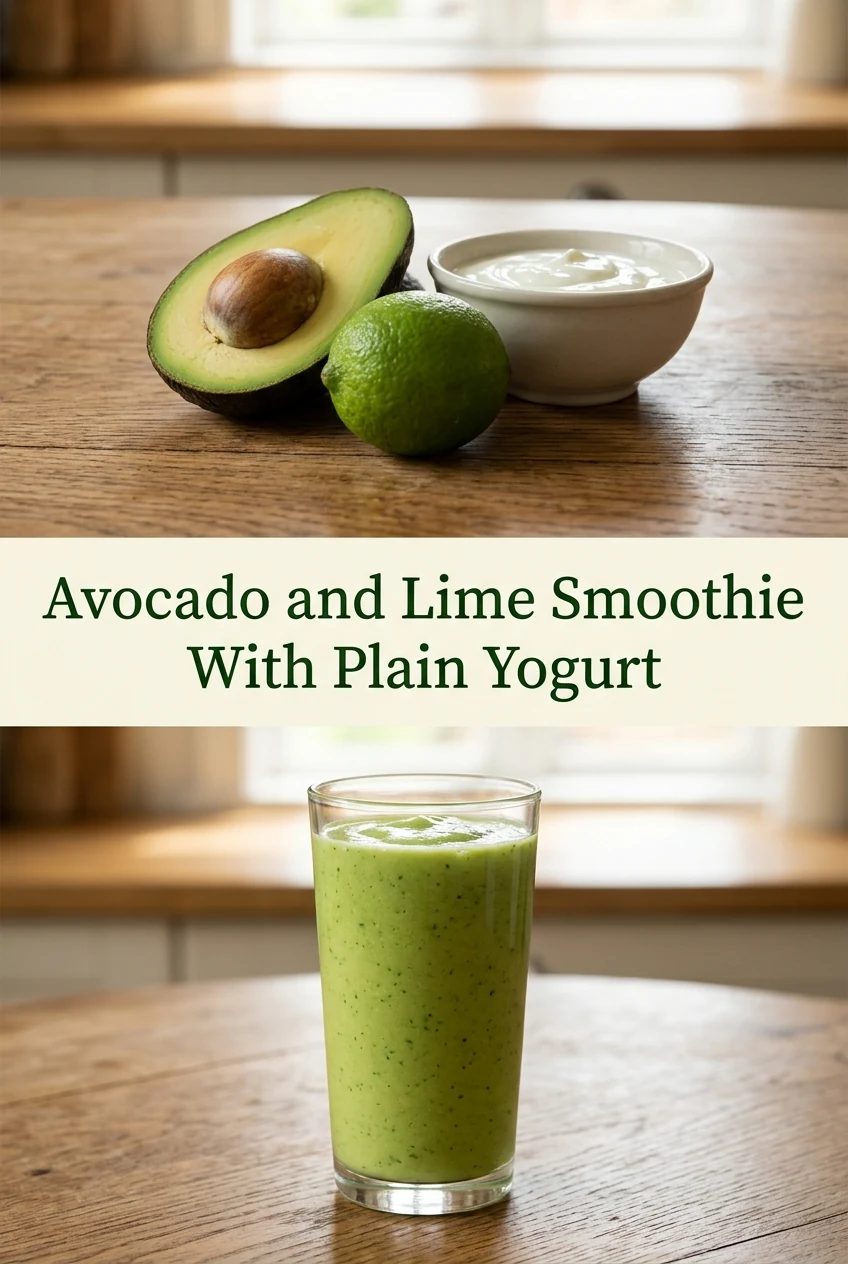
AI-generated editorial concept created for this article. The image is not a technical diagram or a tested result.
Why Avocado Needs Lime Before It Meets the Blender
Once you halve an avocado and remove the stone, the exposed flesh begins reacting with oxygen in the air. The result is the familiar grey-brown discolouration that makes a smoothie look unappetising even when the flavour is still fine. Squeezing fresh lime juice over the flesh immediately after cutting introduces citric acid to the surface, which slows that colour change noticeably. This is not a permanent fix and does not eliminate oxidation entirely, but it buys enough time to complete blending and serve the drink before the colour shifts. The practical takeaway is simple: cut the avocado, squeeze lime juice onto the flesh straight away, and move directly to blending rather than leaving the prepared fruit sitting on the counter.
Ingredients for One Generous Serving
For a single large glass you will need one ripe avocado, the juice of one medium lime, one hundred and fifty grams of plain full-fat yogurt, one hundred millilitres of cold water, one teaspoon of honey or a small pinch of fine salt depending on whether you prefer a lightly sweet or savoury direction, and a generous handful of ice cubes. The yogurt provides body and a mild tang that balances the richness of the avocado. Use plain yogurt with no added flavourings. If you prefer a thinner consistency, increase the cold water by twenty to thirty millilitres. These quantities are an illustrative starting point rather than a tested formula, so adjust to suit the size of your avocado and your own taste.
Loading Order: Liquids and Soft Ingredients First
The order in which ingredients enter a countertop blender jar affects how smoothly everything combines. Standard blender manuals instruct adding liquids and soft foods first, with ice and hard items placed on top. Pour the cold water into the jar first, followed by the plain yogurt. Placing liquid and soft ingredients closest to the blades allows the motor to establish a vortex quickly and prevents air pockets from stalling the blades. Next, scoop the avocado flesh into the jar, pouring any pooled lime juice over the top. Add your honey or salt, and finish by adding the ice cubes last so their weight helps push ingredients down into the blades. Fit the lid securely before blending.
Blending and Serving Immediately
Follow your specific blender manual for recommended speeds or preset cycles, running the machine until the mixture is completely smooth. This typically takes around thirty to forty-five seconds, depending on motor wattage. Stop the motor completely before removing the lid to scrape down the sides with a spatula if needed, then blend briefly again. Taste and adjust lime juice, honey, or salt before the final few seconds of blending. While the blender is running or immediately before you start, place your serving glass in the freezer or fill it with ice water for one to two minutes, then empty it. Pouring the smoothie into a pre-chilled glass keeps the drink cold from the first sip and slows any further colour change at the surface. Serve the smoothie the moment blending is complete. Do not blend ahead and refrigerate, as the colour and texture will deteriorate.
Variations Worth Trying
Once you are comfortable with the base recipe, small adjustments open up different flavour directions. A quarter of a cucumber, peeled and roughly chopped, added to the jar with the avocado gives a lighter, more refreshing result. A small piece of fresh ginger, no larger than a thumbnail, adds a gentle warmth. If you want a creamier texture without extra fat, a frozen banana broken into chunks can replace some of the ice. For a more savoury version, omit the honey, increase the salt slightly, and add a pinch of ground cumin. Each of these is a suggestion to explore rather than a guaranteed outcome, since avocado size, yogurt brand, and blender power all influence the final drink.
A little more
to know.
Can I use low-fat yogurt instead of full-fat?
Yes, low-fat plain yogurt works in this recipe. The smoothie will be slightly less creamy and may feel a little thinner in texture because full-fat yogurt contributes more body. You can compensate by reducing the cold water by around twenty millilitres or by adding a few extra ice cubes to maintain a thick consistency. The flavour balance remains similar either way.
What if my avocado is not fully ripe?
An underripe avocado will blend less smoothly and may leave small fibrous pieces in the finished drink even after extended blending. The flavour will also be noticeably less rich and buttery. It is worth waiting until the avocado yields gently to pressure near the stem end before using it. If you are working with an avocado that is only slightly underripe, blending for a longer period and straining the result through a fine sieve are options, though neither fully replicates the texture of a properly ripe fruit.
Original editorial guidance and recipe formulations, not independently kitchen-tested. Times are estimates and depend on equipment and product directions. Cooked bases need additional cooling and refrigeration before cold serving. Images are AI-generated illustrations; appearance and yield may vary. Check actual ingredient labels, allergens, and any certification you require. We do not certify products. Read our approach.
Save to Pinterest ↗ANOTHER IDEA FOR THE COUNTER