Assemble a Fruit and Yogurt Smoothie in the Correct Blender Loading Order
The order in which ingredients enter a blender affects whether the blades engage properly from the start. Dense frozen fruit placed directly on the blades with no liquid around it can stall the motor or leave large unblended chunks. Loading liquid first creates a fluid layer the blades can move through immediately, drawing other ingredients down progressively. Most blender manuals recommend this sequence, and following it produces a smoother result with less strain on the machine.
Read the note ↓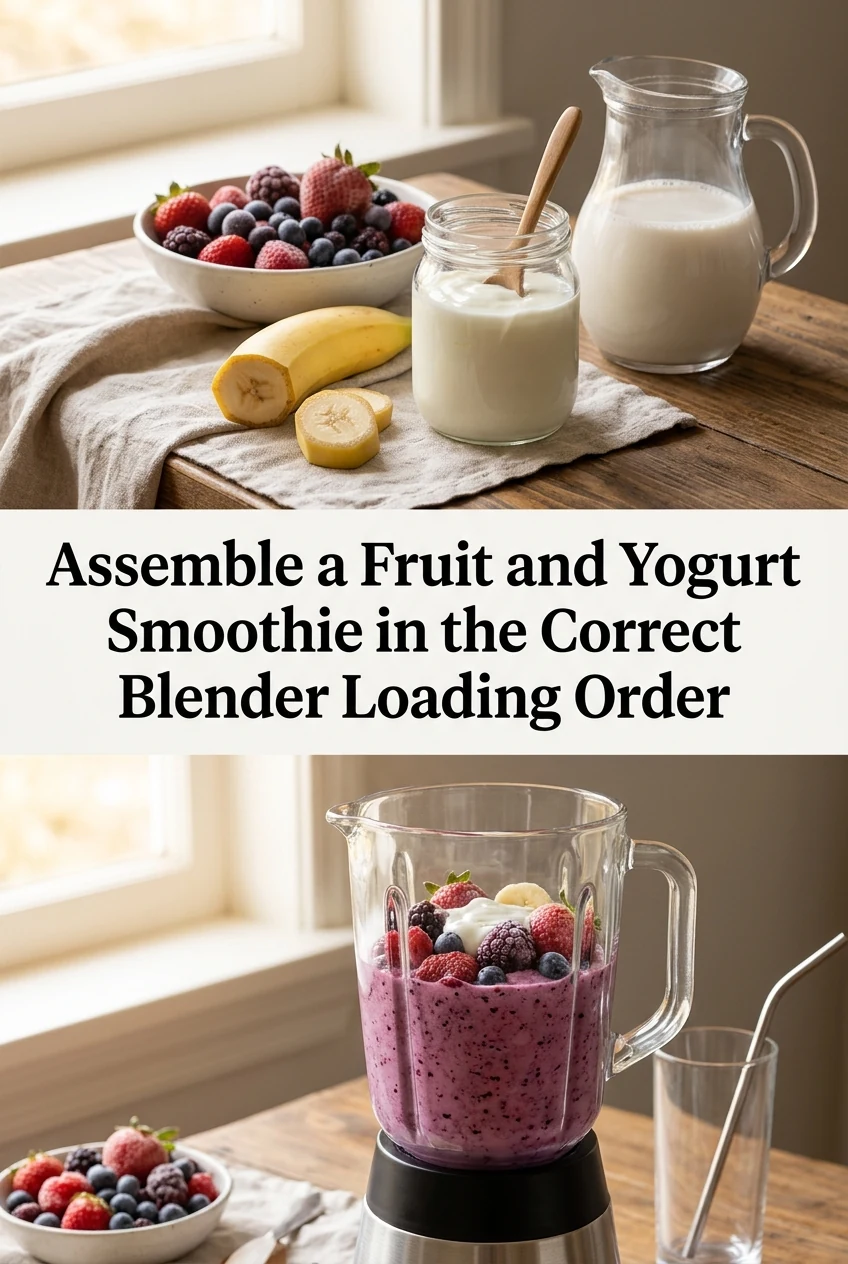
AI-generated editorial concept created for this article. The image is not a technical diagram or a tested result.
Start With Liquid at the Bottom
Pour your liquid base into the blender jar first. For a fruit and yogurt smoothie, this is typically milk, a plant-based milk alternative, or fruit juice. A practical starting quantity for a single 350 to 400 milliliter serving is 120 to 150 milliliters of liquid. This amount creates enough fluid contact with the blades to initiate blending without making the finished drink too thin before the other ingredients are added. Adjust upward if your blender manual specifies a minimum liquid volume.
Add Yogurt and Soft Fruit Second
Spoon yogurt directly onto the liquid, then add any fresh or thawed soft fruit. Yogurt contributes body and blends easily once the liquid is moving. Use pasteurized yogurt and keep it refrigerated at 4 degrees Celsius or below until the moment of use. Soft fruit such as banana or fresh strawberry pieces go in at this stage because they blend quickly and do not require the same blade force as frozen pieces. A typical single-serve quantity is 80 to 100 grams of soft fruit.
Place Frozen Fruit on Top
Add frozen fruit pieces last, on top of the softer ingredients. This position keeps the dense frozen mass away from the blades at startup, allowing the liquid and soft ingredients to begin moving first and then pull the frozen pieces down gradually. A practical single-serve quantity is 80 to 100 grams of frozen fruit. Larger frozen chunks may need a brief pause and stir before continuing if your blender does not have a pulse or ice-crush setting.
Blend in Stages if Needed
Start on a low speed for the first few seconds, then increase to the speed your blender manual recommends for frozen ingredients. If the blender stalls or sounds labored, stop it, remove the lid carefully, and use a long spoon or the tamper provided with your model to redistribute the contents. Do not insert any utensil while the blades are moving. Restart at low speed. This staged approach is more effective than running the blender at maximum speed from the beginning with a dense load.
Check Texture Before Pouring
Stop the blender and check texture before pouring. A properly blended smoothie should flow smoothly off a spoon with no visible fruit chunks or ice crystals. If texture is uneven, blend for an additional ten to fifteen seconds and check again. If the drink is thicker than intended, add liquid in small increments of 15 to 20 milliliters and blend briefly rather than adding a large amount at once, which can make the drink too thin to correct without adding more frozen fruit.
A little more
to know.
Does the type of yogurt affect how the smoothie blends?
Thicker yogurt styles such as strained varieties blend more slowly and may require slightly more liquid to achieve smooth results. Standard stirred yogurt incorporates more easily. Both work well; adjust liquid quantity based on the consistency you observe during blending.
Can I pre-portion smoothie ingredients and freeze them together for faster assembly?
Freezing pre-portioned fruit together is practical, but add yogurt and liquid fresh at blend time rather than freezing them with the fruit. Frozen yogurt changes texture unpredictably and affects the liquid-to-solid balance the loading order depends on.
Original editorial guidance and recipe formulations, not independently kitchen-tested. Times are estimates and depend on equipment and product directions. Cooked bases need additional cooling and refrigeration before cold serving. Images are AI-generated illustrations; appearance and yield may vary. Check actual ingredient labels, allergens, and any certification you require. We do not certify products. Read our approach.
Save to Pinterest ↗ANOTHER IDEA FOR THE COUNTER