Arrange a Small Mise en Place Bowl Set Before Making a Fruit and Cocoa Warm Drink
When measuring cocoa powder, sweetener, and fruit puree directly from large containers into a hot pan on the stove, it is easy to overshoot quantities or lose track of what has already been added. Setting out three small bowls before heating the milk helps streamline the process. Having each ingredient measured and ready nearby turns the stovetop step into a controlled pour-and-stir routine rather than a rushed juggling act.
Read the note ↓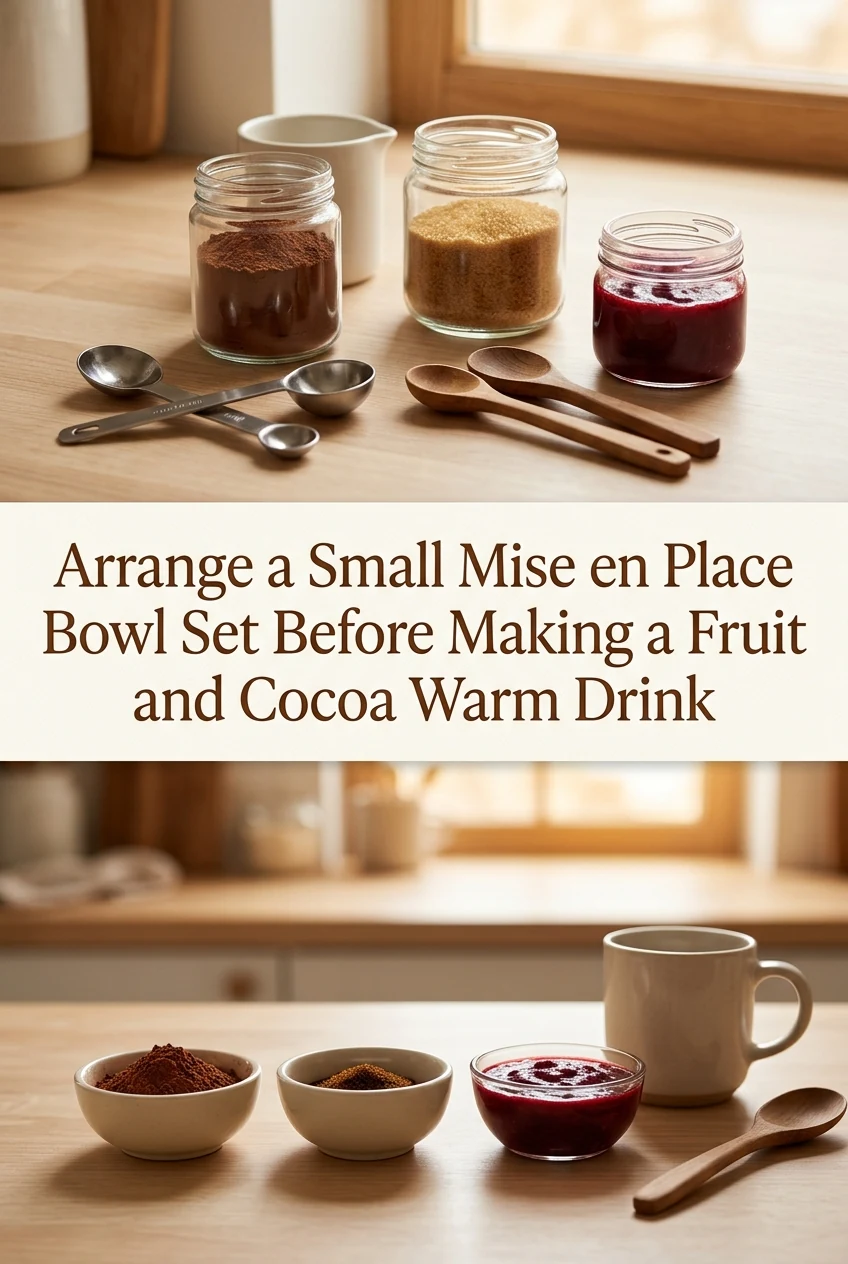
AI-generated editorial concept created for this article. The image is not a technical diagram or a tested result.
Choose the Right Bowl Sizes for Each Ingredient
Use a 60 ml ramekin for cocoa powder, a 30 ml pinch bowl for sweetener, and a 90 ml bowl for fruit puree. These proportions prevent spillage and keep the portions visually distinct. Avoid stacking bowls before use; lay them in a left-to-right line in the order you will add them to the milk. This sequence reduces the chance of reaching for the wrong bowl mid-pour when steam is rising from the pan.
Measure Cocoa Powder Without Packing
Spoon unsweetened cocoa powder lightly into the ramekin and level it with a straight edge rather than pressing it down. Tightly packing the scoop adds significantly more powder than intended, which can make the drink unpleasantly bitter. For a single 250 ml serving, about 5 to 6 grams—roughly one level tablespoon—or up to 10 grams for a richer profile is a practical starting range, though personal preference varies. Measure over a clean sheet of paper or a tray to catch any spill cleanly.
Prepare the Fruit Puree Bowl Separately
Spoon chilled fruit puree, such as raspberry or mango, into the 90 ml bowl and let it sit briefly before use so it is not straight from the coldest part of the refrigerator. Adding chilled puree to a hot pan can rapidly lower the liquid temperature and make it more difficult to integrate smoothly with the cocoa. Preparing the puree in its own bowl also allows you to stir out any separation and verify its texture before pouring it into the warm milk.
Set the Sweetener Bowl Last in the Line
Place the sweetener bowl at the far right so it is the final addition. Fine caster sugar or a pourable liquid sweetener both work, but measure them into separate small bowls if you are testing both in the same session. For a 250 ml drink, 8 to 12 grams of caster sugar is a practical illustrative range; actual preference varies. Keeping sweetener last lets you taste the cocoa-fruit balance before committing to a fixed amount.
Clear the Bowls in Order After Each Pour
As you add each ingredient to the warm milk, move the empty bowl to a separate tray rather than leaving it in the line. This prevents you from accidentally reaching for an already-used bowl and double-dosing an ingredient. Rinse each small bowl immediately after use so residual cocoa or puree does not dry and stain. The cleared tray also signals at a glance that the drink assembly is complete and nothing has been skipped.
A little more
to know.
Can I pre-portion the bowls the night before and refrigerate them?
Cocoa powder and dry sweetener can sit covered at room temperature overnight. Fruit puree should be covered and refrigerated at 4 degrees Celsius or below, then allowed to come slightly toward room temperature for about five minutes before use.
What if the cocoa clumps when I pour it into the warm milk?
Whisk the cocoa with one tablespoon of the warm milk in the ramekin itself to form a thin paste before adding the rest. This pre-wetting step disperses the powder more evenly and avoids dry lumps floating on the surface.
Original editorial guidance and recipe formulations, not independently kitchen-tested. Times are estimates and depend on equipment and product directions. Cooked bases need additional cooling and refrigeration before cold serving. Images are AI-generated illustrations; appearance and yield may vary. Check actual ingredient labels, allergens, and any certification you require. We do not certify products. Read our approach.
Save to Pinterest ↗ANOTHER IDEA FOR THE COUNTER