A Fair Side-by-Side Milk Test for Iced Coffee
Choosing a milk for iced coffee is harder than it sounds when each trial glass is made differently. If one glass has more coffee, more ice, or is poured at a different temperature, the comparison is testing several variables at once rather than the milk itself. A fair test requires identical conditions in every glass except the milk. This guide sets up a simple same-day comparison using dairy milk, an oat drink, and a soy drink against one batch of chilled coffee, with consistent quantities and a clear tasting method.
Read the note ↓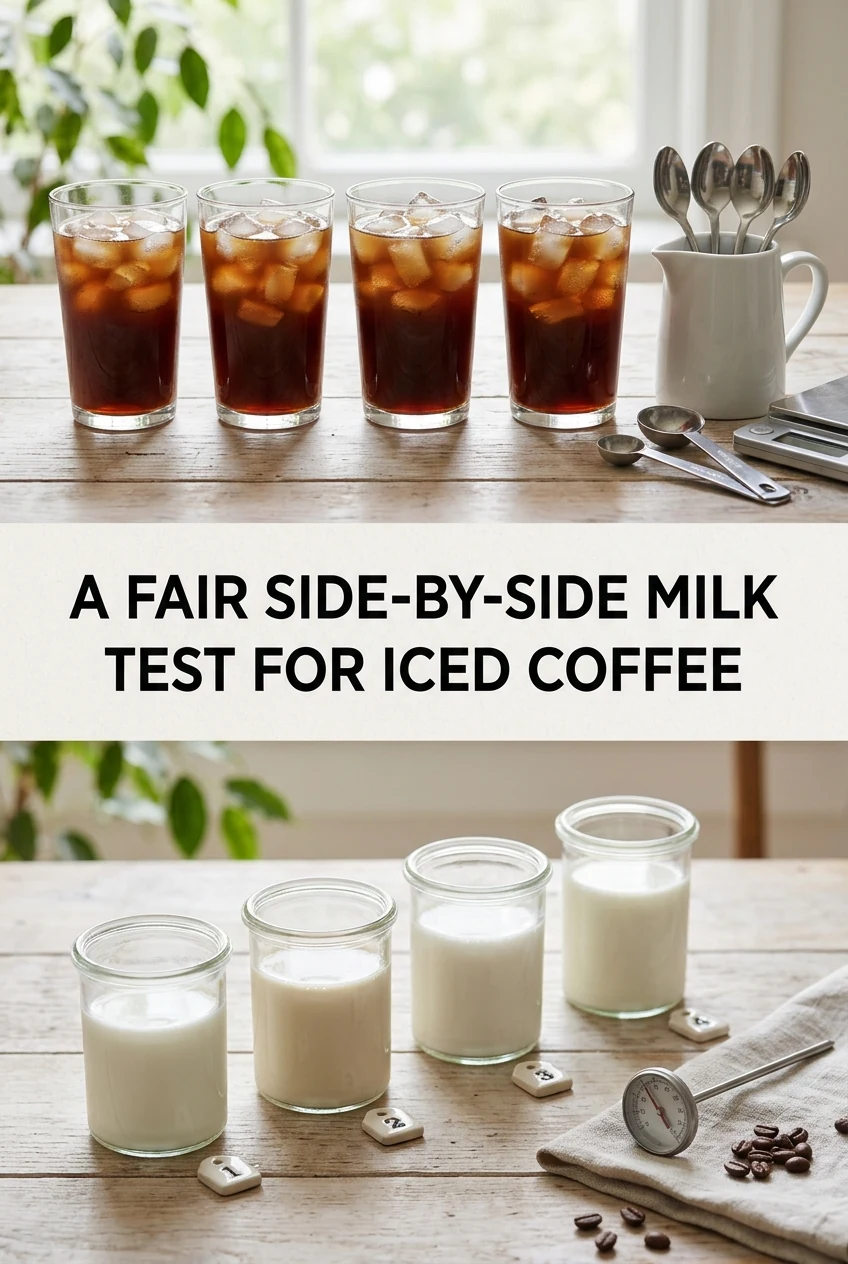
AI-generated editorial concept created for this article. The image is not a technical diagram or a tested result.
Preparing One Coffee Base for All Three Glasses
Brew or prepare one batch of coffee using your usual method and let it cool to room temperature, then refrigerate it until cold. Using a single batch means every glass receives coffee from the same brew, at the same temperature, and at the same strength. Divide it into three equal portions using a measuring jug, for example 100 ml per glass. Differences in brew strength between glasses would make the comparison unreliable, so resist the temptation to brew separately for each. Label three identical glasses before you begin pouring.
Controlling Ice and Milk Quantities
Add the same number of ice cubes to each glass, or weigh the ice to the same gram amount if your cubes vary in size. Then measure the milk for each glass using the same measuring spoon or jug, for example 60 ml per glass. Pour in the same order each time: coffee first, then ice, then milk. Changing the pour order can affect how the milk integrates and how cold the drink feels on the first sip, which would introduce another variable. Keep the sequence identical across all three glasses.
What to Watch for Before Tasting
Before lifting any glass, observe each one for 30 seconds. Some plant-based drinks, particularly certain soy drinks, may visibly separate or curdle when they contact cold acidic coffee. This is a physical reaction between the acidity of the coffee and the proteins in the drink, and it does not indicate a spoiled product. Note what you see in each glass honestly. A drink that separates may still taste acceptable to you, or the appearance may affect your preference. Record your observations before tasting so they are not influenced by flavor.
Tasting with a Clean Palate Between Glasses
Use a clean spoon to take a measured sip from each glass rather than drinking directly from the rim, which makes it easier to take the same volume each time. Rinse your mouth with plain water between glasses and wait about 30 seconds before moving to the next. Taste in the same order for each attribute you are evaluating, such as sweetness, body, and aftertaste. Write a brief note after each glass rather than comparing from memory at the end. Three glasses is a manageable number to evaluate without palate fatigue.
Storing Leftover Milk Safely After the Test
Any opened milk carton or container used in the test should be resealed and returned to the refrigerator at 4 degrees Celsius or 40 degrees Fahrenheit or below promptly after pouring. Do not leave open milk containers on the counter during a long tasting session. Discard any milk that has been left unrefrigerated for more than two hours, or one hour if your kitchen is above 32 degrees Celsius or 90 degrees Fahrenheit. Use pasteurized dairy and pasteurized or commercially processed plant drinks throughout.
A little more
to know.
Does the fat content of dairy milk affect how it behaves in iced coffee compared with plant drinks?
Higher fat dairy milk tends to blend more smoothly and resist separation in cold coffee. Lower fat dairy milk may show slight separation too. Plant drinks vary by formulation; barista-edition versions are often designed to be more stable in coffee than standard versions of the same brand.
Can I run this test with hot coffee instead of iced coffee?
You can, but the variables change significantly. Temperature affects how plant proteins react, how aromas are perceived, and how quickly the drink cools during tasting. A hot coffee test and an iced coffee test are effectively separate comparisons and the results should not be assumed to transfer between them.
Original editorial guidance and recipe formulations, not independently kitchen-tested. Times are estimates and depend on equipment and product directions. Cooked bases need additional cooling and refrigeration before cold serving. Images are AI-generated illustrations; appearance and yield may vary. Check actual ingredient labels, allergens, and any certification you require. We do not certify products. Read our approach.
Save to Pinterest ↗ANOTHER IDEA FOR THE COUNTER