Whole Bean, Pre-Ground or Instant Coffee: Choosing for How You Actually Drink It
A new home café setup often stalls at the question of whether to buy a grinder or stick with pre-ground or instant coffee. The answer depends on your actual daily pattern, not on which format is considered superior. Counter space, cleanup tolerance, how many people you are serving, and which brewing equipment you already own all shape the decision more than abstract freshness arguments. This guide compares the three formats against a realistic weekday-and-weekend routine to help you decide without overbuying equipment.
Read the note ↓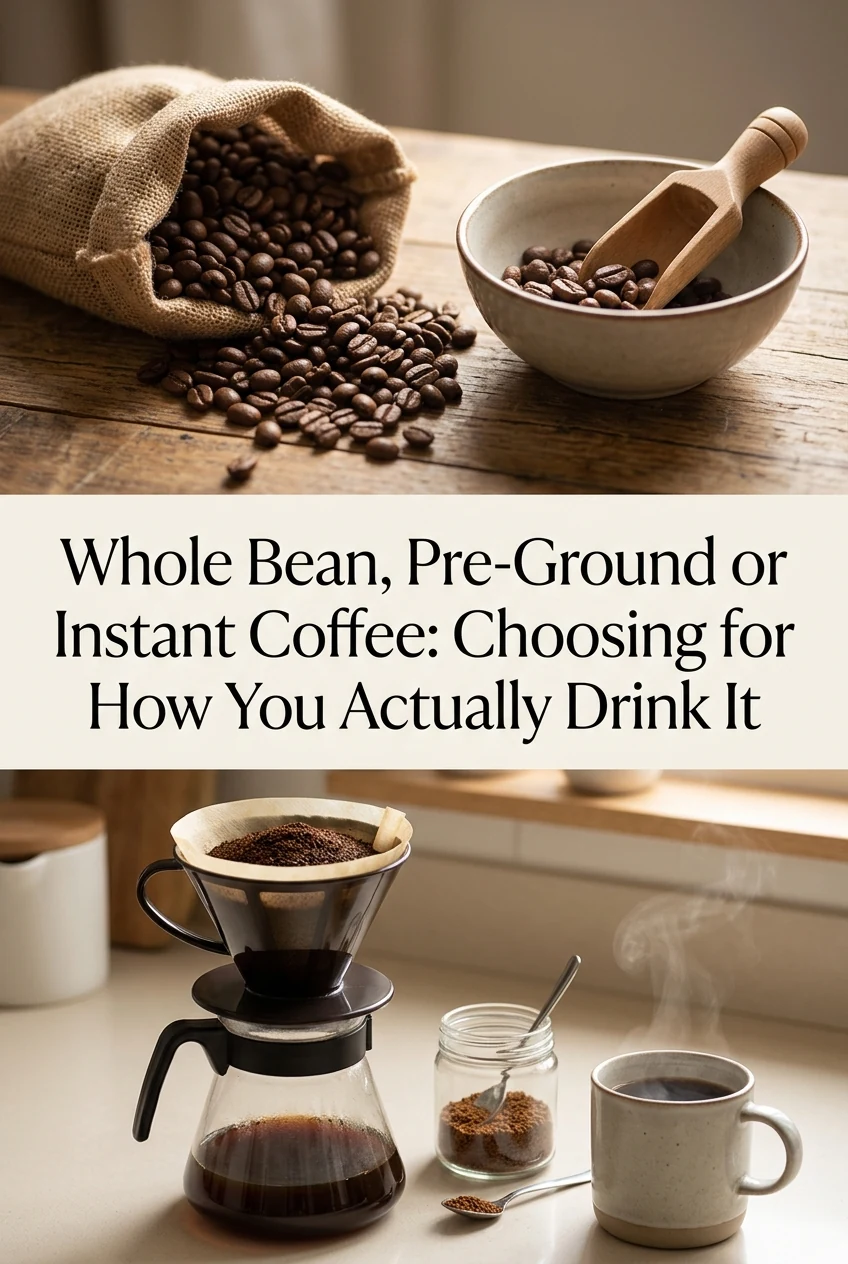
AI-generated editorial concept created for this article. The image is not a technical diagram or a tested result.
Map Your Actual Drinking Pattern First
Before comparing formats, write down a week of your coffee habits honestly. Consider: how many mugs you make on a typical weekday morning, whether you have guests on weekends who want a larger pot, whether you sometimes want coffee at unusual hours with minimal effort, and how often you finish a bag before it goes stale. A person who makes one mug on weekday mornings and a six-cup pot on Saturday has a different set of constraints than someone who drinks three mugs daily without exception.
Whole Bean: What It Adds to Your Routine
Whole beans require a grinder, which means an additional appliance on the counter or in a cupboard, a grinding step before each brew, and cleaning the grinder regularly. Beans stay fresher longer in an airtight container than pre-ground coffee does, which matters if you buy in larger quantities. However, if you own a brewer that requires a specific grind size, you will need to calibrate the grinder to that brewer's needs, which takes some trial and adjustment. Grinding the wrong coarseness for your brewer produces noticeably different results.
Pre-Ground: Convenience with a Freshness Window
Pre-ground coffee skips the grinder entirely and works directly with drip machines, pour-over cones, and French presses without extra equipment. The trade-off is that ground coffee loses volatile compounds faster than whole beans once the bag is opened. For the one-mug-on-weekdays, pot-on-weekends example, a 250-gram bag might last two to three weeks once opened. Storing it in a sealed container away from heat and light slows deterioration. Pre-ground is a practical choice if counter space is limited and you do not want to maintain a grinder.
Instant Coffee: Lowest Barrier, Different Result
Instant coffee dissolves in hot water with no brewer and no cleanup beyond rinsing a mug. It suits the late-night single mug, travel, or situations where the brewer is already put away. The flavor profile differs from brewed coffee because the production process is different; this is a characteristic of the format, not a defect. For someone who wants one occasional mug without setting up equipment, instant is a genuinely useful option to keep alongside a bag of pre-ground for the weekend pot. Keeping both is not redundant.
Match the Format to the Brewer You Already Own
If you own a drip machine, pre-ground coffee sized for that brewer removes one variable. If you own a French press, both whole bean and pre-ground work, but the coarseness of the grind matters for the press's filter. If you own nothing yet, buying instant first lets you drink coffee while you decide what brewer suits your space and habit before committing to a grinder. Buying a grinder before you know your brewer is a common and avoidable mismatch. Decide on the brewer first, then assess whether grinding whole beans fits the workflow.
A little more
to know.
How long does an opened bag of whole beans typically stay usable?
This varies by roast date, storage conditions, and personal taste sensitivity. Many roasters print a best-by date on the bag. Storing beans in an airtight container away from heat and light and following the roaster's own guidance gives you the most accurate window for your specific product.
Is a burr grinder necessary, or will a blade grinder work?
Burr grinders produce more consistent particle sizes than blade grinders, which chop unevenly. Uneven grounds can affect extraction in some brewers. Whether the difference is noticeable to you depends on your brewer type and your own palate. Both are functional options at different price points.
Original editorial guidance and recipe formulations, not independently kitchen-tested. Times are estimates and depend on equipment and product directions. Cooked bases need additional cooling and refrigeration before cold serving. Images are AI-generated illustrations; appearance and yield may vary. Check actual ingredient labels, allergens, and any certification you require. We do not certify products. Read our approach.
Save to Pinterest ↗ANOTHER IDEA FOR THE COUNTER