Whisk Matcha in Flat-Bottomed Bowls Without Splatter
Preparing a vibrant bowl of whisked matcha often results in frustrating counter cleanup when vigorous strokes propel liquid over the rim. This issue typically happens when using standard flat-bottomed kitchen bowls or broad mugs instead of deep, sloping ceramic vessels. Without tall curved walls to deflect turbulence, improper arm motion tosses droplets outward. Mastering a balanced wrist flick in a concentrated 'W' pattern using a measured base of warm water yields micro-foam suspension without a single drop escaping onto the preparation counter.
Read the note ↓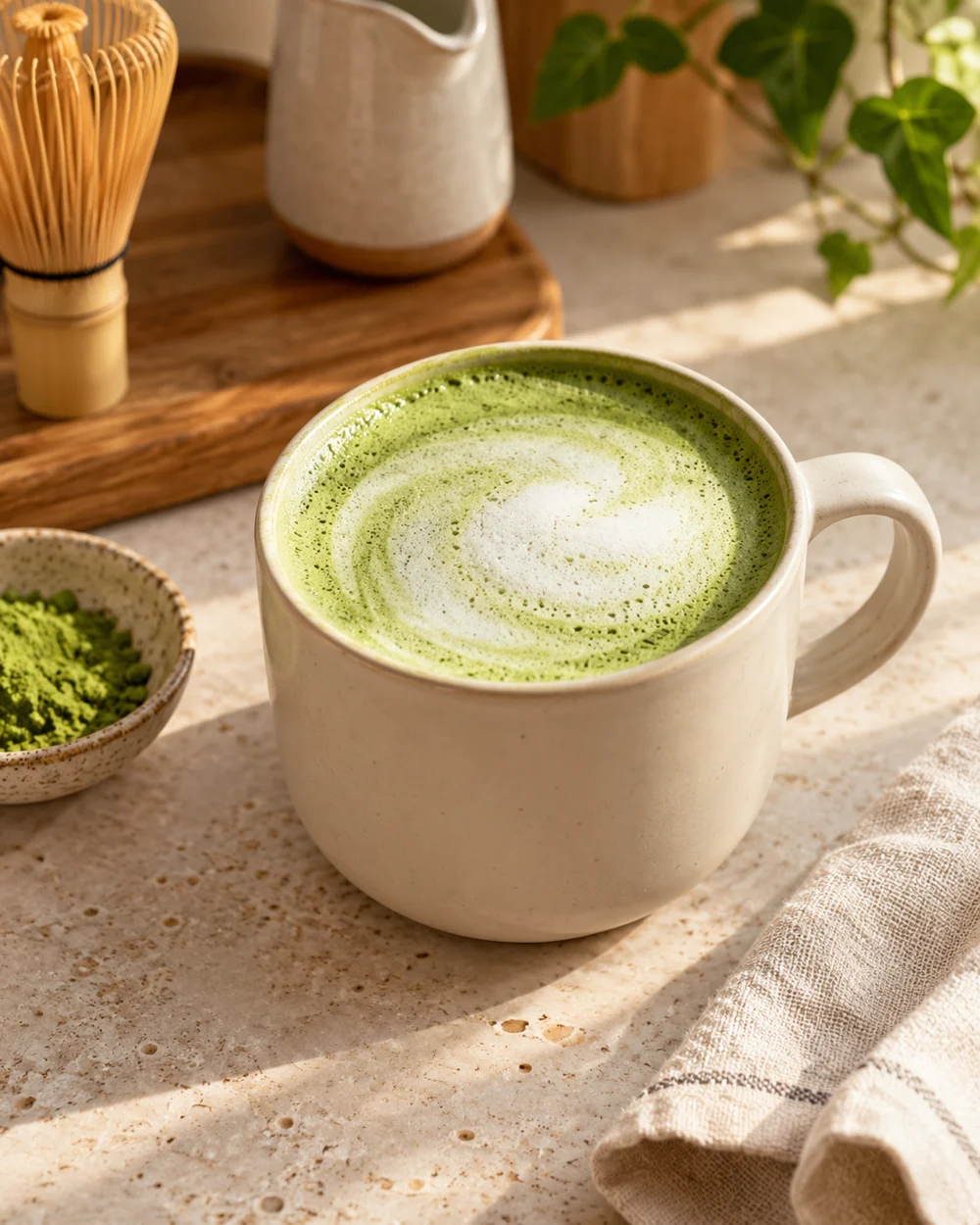
Representative category illustration reused from our editorial library; it does not depict this specific project or a tested result.
Sifting and Concentrated Liquid Ratios
Splatter occurs most frequently when excess liquid sloshes across a wide, flat bottom. Keep the initial whipping volume strictly confined to a concentrate. Sift 2 g of green tea powder through a fine stainless strainer directly into the bowl to break up electrostatic clumps. Pour precisely 60 ml of warm water heated to 75C to 80C over the sifted powder. This compact volume wets the tea completely while leaving substantial freeboard along the interior bowl walls.
Wetting and Gentle Suspension
Never initiate rapid whisking immediately after adding water. Take a multi-tine bamboo whisk or miniature wire cafe whisk and slowly trace three gentle circles around the bottom of the bowl. This pre-wetting stage gathers dry powder floating near the edges and incorporates it into a dark, homogenous slurry. Ensuring no dry pockets remain prevents dry clumps from catching on whisk tines and flicking outward once the higher-speed agitation phase begins.
Isolating Wrist Action from Forearm Motion
The primary cause of messy splashing is whole-arm movement driven from the elbow or shoulder. Anchor your forearm steady at a forty-five-degree angle over the vessel. Grip the whisk handle lightly between thumb and index finger, using only the wrist to generate movement. The wrist should swing rapidly back and forth in an alternating straight line or sharp 'W' trajectory, cutting through the liquid rather than swirling it into a rising vortex that climbs the walls.
Tine Depth and Stroke Control
Position the tips of the whisk tines suspended just above the ceramic floor without pressing down against the flat base. Scraping the bottom generates turbulent upward waves and damages delicate bamboo tips. Keep the agitation focused in the upper half of the liquid layer. Maintain the rapid wrist flick for twenty seconds until dense, velvety micro-bubbles form. Gently slow the tempo, trace an infinity symbol across the surface to pop large bubbles, then lift cleanly.
Transferring the Concentrated Foam
Once suspended into a uniform jade froth, the concentrate is ready for service. Pour the 60 ml shot smoothly into a waiting drinking cup or mug. Because the suspension was developed cleanly without messy spatter, the bowl edge pours neatly without dripping down the outer face. You can now dilute with additional hot water for traditional tea or fold into pasteurized warm milk without having to scrub your workstation.
A little more
to know.
Why does my matcha foam have large, uneven bubbles that pop quickly?
Coarse bubbles form when whisking too deeply or swirling in circular motions. Keep strokes linear and brisk in the top layer of liquid, finishing with light surface strokes to refine the foam texture.
Can I prepare matcha without a specialized whisk?
A small kitchen wire sauce whisk works if you keep the strokes strictly linear. Circular stirring with standard spoons fails to aerate the suspension and merely spins liquid toward the rim.
Original editorial guidance and recipe formulations, not independently kitchen-tested. Times are estimates and depend on equipment and product directions. Cooked bases need additional cooling and refrigeration before cold serving. Images are AI-generated illustrations; appearance and yield may vary. Check actual ingredient labels, allergens, and any certification you require. We do not certify products. Read our approach.
Save to Pinterest ↗ANOTHER IDEA FOR THE COUNTER