Whisk Matcha Clump-Free Using Low-Volume Concentrates
Matcha powder consists of extremely fine particles that naturally compact into dense clusters when exposed to ambient humidity. When added directly to a full volume of water or milk, these dry clusters trap air inside and resist wetting, leaving stubborn lumps regardless of how vigorously they are stirred. A reliable method to achieve a completely smooth drink is preparing a concentrated suspension using a small volume of warm water before adding the rest of your beverage base, eliminating graininess without specialized machinery.
Read the note ↓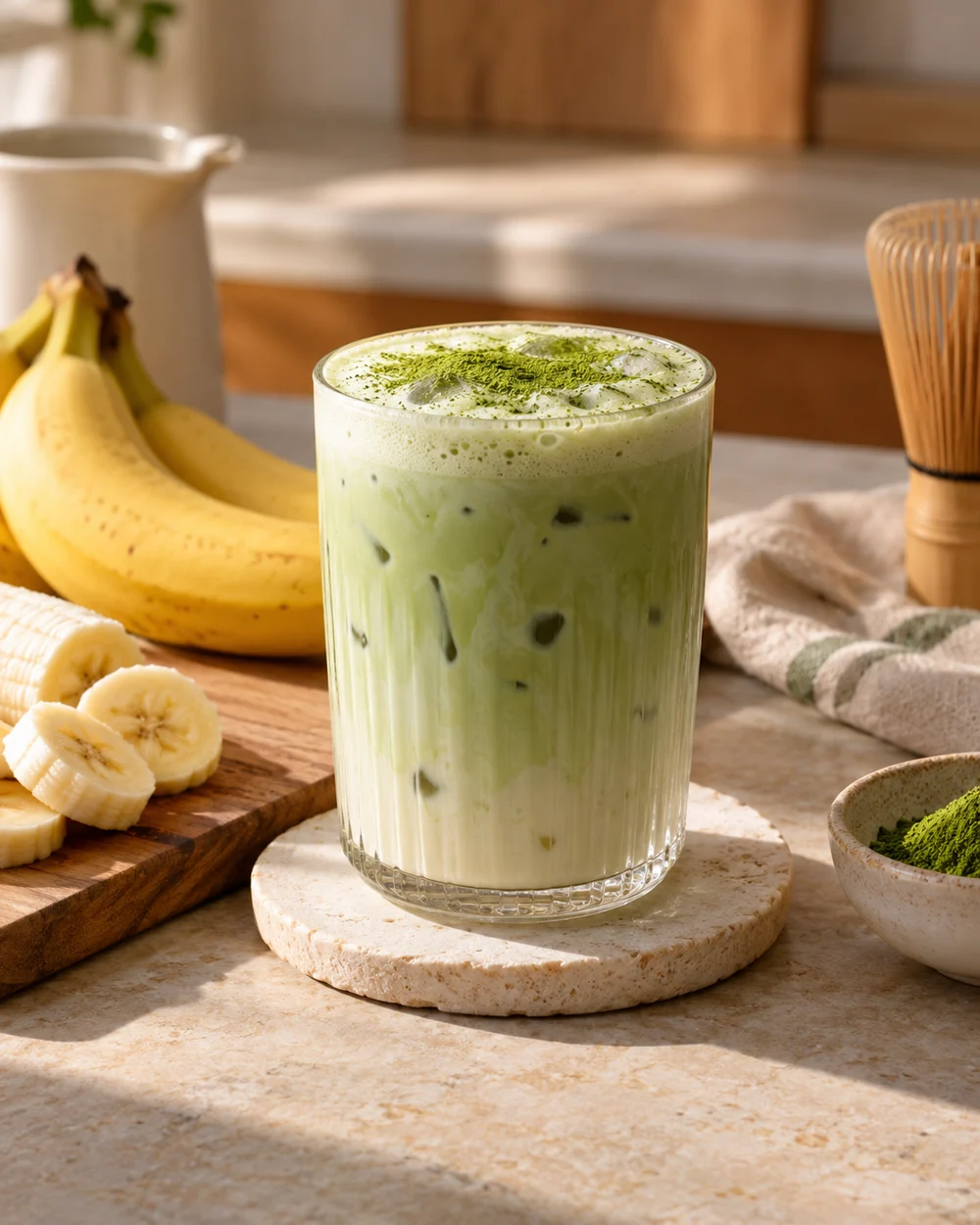
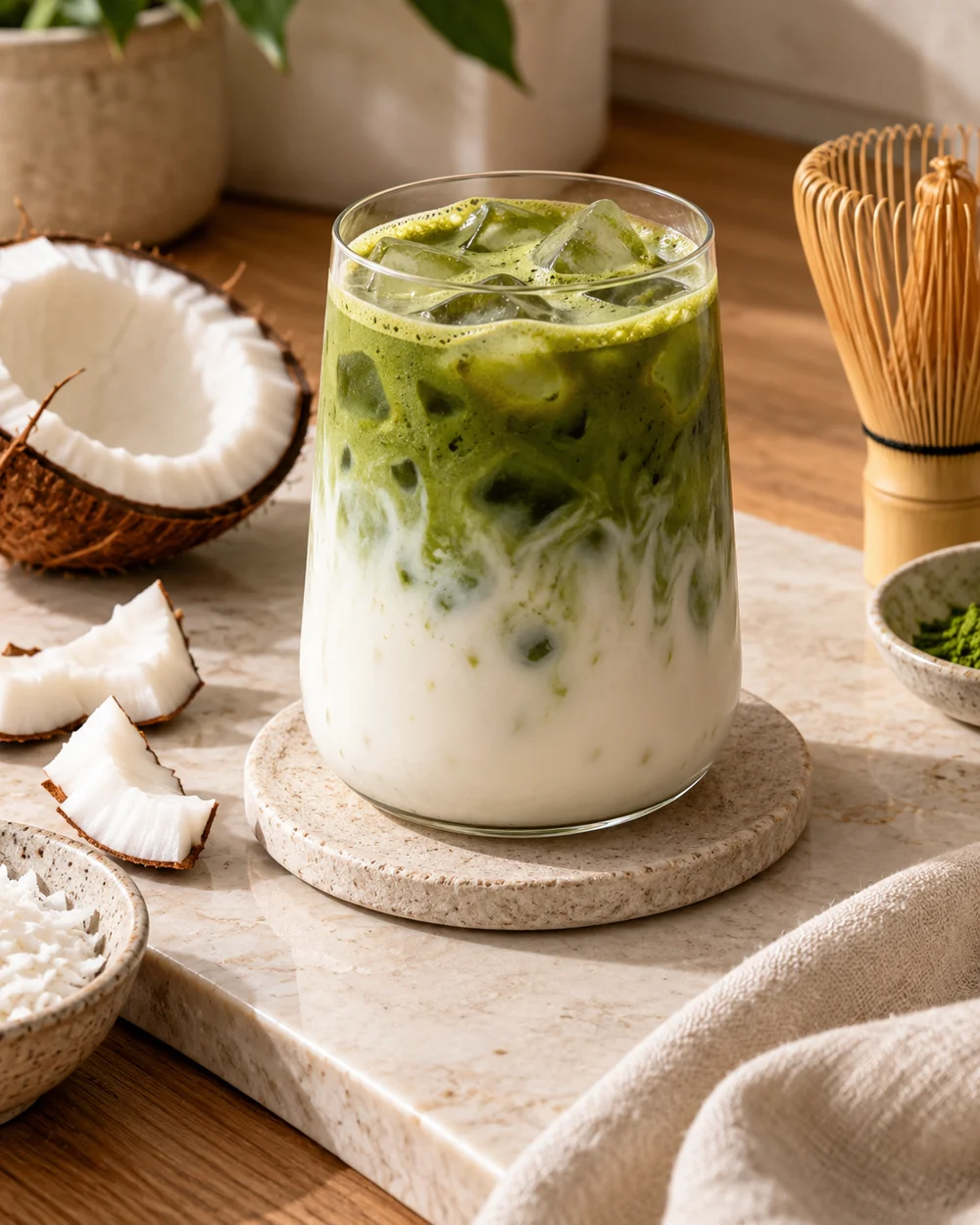
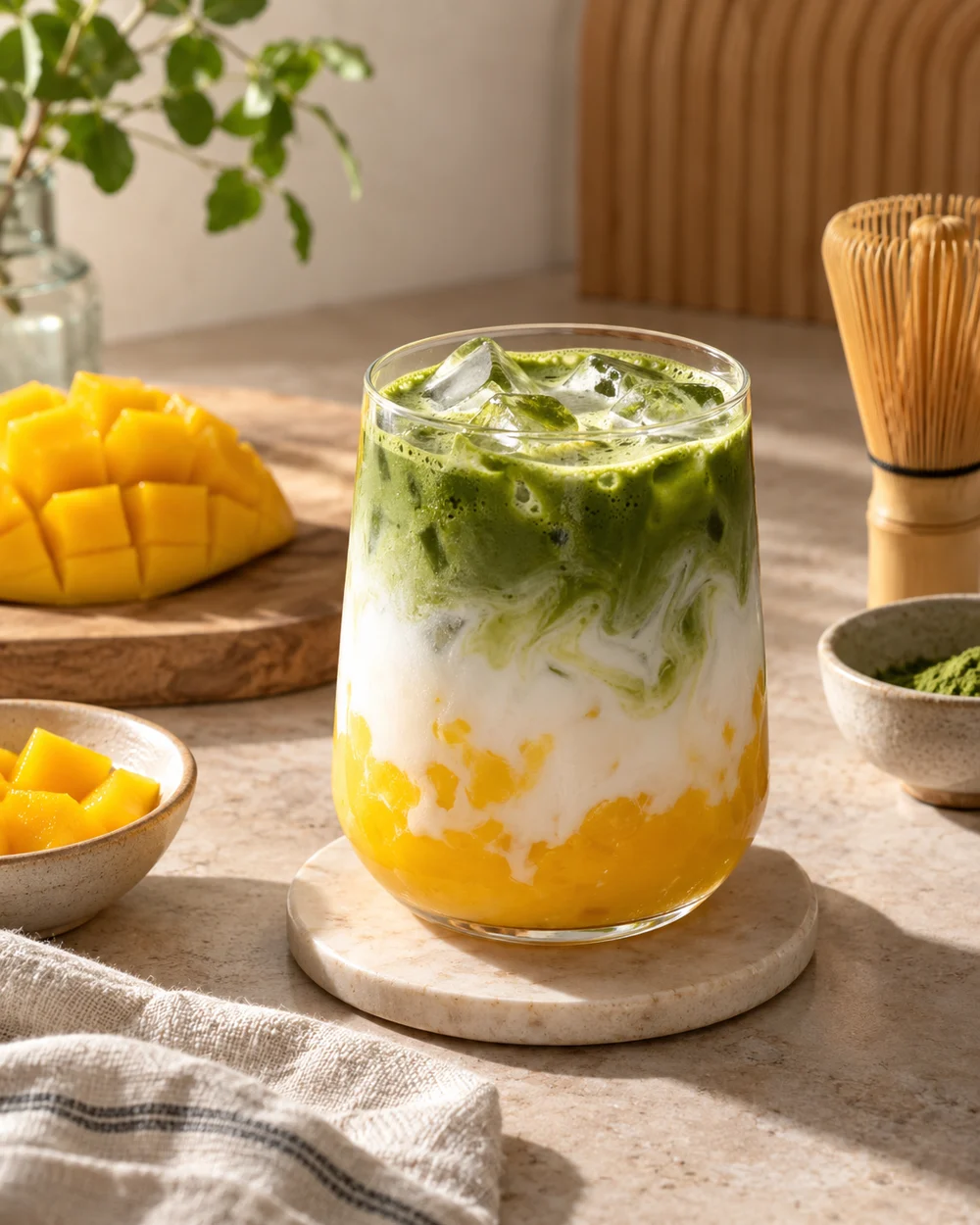
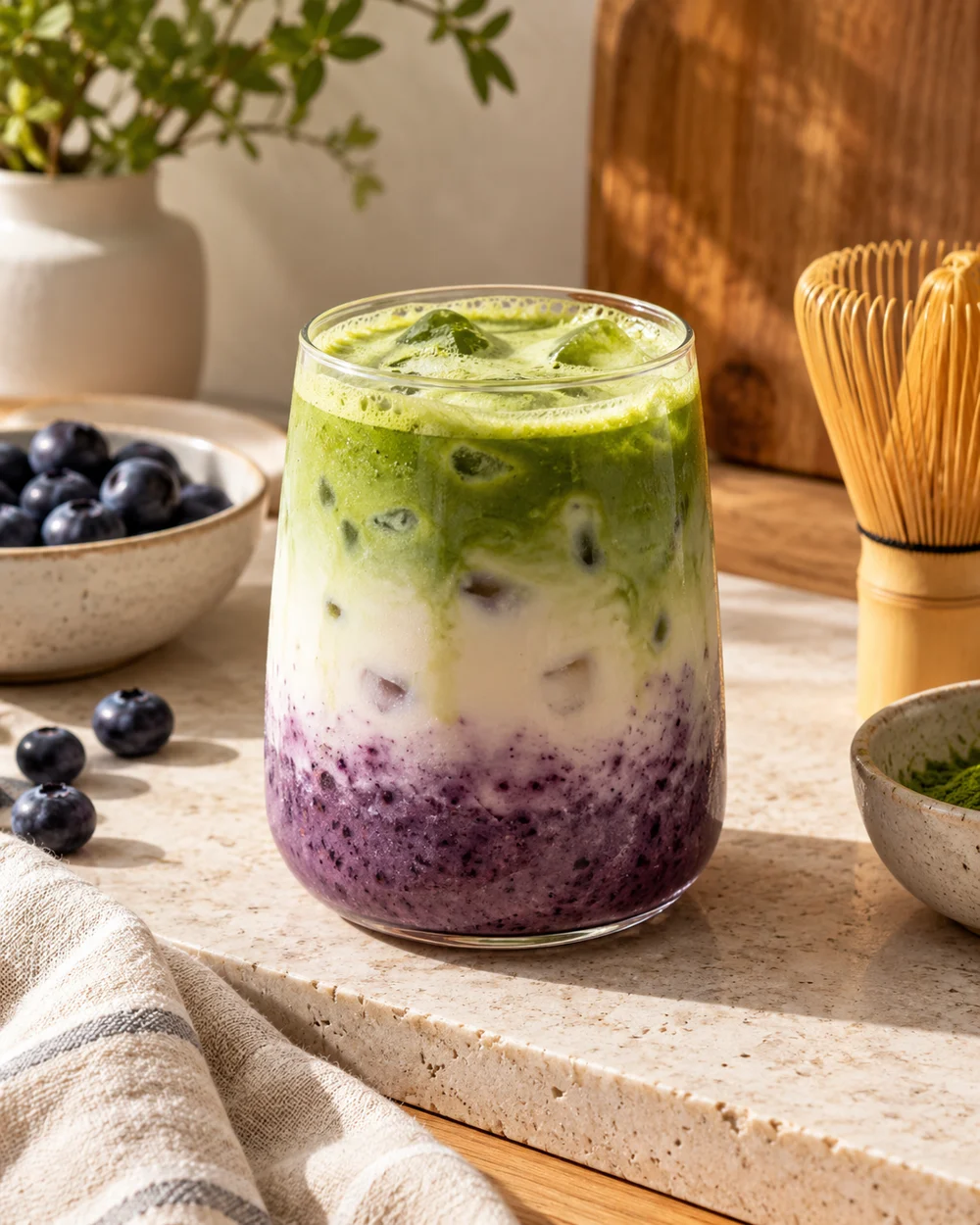
Representative category illustration reused from our editorial library; it does not depict this specific project or a tested result.
Dry Sifting as the Mechanical Baseline
No suspension technique fully corrects un-sifted, densely compacted matcha powder. Before introducing any liquid, pass your measured dose through a fine stainless-steel mesh sieve directly into a wide-bottomed bowl. Use the back of a small spoon to gently press the powder through the wire grid. This separates compressed pellets into discrete particles, maximizing the surface area available to contact water immediately. Skipping this primary physical separation drastically increases the time and friction required during the subsequent whisking stage.
Controlling the Initial Water Ratio
The volume of liquid used for the initial blend makes a significant difference. If you pour a full 150 ml portion immediately, the powder scatters too widely across the bowl and escapes the whisk tines. Instead, use roughly 30 ml of water for an illustrative 2-gram dose of sifted matcha. This low-volume mixture keeps the powder concentrated in direct path of the tines, providing enough body to break down small clusters quickly before the remaining liquid is added.
Thermal Constraints on the Base Liquid
Water temperature plays a major role in how readily matcha disperses and tastes. Using actively boiling water at 100°C can scorch delicate tea compounds, increasing bitterness and causing fine particles to clump tightly together. Conversely, cold water wets the powder too slowly to break down clusters with a standard whisk. Aim for water around 70°C to 80°C. At this temperature, the powder hydrates smoothly and disperses into an even, rich concentrate within twenty to thirty seconds of steady whisking.
Executing the Shear Motion
Avoid stirring the mixture in a circular sweep around the bowl walls, which merely pushes powder clusters along in a gentle swirl. Rest the tines of your whisk lightly above the bottom surface. Move your wrist briskly in a linear, back-and-forth zigzag pattern resembling the letters W or M. This rapid crossing motion forces liquid between the narrow tines, breaking apart trapped dry pockets and suspending the finely ground leaf material evenly.
Dilution Sequence and Base Blending
Once the 30 ml concentrate exhibits a uniform, glossy sheen without specks on the vessel wall, introduce the remaining liquid base. If preparing an iced beverage, pour the concentrate directly over chilled milk or cold water; the fully dispersed particles will remain suspended rather than sedimenting immediately. If preparing a warm tea, gently pour an additional 60 to 90 ml of 70°C water down the vessel wall, integrating the layers with three slow, broad circular folds.
A little more
to know.
Can I make this concentrate using cold milk instead of warm water?
Cold milk contains fat globules and cold proteins that coat dry powder clusters, inhibiting rapid wetting. Always disperse the matcha in warm water first before combining it with cold dairy or plant liquids.
Will an electric handheld frother work with the 30 ml volume?
A motorized mini-whisk operates effectively in 30 ml if tilted at a 45-degree angle in a narrow cup, though it introduces more air bubbles than a traditional bamboo whisk.
Original editorial guidance and recipe formulations, not independently kitchen-tested. Times are estimates and depend on equipment and product directions. Cooked bases need additional cooling and refrigeration before cold serving. Images are AI-generated illustrations; appearance and yield may vary. Check actual ingredient labels, allergens, and any certification you require. We do not certify products. Read our approach.
Save to Pinterest ↗ANOTHER IDEA FOR THE COUNTER