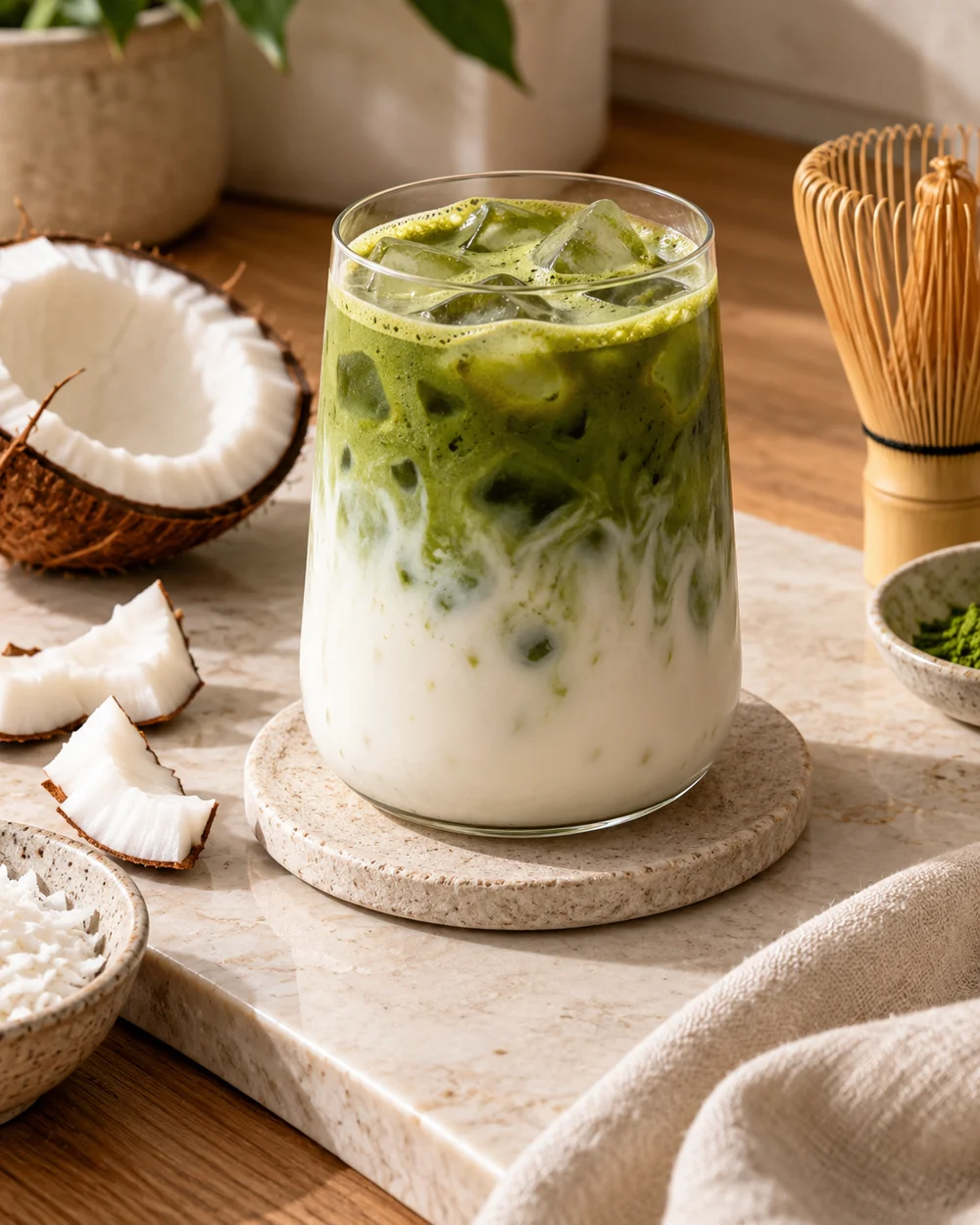
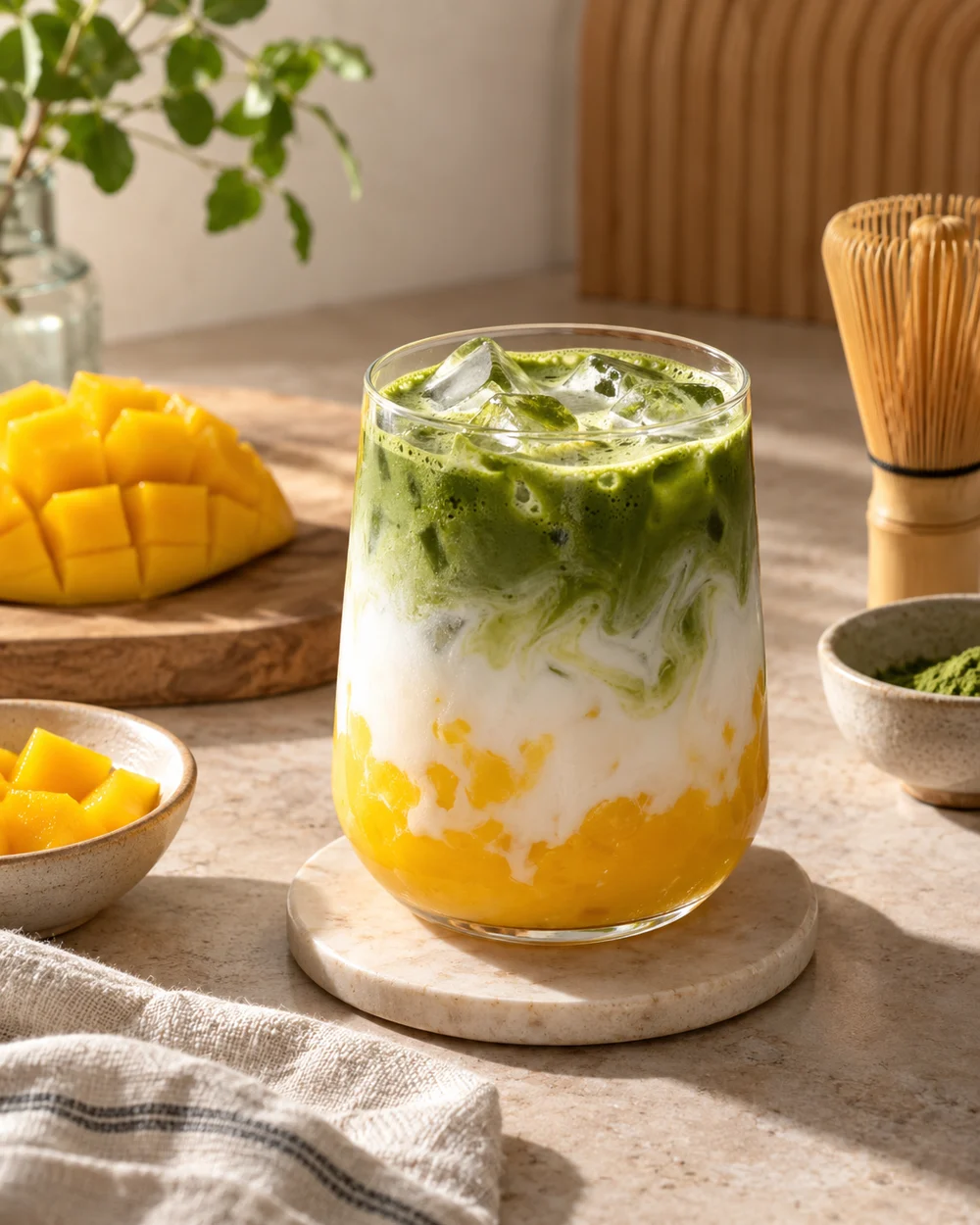
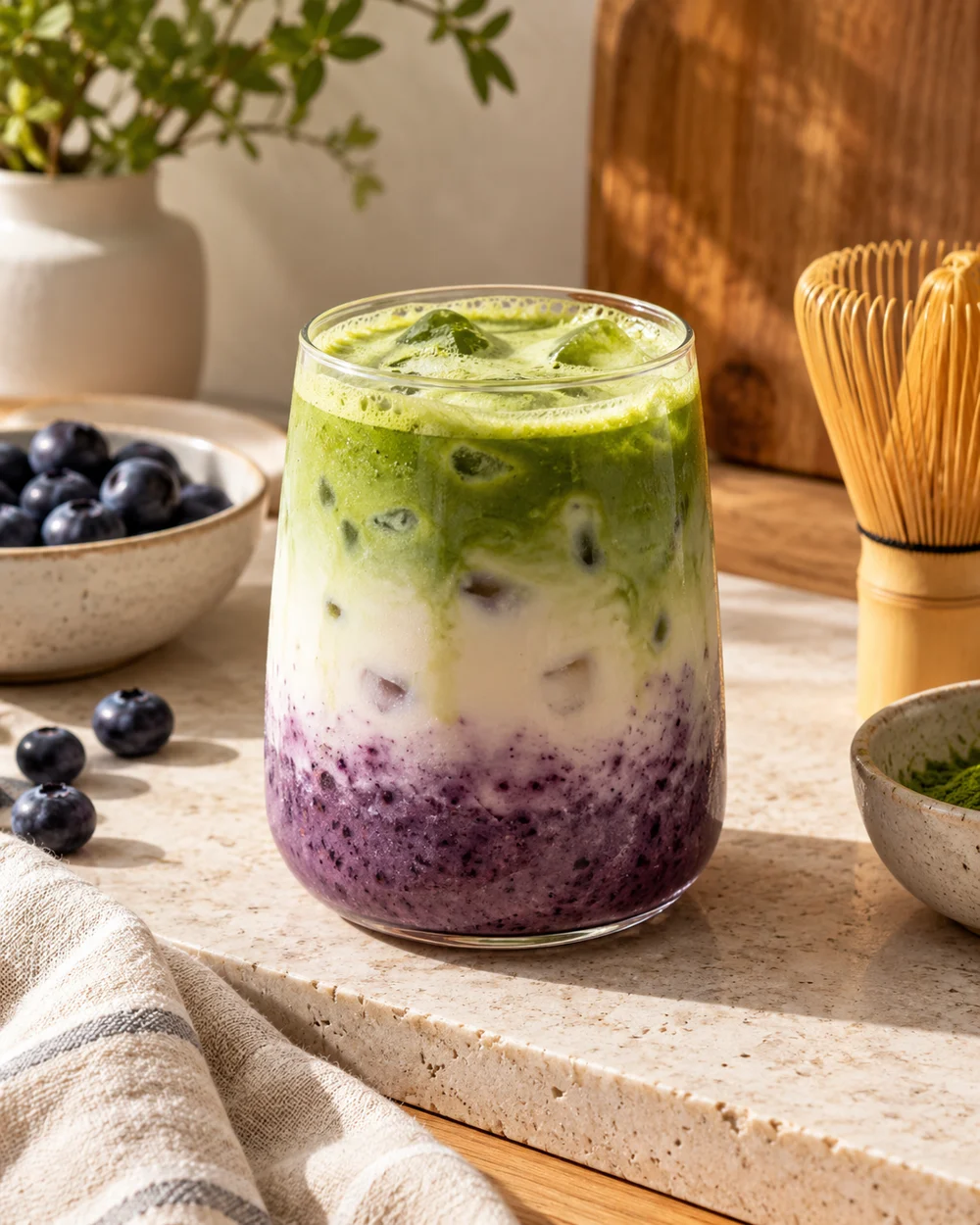
Whisk Ceremonial Matcha to Avoid Clump Streaks on Glassware
Serving cold or hot matcha drinks in clear glassware quickly highlights preparation mistakes, such as dark green streaks and stubborn powder clumps sticking to the glass. Finely milled green tea powder naturally clings to itself and forms dry lumps when poured straight into liquid. Overcoming these clumps requires a straightforward routine: sifting the powder through a fine strainer, mixing an initial smooth paste with a small splash of water, and whisking thoroughly before pouring so the drink stays evenly blended and the glassware remains clean.
Read the note ↓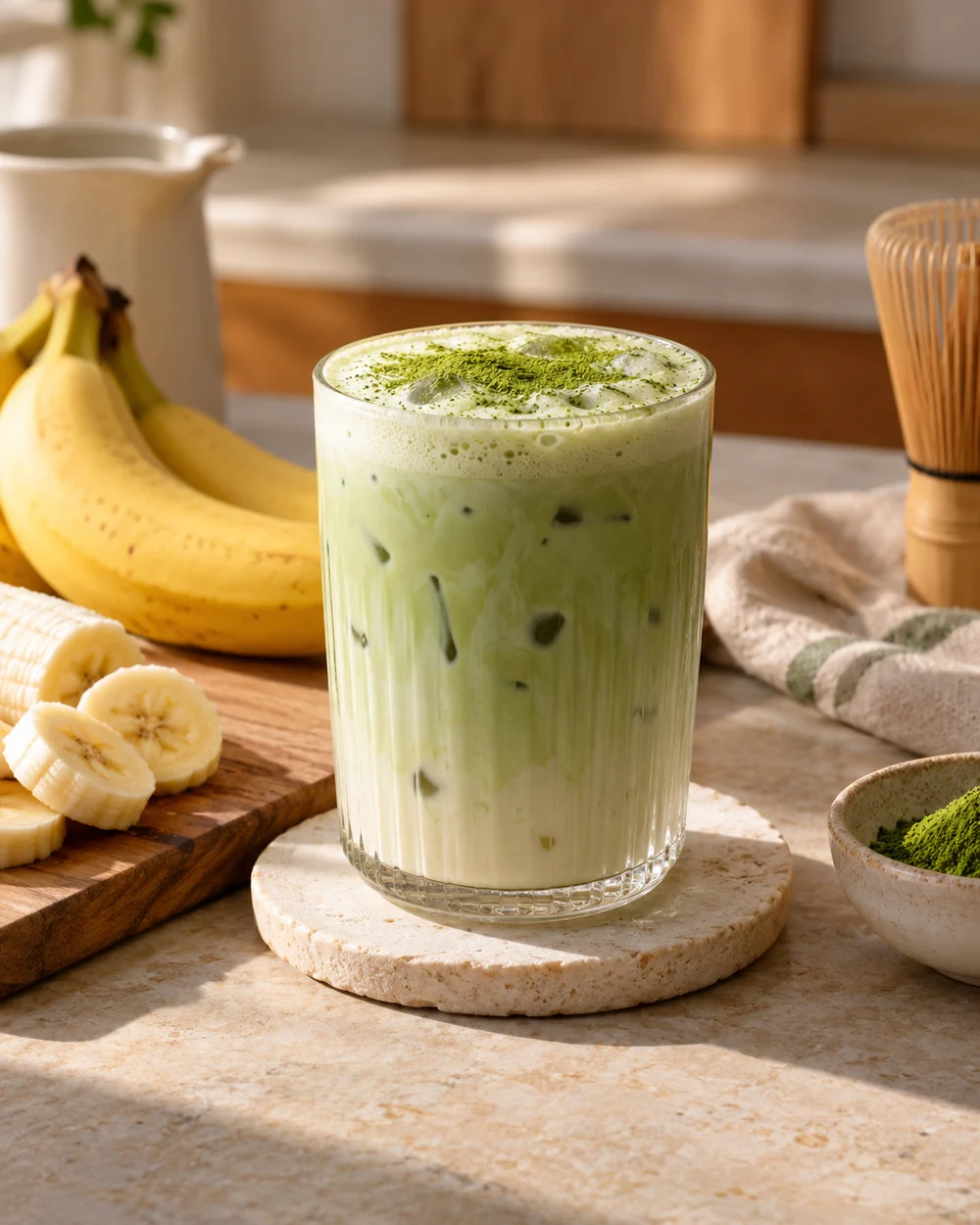
Representative category illustration reused from our editorial library; it does not depict this specific project or a tested result.
Sift Through Fine Stainless Mesh
Milled green tea powder easily compacts inside storage tins during shipping and handling, forming small, dense lumps. Scooping compressed powder directly into water leaves dry centers that resist mixing. Always pass your measured matcha portion through a small, fine-mesh tea sifter directly into your preparation bowl. Lightly tap the rim of the sifter or press the powder through the wire weave using a dry bamboo scoop. Sifting breaks up all compacted clumps so the powder hydrates quickly and evenly when liquid is introduced.
Build a Concentrated Wetting Paste
Pouring the full volume of water directly over loose matcha powder causes it to float and cluster against the sides of the bowl. Instead, start with a planning portion of roughly 15 milliliters of water over 2 grams of sifted matcha. Using the tips of a bamboo whisk or a small silicone spatula, gently work the powder and water together in small circular strokes until a smooth, glossy paste forms. Creating this smooth paste first breaks down any remaining dry flecks completely before you add the rest of the liquid.
Control Water Temperature for Dispersion
Pouring boiling water over delicate green tea scorches the leaf powder, producing harsh, bitter flavors and making smooth whisking more difficult. For the main dilution, use hot water heated to around 70 to 80 degrees Celsius. Pour approximately 50 to 60 milliliters of this hot water into your smooth matcha paste. This moderate temperature allows the tea powder to disperse cleanly into the water, preserving fresh, sweet grassy notes without scalding the tea or leaving gummy residues on glassware.
Execute High-Frequency Linear Agitation
Circular stirring simply spins matcha around the bowl instead of whipping it into an even blend. Hold a pre-soaked bamboo whisk with the tips resting just above the bottom of the bowl. Whisk briskly using a rapid back-and-forth or W-shaped motion from your wrist for about 20 to 30 seconds. This vigorous linear motion suspends the fine tea powder evenly and builds a light, frothy crema on the surface, ensuring the liquid pours cleanly without dropping sediment.
Pour into Glassware Without Wall Contact
When preparing iced or layered matcha drinks, pouring green tea liquid directly against the dry glass wall often leaves dark streaks that stick to the sides. Pour the whisked matcha steadily into the center of the glass over the milk or water base. If adding ice, place the ice cubes into the milk or water before pouring the matcha. Pouring into liquid rather than directly over dry ice cubes prevents the tea from adhering to cold surfaces and maintains a clean, attractive glass.
A little more
to know.
Why does sifted matcha still clump if mixed directly with cold milk?
Cold milk makes fine tea powder clump because cold liquids do not hydrate dry matcha quickly, and milk fats slow down wetting. Always whisk sifted matcha in a small splash of warm or room-temperature water first, then combine the smooth concentrate with cold milk.
Can an electric handheld frother replace a bamboo whisk for streak-free drinks?
Yes, provided powder is sifted and pre-wetted into a paste first. Submerge frother coils fully before activating at low speed to prevent splattering and excessive, large bubble formation.
Original editorial guidance and recipe formulations, not independently kitchen-tested. Times are estimates and depend on equipment and product directions. Cooked bases need additional cooling and refrigeration before cold serving. Images are AI-generated illustrations; appearance and yield may vary. Check actual ingredient labels, allergens, and any certification you require. We do not certify products. Read our approach.
Save to Pinterest ↗ANOTHER IDEA FOR THE COUNTER