Warm a Glass Server Before Pouring Drip Coffee Into It
A glass server pulled straight from a cupboard is at room temperature or cooler, and hot drip coffee poured into it loses heat immediately to the cold glass walls. The temperature drop happens in the first few seconds of contact and continues as long as the glass remains cooler than the liquid inside. Warming the server with hot water for about a minute before brewing is a simple step that reduces that initial heat loss and keeps the coffee closer to its brewed temperature for longer after you pour.
Read the note ↓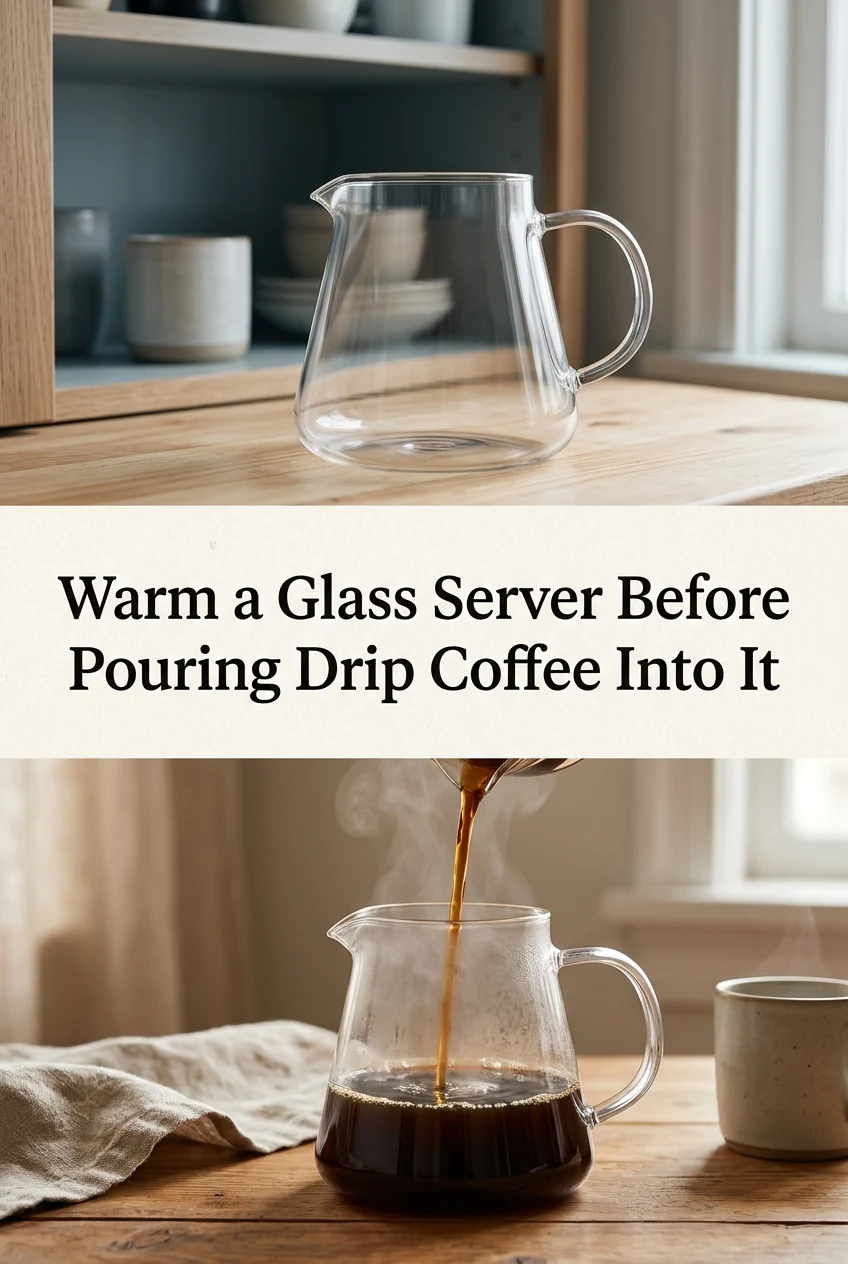
AI-generated editorial concept created for this article. The image is not a technical diagram or a tested result.
Fill the Server with Hot Tap Water Before Brewing
Before you begin measuring coffee or filling the reservoir of your drip brewer, fill the glass server with hot water from your tap. The goal is to raise the temperature of the glass itself, not to heat the water to a precise degree. Let the hot water sit in the server for approximately one minute while you prepare the brewer. One minute of contact is a practical working estimate for a standard glass server; thicker glass may benefit from slightly longer contact time.
Empty the Server Completely Before Placing It
Pour out all the warming water immediately before placing the server in position to receive the brew. Leaving even a small amount of water in the server dilutes the first portion of coffee that drips in. Shake the server gently over a sink to remove residual drops, then place it on the warming plate or drip position right away. Do not let the emptied server sit on the counter for several minutes before brewing starts, as the glass will begin cooling again during that wait.
Check That the Server Is Dry on the Outside
Water on the outside of the glass server can cause it to slip when you lift it, and on a warming plate it can create steam or uneven contact. After emptying the warming water, wipe the outside of the server with a dry cloth before placing it. This step takes only a few seconds but matters for safe handling, particularly when the server will be warm and the outside surface is wet from the pre-warming process.
Understand What Pre-Warming Does and Does Not Do
Pre-warming reduces the initial temperature shock between the hot coffee and the cold glass, which slows the early rate of heat loss. It does not keep coffee hot indefinitely, and it does not replace a thermal carafe for long-term temperature retention. If you need coffee to stay hot for more than twenty to thirty minutes, a pre-warmed glass server on a warming plate is a different tool from an insulated vessel. Pre-warming is most useful when you plan to serve the coffee within a short time of brewing.
Apply the Same Logic to Mugs and Cups
The same principle applies to individual mugs. A cold ceramic mug draws heat from drip coffee in the same way a cold glass server does. Filling a mug with hot tap water for thirty to sixty seconds before pouring coffee into it keeps the drink warmer through the first half of the cup. Empty and dry the mug before pouring, just as with the server. This is a straightforward habit that requires no additional equipment and adds under two minutes to the preparation routine.
A little more
to know.
Will pre-warming crack a glass server if the glass is cold from the refrigerator?
Thermal shock is a real risk with glass that has been refrigerated. If the server has been in a cold environment, bring it to room temperature first before introducing hot water. Follow any care guidance provided by the server manufacturer.
Does the warming plate on a drip brewer make pre-warming unnecessary?
A warming plate maintains temperature after brewing but does not fully compensate for the initial heat absorbed by cold glass during the first pour. Pre-warming addresses that first-contact drop, which the plate alone does not prevent.
Original editorial guidance and recipe formulations, not independently kitchen-tested. Times are estimates and depend on equipment and product directions. Cooked bases need additional cooling and refrigeration before cold serving. Images are AI-generated illustrations; appearance and yield may vary. Check actual ingredient labels, allergens, and any certification you require. We do not certify products. Read our approach.
Save to Pinterest ↗ANOTHER IDEA FOR THE COUNTER