Warm a Ceramic Server With Hot Water Before Pouring a Pour-Over Brew Into It
A ceramic server sitting at room temperature can pull several degrees from freshly brewed pour-over coffee within the first minute of contact. That temperature drop happens before you pour a single cup. Pre-warming the server with hot water is a simple step that takes under two minutes and meaningfully reduces that initial heat loss, keeping your brew closer to serving temperature from the first pour to the last.
Read the note ↓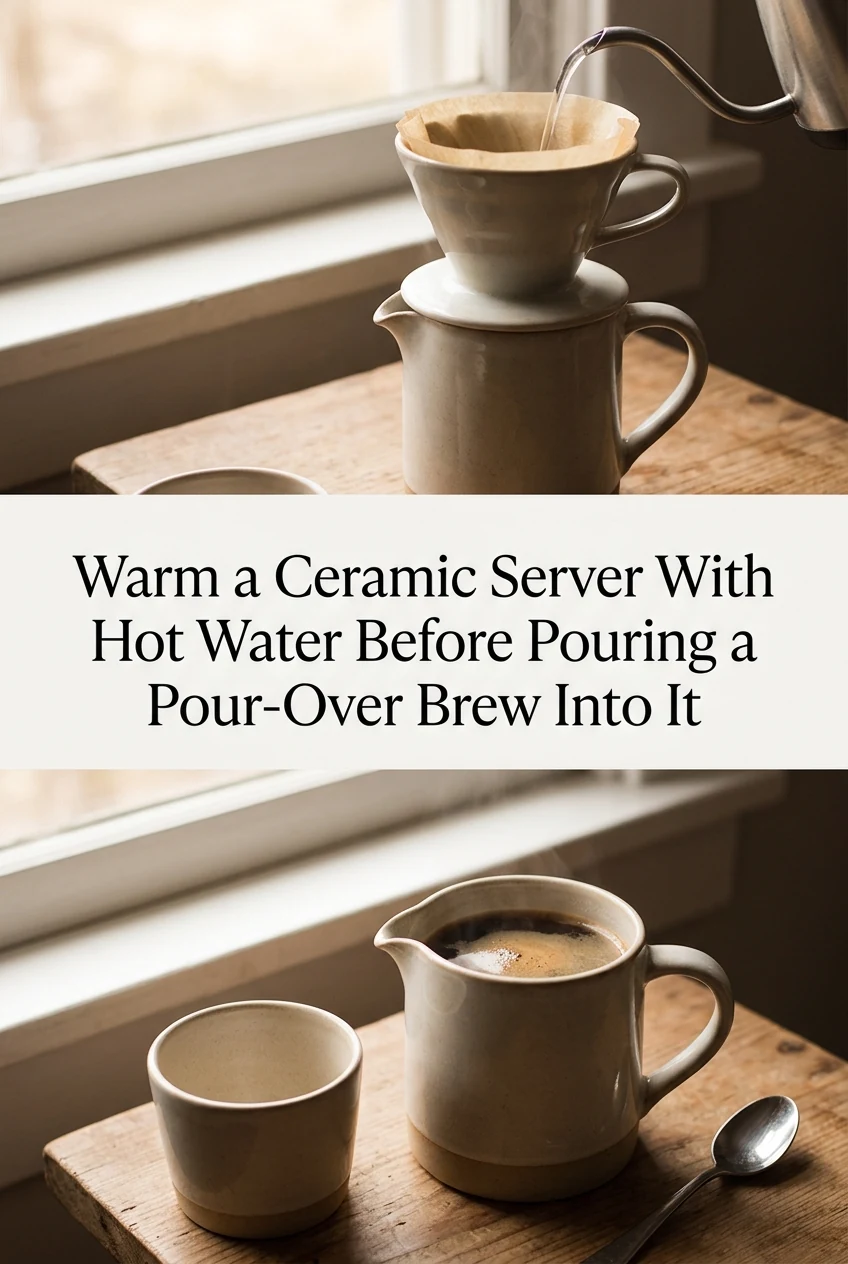
AI-generated editorial concept created for this article. The image is not a technical diagram or a tested result.
Why Ceramic Absorbs Heat So Quickly
Ceramic has a relatively high thermal mass compared to thin glass. When hot liquid contacts a cold ceramic surface, heat transfers rapidly from the liquid into the vessel walls until both reach equilibrium. A server at 20 degrees Celsius can drop a 90-degree brew by several degrees in the first minute of contact alone. Thicker ceramic servers and those with wider bases show this effect more noticeably because more surface area is in contact with the coffee at once.
The Pre-Warming Step in Practice
Fill the ceramic server with hot tap water or water from your kettle, enough to cover the bottom third of the interior. Swirl it gently so warm water contacts the sides, then let it sit for 60 to 90 seconds. Pour the water out completely just before you begin your pour-over brew. The server walls are now warm to the touch and will absorb significantly less heat from the incoming coffee. This step adds under two minutes to your total setup time.
When Pre-Warming Makes the Most Practical Difference
Pre-warming matters most when the server has been stored in a cool kitchen, when you are brewing a small volume such as 250 to 350 milliliters into a large server, or when you plan to let the brew sit for several minutes before serving. A small volume of coffee in a large cold vessel loses temperature faster than a full server would. If you pour directly into a warmed cup immediately after brewing, the server's temperature matters less.
Using the Rinse Water Purposefully
The water you use to pre-warm the server does not need to be discarded wastefully. Pour it into your cups to pre-warm those at the same time, then empty the cups just before serving. This extends the benefit through the entire serving chain. Alternatively, use it to rinse your paper filter if your workflow allows. Coordinating the rinse water across multiple steps keeps your setup efficient without adding extra water use.
Checking Whether Your Server Retains Warmth
After pre-warming, place your hand near the outside of the server. It should feel noticeably warm rather than room temperature. If it still feels cool, the water you used was not hot enough or the soak time was too short. Repeat with hotter water and a full 90-second soak. Servers with lids retain warmth longer after brewing, so fitting the lid immediately after the brew finishes is worth doing if your server includes one.
A little more
to know.
Does pre-warming the server change the flavor of the coffee?
Pre-warming does not alter flavor directly, but serving coffee at a higher temperature means you taste it closer to the intended brew temperature. Some flavor compounds are more perceptible within a specific temperature range, so temperature maintenance can affect your overall impression.
Is there a risk of thermal shock when pouring hot water into a cold ceramic server?
Most ceramic servers sold for brewing use are designed to handle hot liquids. Using hot rather than boiling water and avoiding sudden temperature extremes reduces any risk. Check your server's care instructions for specific guidance from the manufacturer.
Original editorial guidance and recipe formulations, not independently kitchen-tested. Times are estimates and depend on equipment and product directions. Cooked bases need additional cooling and refrigeration before cold serving. Images are AI-generated illustrations; appearance and yield may vary. Check actual ingredient labels, allergens, and any certification you require. We do not certify products. Read our approach.
Save to Pinterest ↗ANOTHER IDEA FOR THE COUNTER