Strain a Fruit Cooler Through a Fine Sieve Into a Serving Jug
Blending whole fruit produces a drink full of pulp, seed fragments, and skin particles that make the texture uneven and the pour unpredictable. Running the blended mixture through a fine sieve before serving removes these solids and produces a smooth, translucent cooler that pours cleanly into glasses. The technique requires knowing how much pressure to apply, which sieve mesh to use, and when to stop pressing so that bitter compounds from seeds or pith do not enter the finished drink.
Read the note ↓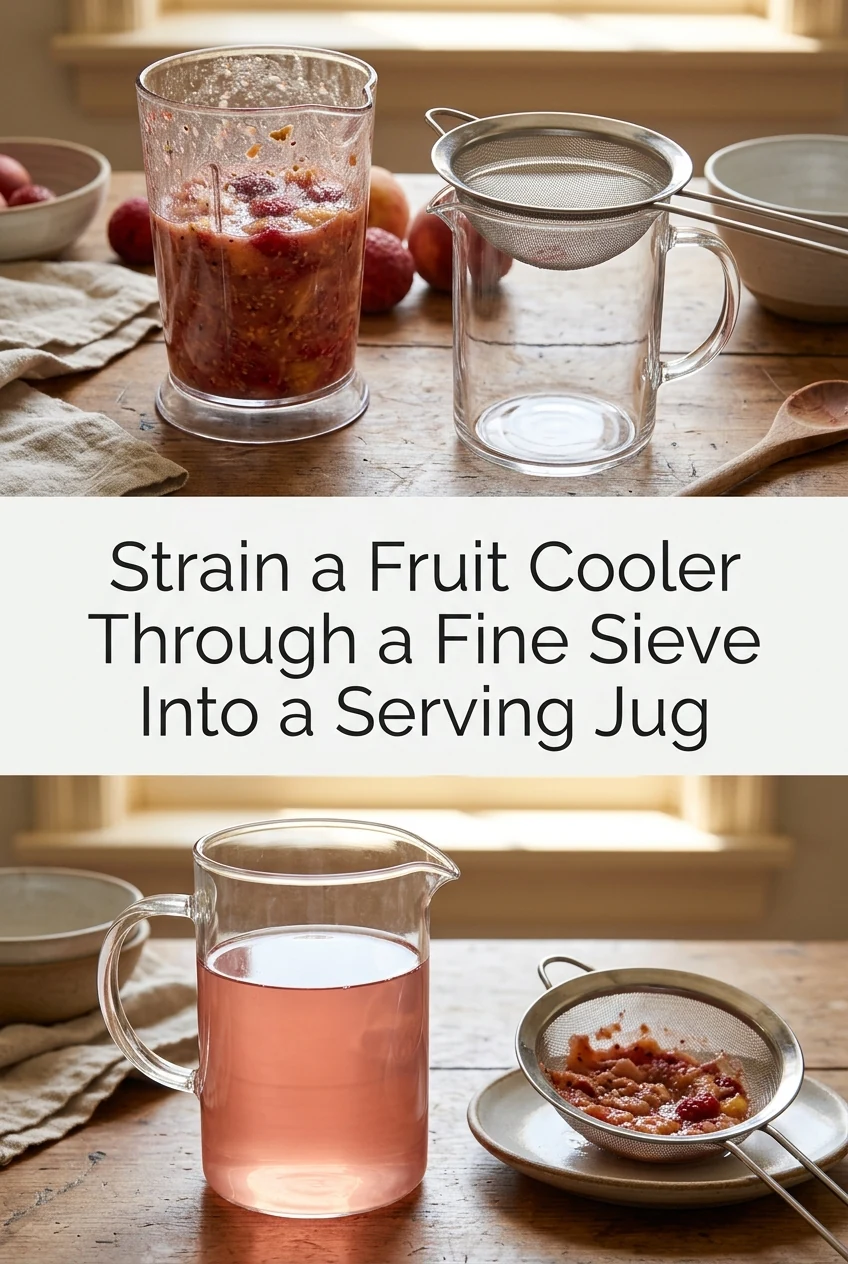
AI-generated editorial concept created for this article. The image is not a technical diagram or a tested result.
Select the Right Sieve for the Job
A fine-mesh stainless steel sieve with a mesh count between 40 and 60 strands per 2.5 centimetres removes most pulp and small seeds from blended fruit drinks without requiring multiple passes. A coarser sieve leaves visible pulp; a very fine conical strainer designed for stocks is unnecessary and slows the process considerably. Choose a sieve wide enough to sit stably across the opening of your serving jug, typically 18 to 22 centimetres in diameter for a standard 1-litre jug. Stability matters because you will be pressing with a spoon.
Blend the Fruit Cooler First, Then Strain
Blend your fruit cooler fully before straining. For a two-serving watermelon cooler as an illustrative example, blend 400 grams of seedless watermelon flesh with 120 millilitres of cold water and the juice of half a lime until smooth, approximately 20 to 30 seconds on medium speed. Do not strain mid-blend or add ice before straining; ice dilutes the liquid and makes it harder to press pulp effectively. The blended mixture should be at refrigerator temperature or colder before you begin straining.
Pour in Batches and Let Gravity Work First
Pour roughly half the blended mixture into the sieve and allow it to drain by gravity for 30 to 45 seconds before touching it. Much of the liquid passes through on its own, and letting it do so means you press less overall, reducing the risk of forcing bitter solids through the mesh. Hold the sieve handle steady over the jug and resist the urge to stir or press immediately. Once the flow slows to a drip, you are ready to apply gentle pressure to the remaining pulp.
Press Gently and Know When to Stop
Use the back of a large spoon to press the pulp against the mesh in slow circular strokes. Apply light, even pressure rather than pushing straight down. Three to five strokes are usually sufficient to extract the remaining liquid from the pulp. Stop when the pulp feels dry and compact and the liquid coming through turns slightly cloudy or changes color. That color shift signals that you are beginning to press skin or seed material through the mesh, which can introduce bitterness. Discard the pressed pulp.
Finish, Chill, and Serve the Strained Cooler
Rinse the sieve immediately after each batch to prevent pulp from drying in the mesh, which makes it difficult to clean and can affect the next pour. Stir the strained liquid in the jug, taste, and adjust sweetness if needed before adding ice. If serving is not immediate, cover the jug and refrigerate at 4 degrees Celsius or below. Serve within two hours of preparation for best flavor and food safety. Do not leave the strained drink at room temperature for more than one hour if the ambient temperature exceeds 32 degrees Celsius.
A little more
to know.
Can I strain the cooler directly into individual glasses instead of a jug?
Yes, but the sieve must be small enough to balance on a glass rim, and you will need to reposition it for each glass. A jug is more practical for batches of two or more servings and reduces the risk of spills during pressing.
Does straining remove enough seeds to make the drink safe for people who avoid them?
Fine-mesh straining removes most seed fragments but is not a guaranteed complete removal method. For guests with specific dietary concerns about seeds, use seedless fruit varieties as the starting ingredient rather than relying on straining alone.
Original editorial guidance and recipe formulations, not independently kitchen-tested. Times are estimates and depend on equipment and product directions. Cooked bases need additional cooling and refrigeration before cold serving. Images are AI-generated illustrations; appearance and yield may vary. Check actual ingredient labels, allergens, and any certification you require. We do not certify products. Read our approach.
Save to Pinterest ↗ANOTHER IDEA FOR THE COUNTER