Store Roasted Coffee Beans Away From Countertop Heat Sources
Staging bags of roasted coffee directly beside an espresso machine or beneath under-cabinet task lighting exposes beans to constant thermal fluctuations. Roasted coffee beans are porous, chemically active structures containing delicate aromatic oils and trapped carbon dioxide. Exposure to ambient warmth accelerates lipid oxidation and drives off trapped gases prematurely. Establishing a dedicated storage spot in a cool, dark location away from appliance heat sources helps maintain bean freshness and promotes predictable extraction flow rates.
Read the note ↓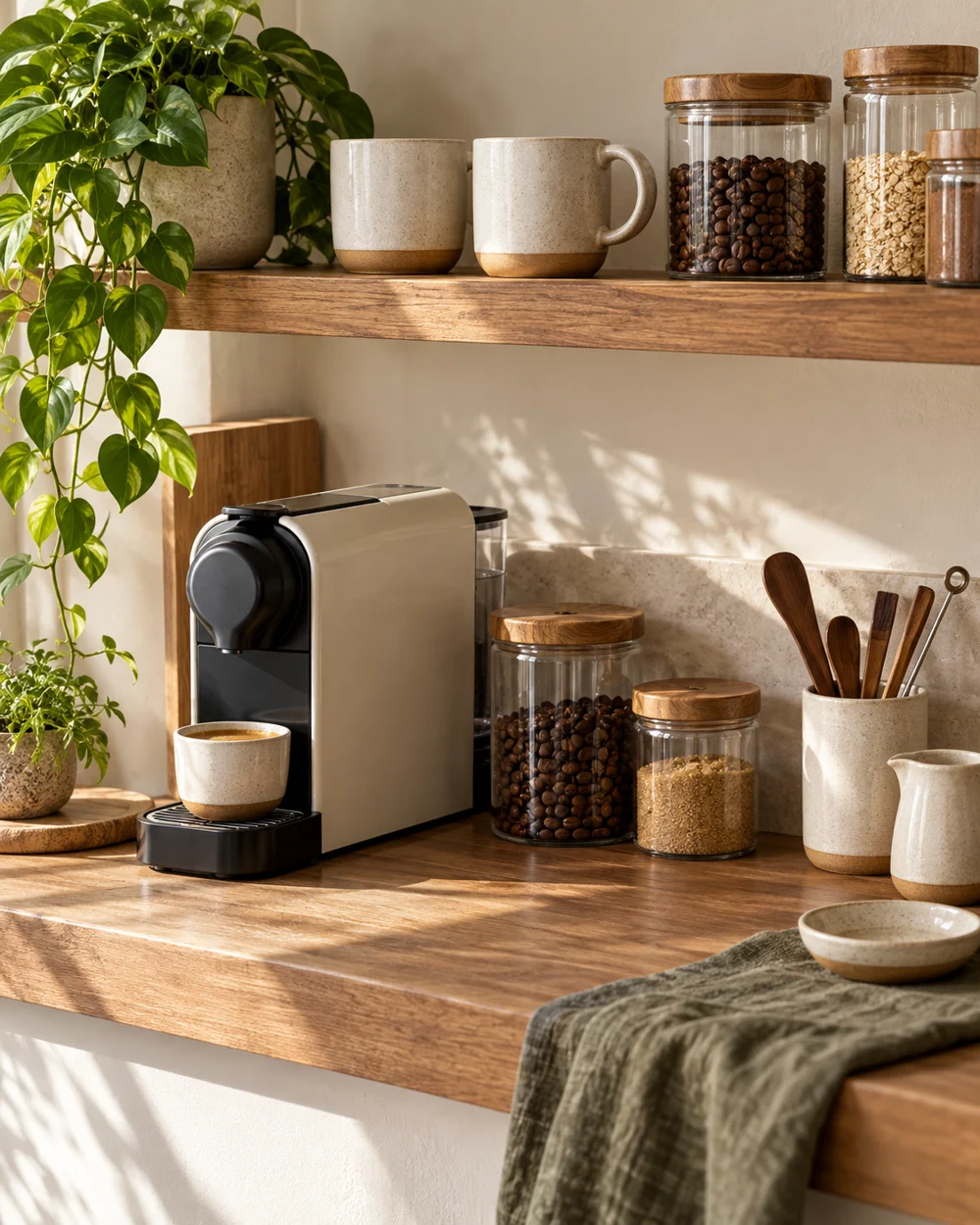
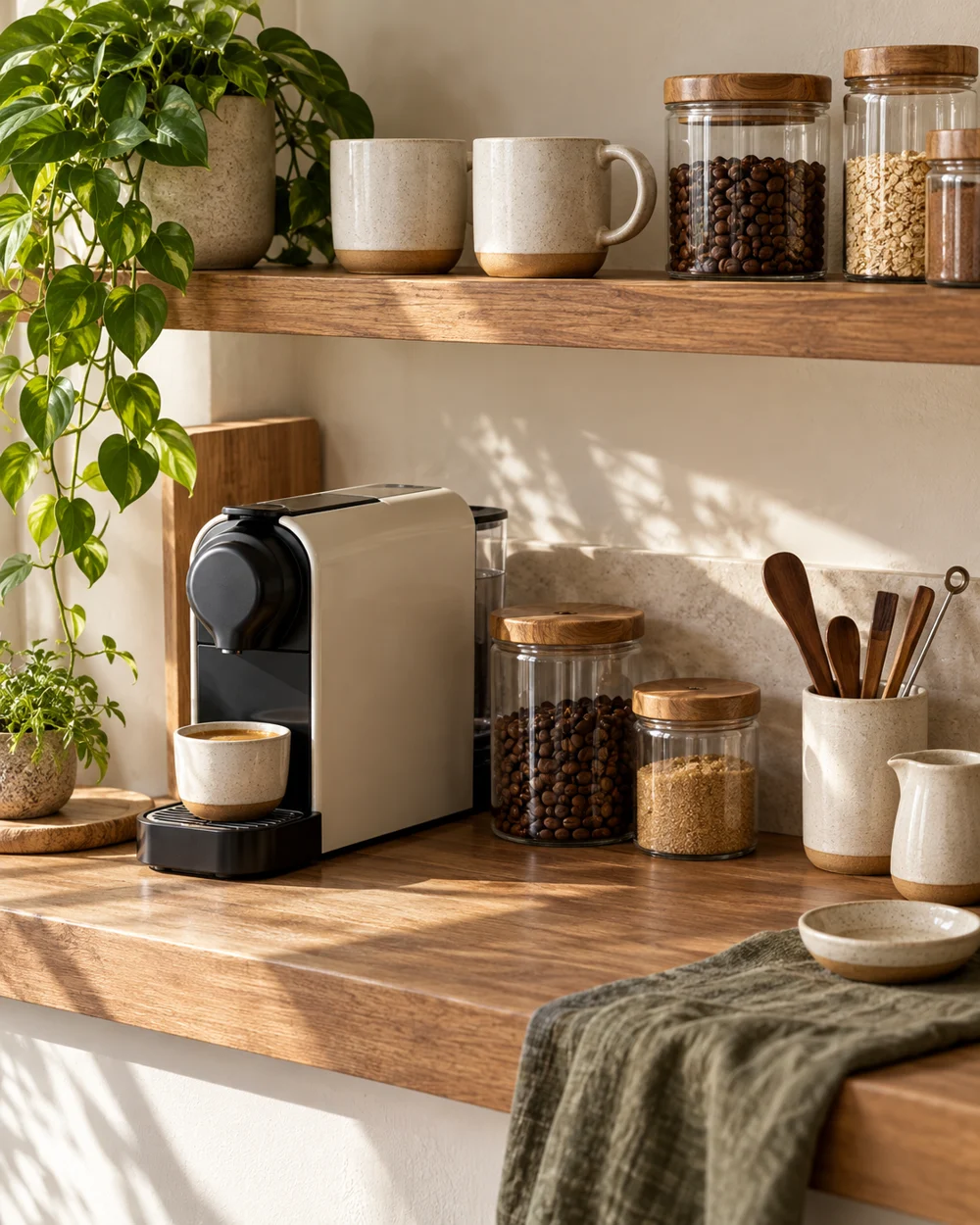
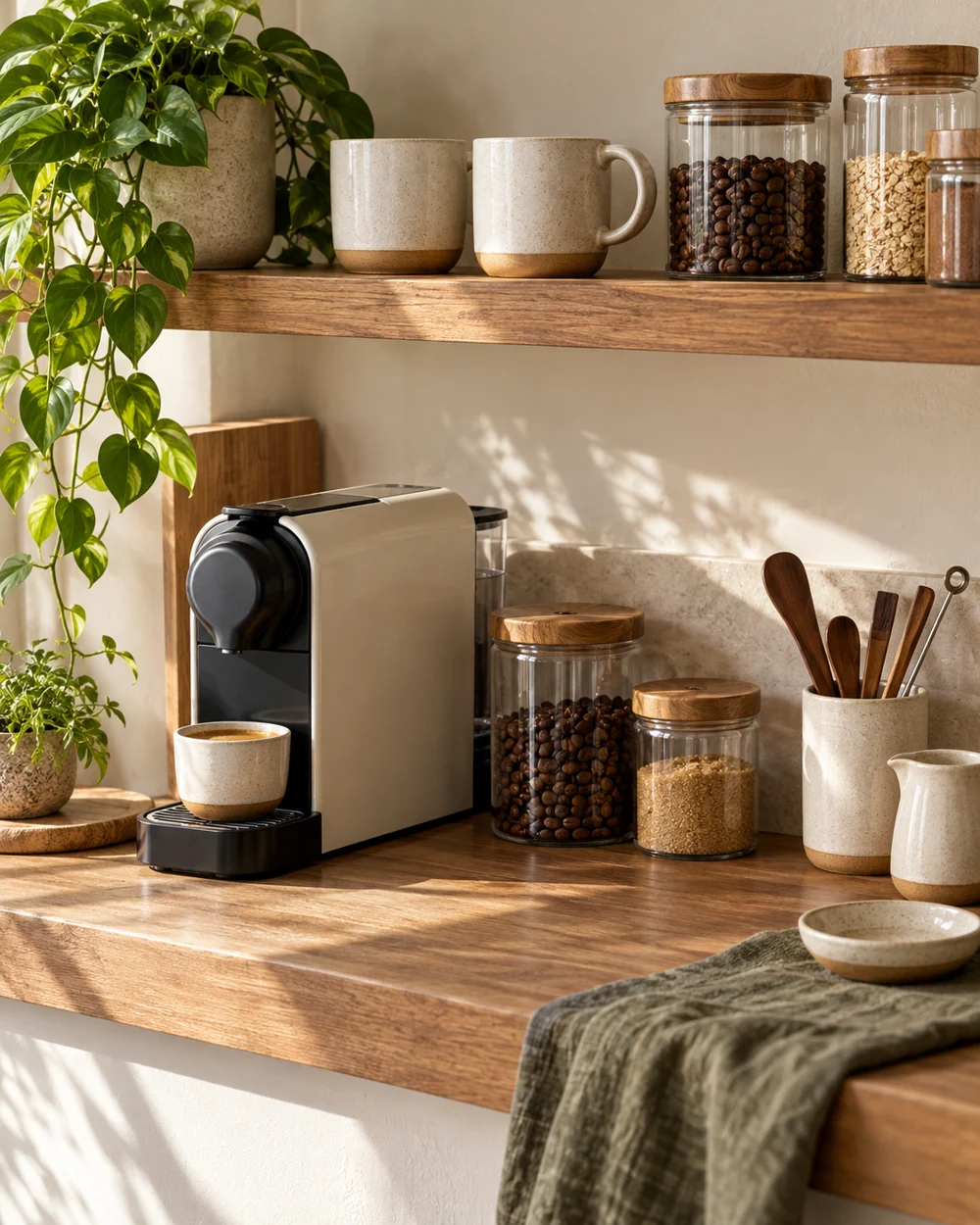
Representative category illustration reused from our editorial library; it does not depict this specific project or a tested result.
Identify Countertop Heat Zones
Kitchen countertops contain localized microclimates created by household appliances. Dual-boiler espresso machines, dishwashers, toaster ovens, and refrigerators continuously vent radiant heat into their immediate surroundings. A bag of coffee resting close to an active machine boiler sits in an elevated temperature zone compared to the rest of the room. Warm environments accelerate the migration of volatile oils to the bean exterior, where they contact ambient air and undergo faster staling.
Select Opaque Degassing Packaging
Store roasted beans inside their original multi-ply foil bags equipped with one-way degassing valves, or move them into opaque ceramic or stainless steel canisters. Clear glass jars allow ambient light to reach the beans, triggering light-induced oxidation that degrades flavors even at moderate temperatures. The one-way valve permits escaping carbon dioxide to vent without letting outside air in. Gently press excess air from flexible valve bags before pressing the airtight seal closed.
Establish Physical Clearance from Heat and Steam
Position the primary coffee bean storage area at least one meter away from cooking ranges, toaster ovens, and espresso boilers. An interior kitchen cabinet or pantry shelf held at stable room temperature offers an effective environment. Avoid cupboards located directly over an electric kettle, sink, or cooktop, as rising steam and heat plumes penetrate cabinet bases, creating humidity and temperature swings that degrade coffee bean freshness.
Protect Single-Dose Storage Vessels
When dividing coffee into individual glass tubes or small containers for single-dose grinding, store those containers inside a closed drawer or opaque wooden box rather than displaying them on open counter racks. Clear tubes left on open counters expose small quantities of beans to daylight and ambient kitchen warmth. Shielding single-dose tubes inside a dark, unheated cabinet protects the coffee from rapid temperature changes prior to grinding.
Limit Hopper Loading Quantities
Clear hoppers attached to countertop grinders expose beans to ambient kitchen lighting and residual warmth rising from the motor housing below. Rather than loading an entire bag into the hopper, add only the quantity intended for immediate use or for that day. If the grinder will remain unused for extended periods, empty unground beans back into an opaque, valve-sealed bag stored in a cooler pantry space.
A little more
to know.
Is storing daily coffee beans inside the refrigerator recommended?
No. Frequent removal from the refrigerator introduces cold beans to warm, humid room air, causing condensation to form rapidly on bean surfaces. That moisture damages delicate roasted coffee structures and causes grounds to gum up grinder burrs.
How does radiant heat affect espresso extraction?
Elevated storage temperatures cause carbon dioxide to dissipate more rapidly from the bean matrix and draw oils to the surface. When ground, heat-exposed beans often produce watery shots that flow unexpectedly fast, yielding lower crema volume and altered flavor balance.
Original editorial guidance and recipe formulations, not independently kitchen-tested. Times are estimates and depend on equipment and product directions. Cooked bases need additional cooling and refrigeration before cold serving. Images are AI-generated illustrations; appearance and yield may vary. Check actual ingredient labels, allergens, and any certification you require. We do not certify products. Read our approach.
Save to Pinterest ↗ANOTHER IDEA FOR THE COUNTER