Store Pre-Cut Citrus Garnishes Without Drying Out
Preparing lemon and lime wheels ahead of service saves essential seconds during busy drink assembly, yet sliced citrus rapidly loses moisture to cold refrigerator air. When exposed, the tender pulp shrivels, edges curl upward, and essential oils on the rind oxidize. Placing fresh slices directly into dry plastic containers often leads to leathery, unappealing garnishes within hours. By pairing an airtight glass vessel with a calibrated damp liner, you establish a high-humidity microclimate that keeps fruit slices plump, flat, and ready for clean presentation throughout the day.
Read the note ↓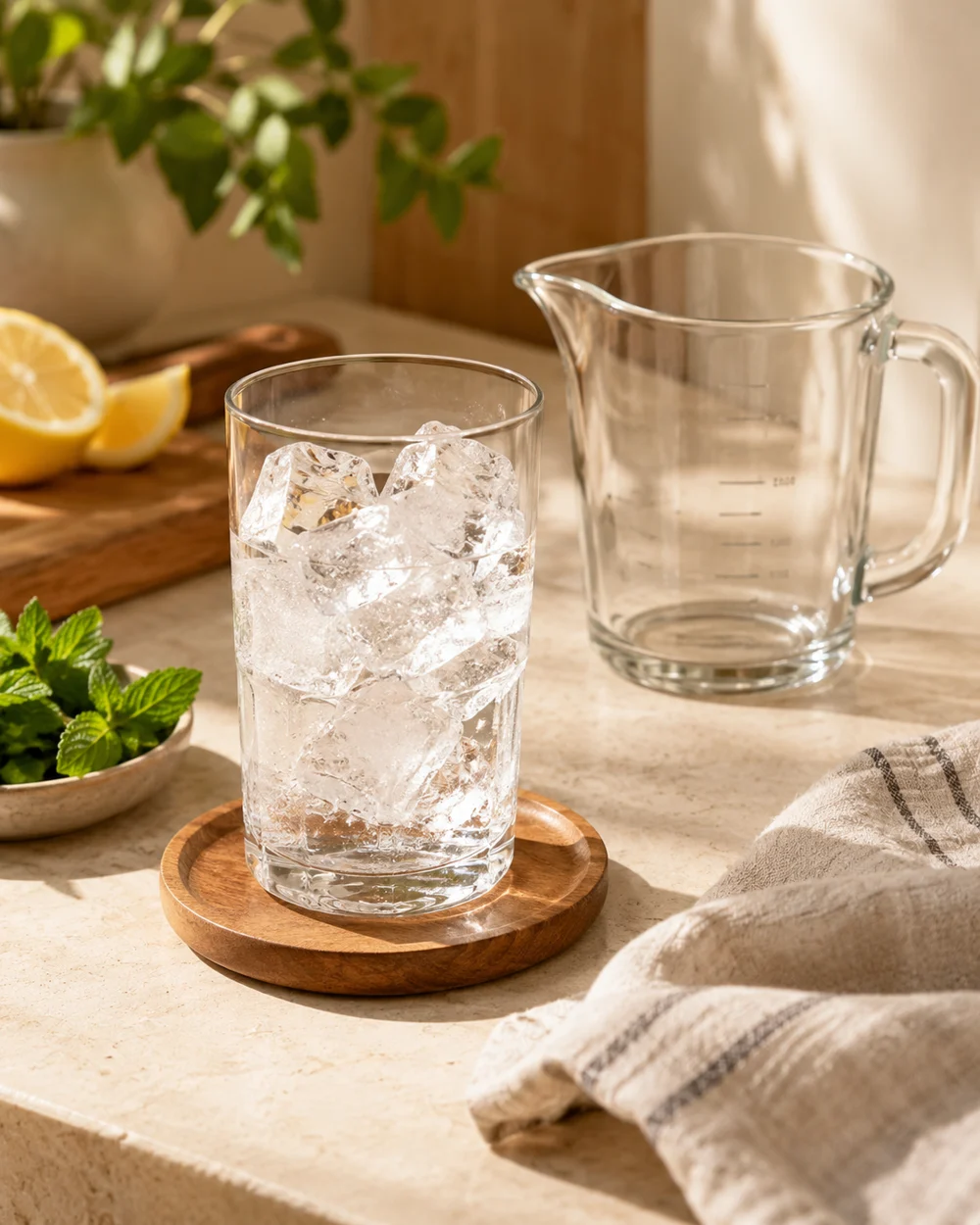
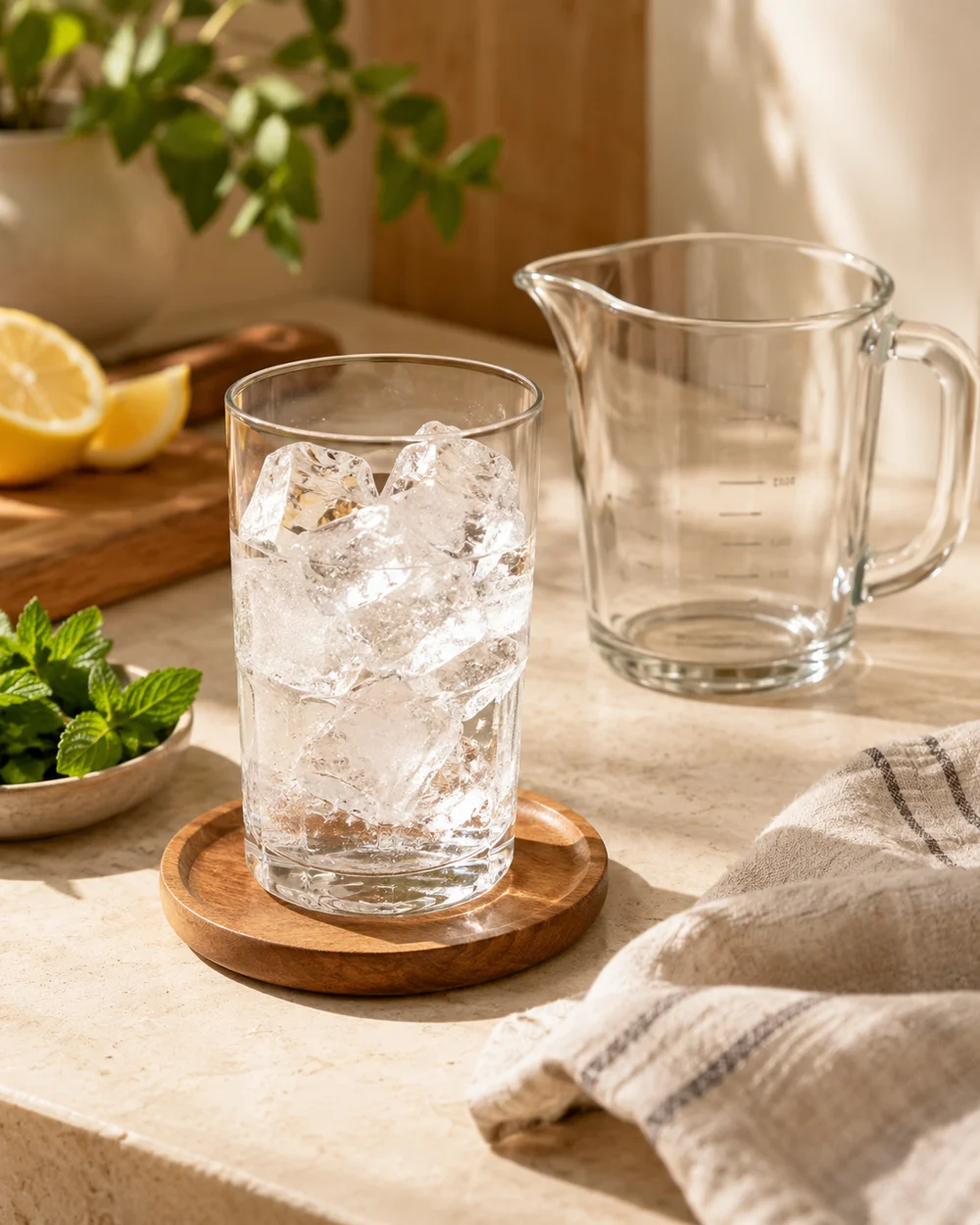
Representative category illustration reused from our editorial library; it does not depict this specific project or a tested result.
Select and Slice Uniform Wheels
Start with thoroughly washed whole citrus fruit at room temperature. Use a sharp, non-serrated chef knife to produce even slices between 3 and 5 millimeters thick. Discard the asymmetric end caps, which contain excess pith and minimal juice vesicles. Uniform thickness guarantees that every slice lies flat against adjacent pieces, reducing empty air pockets inside the storage vessel. Ragged cuts from dull blades crush cell walls, causing premature juice leakage that pools at the bottom of the container rather than staying inside the fruit flesh.
Prepare the Humidity Barrier
Take a clean, unbleached, food-safe paper towel and fold it to fit the base of a shallow glass container. Moisten the paper with cold potable water, then press it firmly between your palms over the sink until no liquid drips out. The towel must be damp, not dripping wet. Excess water leaches citric acid and soluble sugars from the cut edges, softening the structure into a mushy pulp, whereas a correctly wrung towel maintains local humidity without liquid accumulation.
Layer Slices to Prevent Deformation
Arrange the cut wheels directly onto the damp liner in slightly overlapping rows, shingle-style, rather than stacking them vertically in deep columns. Heavy vertical stacking forces juice out of lower slices under cumulative weight. For an illustrative container measuring roughly 15 by 20 centimeters, one prepared lemon and one lime yield approximately 16 to 20 usable slices laid out in two neat shingled lines. Place a second damp towel lightly across the exposed top surfaces to prevent drying from above.
Seal in Airtight Glass
Glass containers provide a superior non-reactive barrier compared to thin plastic tubs, which can absorb volatile terpenes from the citrus peels and permit minute vapor transfer. Ensure the container features a silicone gasket and snap-locking latches. Press the lid down firmly to compress the seal before engaging the clamps. This closure locks in ambient moisture, halting the evaporative cooling draft produced by modern fan-forced refrigeration units that quickly dehydrates unprotected produce.
Chill Promptly at Safe Temperatures
Transfer the sealed container to your refrigerator immediately, confirming the internal temperature holds at 4 degrees Celsius or colder. Cut produce becomes perishable once the protective peel is breached. Keep the vessel chilled within two hours of preparation under normal kitchen conditions, or within one hour if ambient room temperature reaches 32 degrees Celsius. Stored this way, garnishes retain crisp edges and bright translucent pulp for standard daily service without drying out.
A little more
to know.
Can sliced citrus wheels be submerged in plain cold water instead?
Submerging slices prevents drying out, but prolonged water immersion washes away natural juices, dilutes aromatic surface oils, and softens the rind. A wrung-out damp paper towel maintains adequate ambient humidity without leaching flavor compounds into surrounding liquid.
How long do pre-cut citrus garnishes retain their fresh appearance?
Under continuous refrigeration at 4 degrees Celsius, damp-towel-lined glass containers maintain slice flat shape and moisture for roughly twelve to twenty-four hours. Beyond that window, pulp begins losing structural integrity and rinds slowly turn brown.
Original editorial guidance and recipe formulations, not independently kitchen-tested. Times are estimates and depend on equipment and product directions. Cooked bases need additional cooling and refrigeration before cold serving. Images are AI-generated illustrations; appearance and yield may vary. Check actual ingredient labels, allergens, and any certification you require. We do not certify products. Read our approach.
Save to Pinterest ↗ANOTHER IDEA FOR THE COUNTER