Still Guava and Lemon Cooler Strained Into a Serving Jug
Fresh guava has a fragrant, tropical sweetness, but it also carries a dense cluster of fine hard seeds and fibrous flesh that turn any unfiltered drink gritty and unpleasant. Straining is not optional with this fruit — it is the step that transforms a rough blended mixture into a smooth, pourable cooler. This article walks through halving and scooping ripe guava, blending briefly with cold water and fresh lemon juice, pressing the pulp firmly through a fine-mesh sieve, and measuring the clear yield before pouring it over ice in a serving jug. The quantities below form one illustrative plan rather than a claim of tested results, and individual guava size and ripeness will affect actual output.
Read the note ↓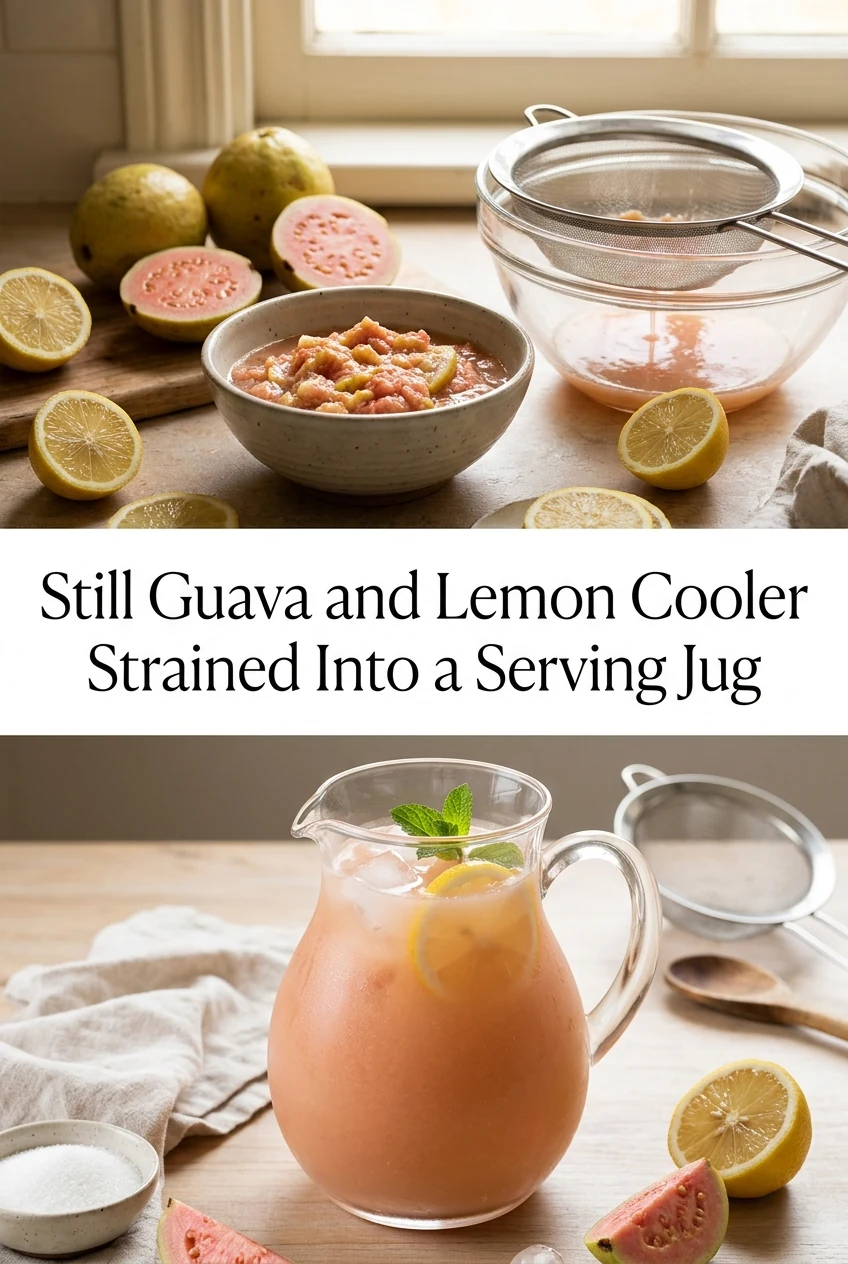
AI-generated editorial concept created for this article. The image is not a technical diagram or a tested result.
Choosing and Preparing the Guava
Select guavas that yield slightly under gentle thumb pressure and carry a noticeable floral scent at the stem end. Fruit that is still firm will blend into a starchy, under-flavored liquid, while overripe fruit can turn the drink muddy. Rinse each guava under cold running water and pat dry. Cut each fruit in half through the equator to expose the seed-packed core. Use a dessertspoon to scoop the seedy centre into a separate bowl — this portion will still go into the blender because it holds a great deal of flavor, but isolating it first lets you see exactly how much seed mass you are working with. Scoop the remaining flesh away from the skin and add it to the blender jar along with the seedy core. Discard the skins.
Blending With Cold Water and Lemon Juice
For an illustrative batch using four medium guavas (roughly 500 g of scooped flesh and seeds combined), add 600 ml of cold water and the strained juice of two medium lemons — approximately 60 ml — directly into the blender jar. Keep the blend brief: ten to fifteen seconds on a medium setting is usually enough to break the flesh down without grinding the seeds into fine particles that would pass through the sieve. Over-blending increases the risk of seed fragments making it into the finished drink. The mixture at this stage will look opaque and pale pink or cream depending on guava variety, and it will smell intensely fruity.
Pressing Through a Fine-Mesh Sieve
Set a large fine-mesh sieve over a deep mixing bowl wide enough to catch the full volume of liquid. Pour the blended mixture into the sieve in stages rather than all at once, which helps prevent overflow and makes pressing easier. Use the back of a large spoon or a flexible silicone spatula to press the pulp firmly against the mesh in circular motions. Continue pressing until the pulp left in the sieve looks dry and compact — this is the fibrous material and seed husks that would otherwise make the drink gritty. Discard the pressed solids. The strained liquid in the bowl should appear smooth and translucent at the edges. Measure the yield at this point: the illustrative batch above might produce approximately 700 to 750 ml of strained cooler, though actual output will vary.
Sweetening and Balancing the Flavor
Taste the strained liquid before adding any sweetener. Guava ripeness varies considerably, and the lemon juice already contributes noticeable acidity. If the cooler tastes sharp, stir in plain white sugar one teaspoon at a time, dissolving each addition fully before tasting again. A simple syrup — equal parts sugar and water stirred together until the sugar dissolves — blends in more evenly than granulated sugar added directly to cold liquid. Add a small pinch of fine salt to lift the fruit flavor if the drink tastes flat. Avoid adding so much sweetener that the lemon brightness disappears; the goal is a cooler that tastes refreshing rather than syrupy.
Measuring the Yield and Serving Over Ice
Pour the finished, seasoned cooler into a clean serving jug using a second brief pass through the sieve or a piece of fine muslin if any fine particles remain visible. Add ice to the jug before pouring the cooler over it so the drink chills immediately on contact. For an illustrative yield of roughly 700 ml plus ice, a 1.5-litre jug provides comfortable headspace without spilling. Serve promptly into chilled glasses. Because this cooler contains no preservatives and is made from fresh fruit, it is best consumed the same day it is prepared and kept refrigerated until serving.
A little more
to know.
Can a nut-milk bag be used instead of a fine-mesh sieve?
A clean, fine-weave nut-milk bag can work in a similar way: pour the blended mixture into the bag, gather the top, and squeeze firmly over a bowl. The mesh on many nut-milk bags is finer than a standard kitchen sieve, which can produce a clearer result, though squeezing by hand takes more effort than pressing with a spoon. Rinse the bag thoroughly with cold water immediately after use.
What causes the strained cooler to look cloudy even after sieving?
Some cloudiness is natural in fresh guava juice and comes from very fine pectin and pulp particles that pass through even a fine sieve. This is not a sign that the straining failed. If a clearer appearance is important, allow the strained liquid to rest in the refrigerator for twenty to thirty minutes and then pour it carefully into the serving jug, leaving any settled sediment behind in the bowl.
Original editorial guidance and recipe formulations, not independently kitchen-tested. Times are estimates and depend on equipment and product directions. Cooked bases need additional cooling and refrigeration before cold serving. Images are AI-generated illustrations; appearance and yield may vary. Check actual ingredient labels, allergens, and any certification you require. We do not certify products. Read our approach.
Save to Pinterest ↗ANOTHER IDEA FOR THE COUNTER