Small-Batch Toasted Coconut Syrup for Warm and Cold Drinks
Coconut flavour in a syrup does not have to come from an extract. Dry-toasting desiccated coconut before simmering it with sugar and water draws out a deeper, nuttier sweetness that plain coconut simply cannot match. This article walks through one illustrative small-batch plan for making a toasted coconut syrup at home, covering the toasting step, the brief simmer, straining through a fine cloth, and transferring the cooled syrup into a small sealed jar. The quantities below are a worked example, not a tested or guaranteed result, and your own stove, pan, and coconut will behave slightly differently.
Read the note ↓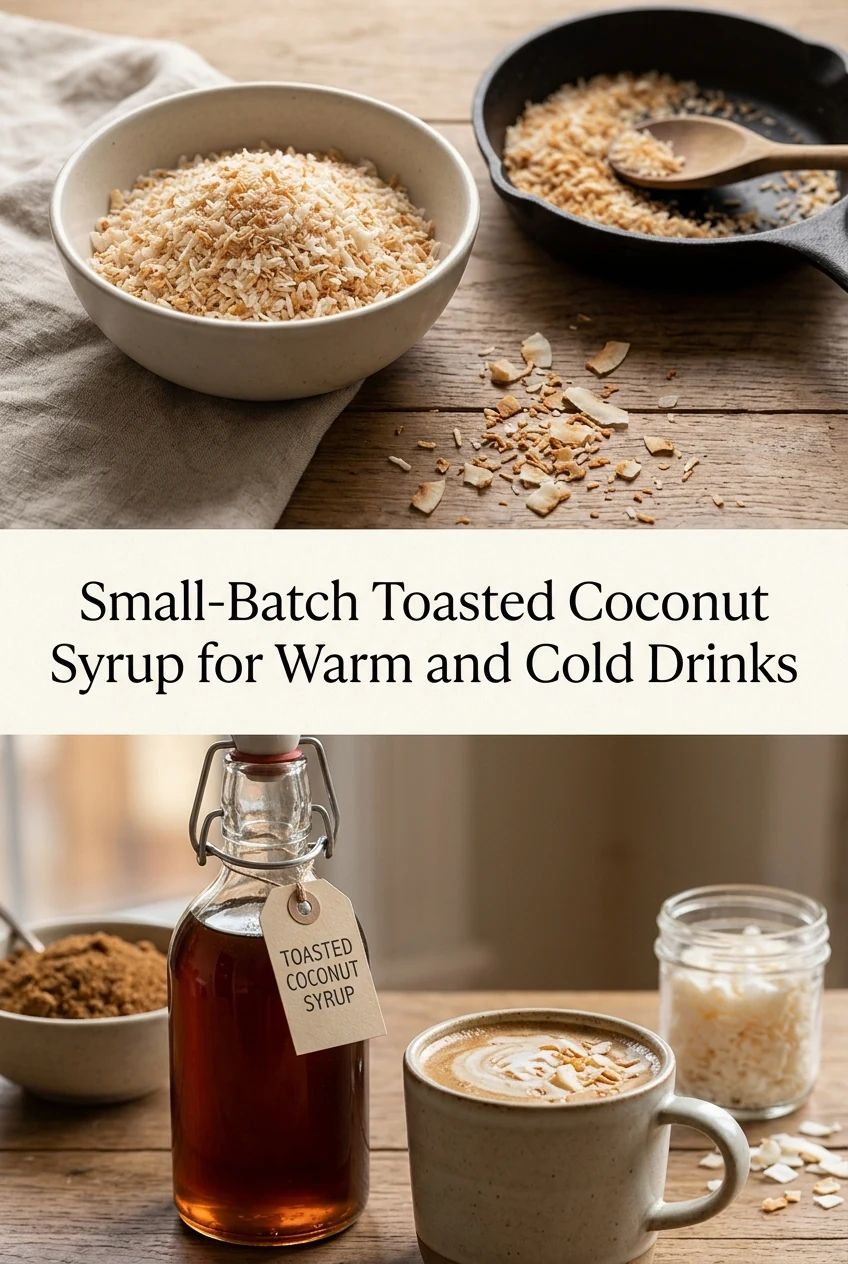
AI-generated editorial concept created for this article. The image is not a technical diagram or a tested result.
Choosing and Measuring Your Ingredients
For a small batch, a useful starting point is 40 g of unsweetened desiccated coconut, 200 g of white granulated sugar, and 240 ml of cold water. That sugar-to-water ratio sits close to a standard simple syrup and gives a pourable consistency once cooled. Unsweetened desiccated coconut is preferred here because sweetened varieties add an unpredictable extra sugar load that can make the finished syrup cloyingly sweet. Check that your desiccated coconut contains no added flavourings or preservatives beyond what the label declares. Gather a heavy-based small saucepan, a wooden spoon, a fine-mesh strainer, a piece of clean muslin or a nut-milk bag, a heatproof jug, and one small glass jar with a tight-fitting lid.
Dry-Toasting the Desiccated Coconut
Place the desiccated coconut in a dry, cold small saucepan or skillet. Set the heat to medium-low and stir continuously with a wooden spoon. The coconut will begin to turn golden in patches after a few minutes; keep stirring so the pieces colour evenly rather than burning at the edges. Pull the pan from the heat as soon as most of the coconut is a light amber and the kitchen smells noticeably nutty. Toasting time varies with pan material, burner output, and how finely the coconut is shredded, so watch colour and aroma rather than a fixed timer. Tip the toasted coconut immediately onto a plate to stop residual pan heat from darkening it further.
Simmering the Syrup
Return the toasted coconut to the saucepan and add the 240 ml of cold water and 200 g of sugar. Stir gently over medium heat until the sugar has fully dissolved and the liquid just reaches a gentle simmer. Once simmering, reduce the heat to low and hold that simmer for approximately eight to ten minutes, stirring occasionally. The liquid will take on a pale golden tint from the coconut. Avoid a rolling boil, which can reduce the liquid too quickly and make straining harder. After the simmer, remove the pan from the heat and allow the mixture to rest for five minutes so the coconut continues to steep in the warm liquid.
Straining and Cooling
Set a fine-mesh strainer over a heatproof jug and line it with a double layer of clean muslin or a nut-milk bag. Pour the warm syrup mixture slowly through the cloth. Once the free liquid has drained, gather the cloth and press gently to extract the remaining syrup from the coconut solids. Discard the spent coconut. The strained syrup should look clear to lightly golden. Allow it to cool to room temperature before transferring it to your small glass jar. Sealing a warm syrup in a closed jar can create condensation inside the lid, so patience here keeps the syrup in better condition. Once fully cooled, seal the jar and label it with the date of preparation.
Using the Syrup in Warm and Cold Drinks
This toasted coconut syrup works as a sweetener and flavour addition in a range of drinks. In a warm drink, stir one to two teaspoons into a freshly brewed cup of black tea or a small mug of warm oat milk and taste as you go, adjusting to your preference. For a cold drink, combine two teaspoons of syrup with ice, a splash of cold brew coffee, and chilled milk in a tall glass and stir well. Because the syrup is already sweetened, reduce or omit any other sugar you would normally add. The worked example batch of roughly 240 to 250 ml of finished syrup is sized for personal use over a short period. Store the sealed jar in the refrigerator and use your senses to judge freshness; if the syrup smells or looks off at any point, discard it.
A little more
to know.
Can I use sweetened desiccated coconut instead of unsweetened?
You can, but the total sugar in the finished syrup will be higher and harder to predict because sweetened coconut already contains added sugar. If you use it, consider reducing the granulated sugar in the recipe by roughly 20 to 30 g and tasting the syrup before adding more. The toasting step works the same way regardless of whether the coconut is sweetened or unsweetened.
Why does the recipe avoid coconut extract?
Many coconut extracts are alcohol-based, which conflicts with halal preparation requirements and is not suitable for all households. Dry-toasting desiccated coconut and simmering it directly in the sugar syrup produces coconut flavour through the coconut itself, with no extract needed. This approach also gives a toasted, slightly caramelised depth that a plain extract typically does not provide.
Original editorial guidance and recipe formulations, not independently kitchen-tested. Times are estimates and depend on equipment and product directions. Cooked bases need additional cooling and refrigeration before cold serving. Images are AI-generated illustrations; appearance and yield may vary. Check actual ingredient labels, allergens, and any certification you require. We do not certify products. Read our approach.
Save to Pinterest ↗ANOTHER IDEA FOR THE COUNTER