Small-Batch Dried Rose and Cardamom Syrup for Warm Drinks
A small jar of rose and cardamom syrup can transform a plain cup of warm milk into something quietly special. This guide walks through one illustrative approach: building a simple cardamom sugar syrup on the stove, then steeping dried rose petals off the heat so they release colour and floral fragrance without crossing into bitterness. The result is a lightly pink, aromatic syrup suited to warm milk drinks, chai, or a gentle drizzle over oats. All steps described here represent a practical plan rather than a claim of tested or guaranteed results.
Read the note ↓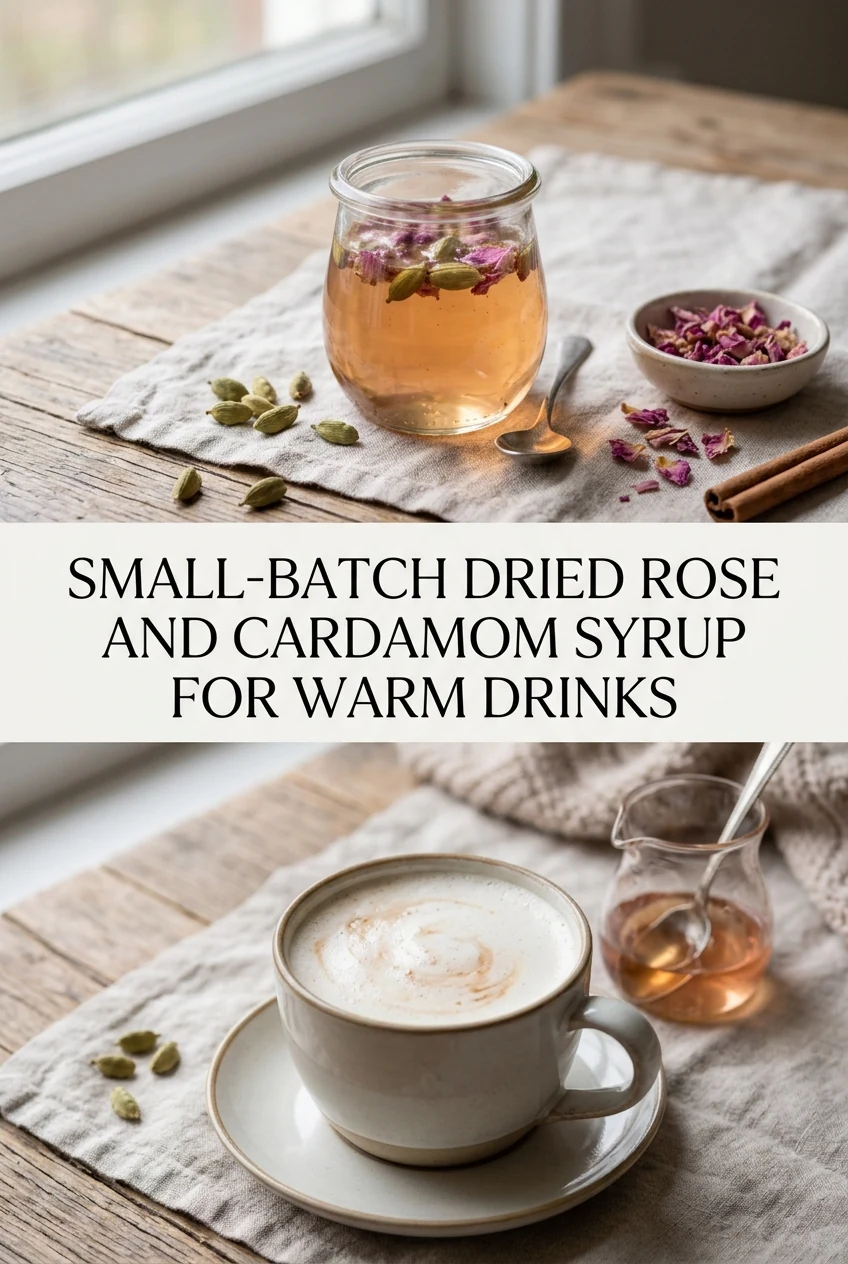
AI-generated editorial concept created for this article. The image is not a technical diagram or a tested result.
Choosing Your Dried Rose Petals and Cardamom
Look for food-grade dried rose petals sold specifically for culinary use. Petals labelled for potpourri or fragrance are often treated and should be avoided entirely. Colour ranges from pale blush to deep magenta; deeper petals tend to give a more pronounced pink tint to the finished syrup. For cardamom, whole green pods cracked open just before use offer a fresher, more aromatic result than pre-ground powder, which can turn the syrup slightly murky. A small worked example: for roughly 200 ml of finished syrup, plan on using around 200 g of white granulated sugar, 200 ml of water, 6 to 8 green cardamom pods lightly cracked, and 10 to 12 g of dried culinary rose petals. These proportions are illustrative and may need adjusting based on the strength of your specific petals and pods.
Making the Cardamom Sugar Syrup Base
Combine the water, sugar, and cracked cardamom pods in a small saucepan. Stir over a medium-low heat until the sugar has fully dissolved, then allow the mixture to reach a gentle simmer. Keep it at a low simmer for approximately 5 minutes so the cardamom has time to infuse into the liquid. You are aiming for a syrup that is fragrant and lightly golden from the pods rather than a thick reduction, so avoid cooking it down significantly. Once the cardamom base smells warmly spiced and the sugar is fully dissolved, remove the saucepan from the heat completely before adding the rose petals. This off-heat step is central to the approach: active simmering can push rose petals quickly toward a bitter, overcooked flavour.
Steeping the Rose Petals Off the Heat
With the pan removed from the stove, add the dried rose petals directly to the warm cardamom syrup. Stir gently to submerge them. The petals will begin releasing colour almost immediately, shifting the syrup toward a soft pink or rose tone depending on the variety used. Allow the petals to steep in the residual heat for 8 to 12 minutes. Check the colour and fragrance at around 8 minutes; if the floral note is already present and pleasant, you can move to straining. If you prefer a stronger rose character, continue for a few more minutes, tasting cautiously. Once any hint of bitterness appears, strain immediately. The steeping window is narrow, so stay nearby rather than walking away.
Straining and Jarring While Warm
Set a fine-mesh strainer over a heatproof jug or bowl. Pour the syrup through the strainer while it is still warm, pressing the petals very gently with the back of a spoon to release remaining liquid without forcing through any bitter plant solids. Discard the spent petals and cardamom pods. Transfer the strained syrup into a clean, dry small glass jar with a tight-fitting lid. A 250 ml jar works well for this batch size and leaves a little headspace. Label the jar clearly with the contents and the date it was made. Allow the syrup to cool to room temperature before sealing and refrigerating. Refrigerate and use within a timeframe you are comfortable with given standard home kitchen conditions; do not treat this syrup as shelf-stable.
Using the Syrup in Warm Milk Drinks
Start with a small amount when adding this syrup to drinks, as the combined floral and spice notes can be assertive. For a warm milk drink, one to two teaspoons stirred into a cup of gently heated milk is a reasonable starting point for most palates. The syrup dissolves easily into warm liquids. It also works stirred into a mug of plain black tea or added to a lightly spiced chai base. Because the syrup is sweet, taste the drink before adding any additional sugar. Store the jar in the refrigerator and give it a gentle shake or stir before each use if any settling occurs. Use a clean, dry spoon each time to avoid introducing moisture or residue into the jar.
A little more
to know.
Can I use rose water instead of dried petals to make this simpler?
Rose water is a different ingredient and will produce a different result. It can be stirred into a finished plain cardamom syrup off the heat, but the quantity needs careful adjustment because rose water varies considerably in concentration between brands. Start with a small amount, taste, and add more gradually. Using rose water skips the steeping step entirely, which does simplify the process, though the character of the finished syrup will differ from one made with whole dried petals.
Why does the syrup need to be strained while still warm rather than after it cools?
Straining while the syrup is still warm makes the liquid flow more freely through the strainer, which helps you separate it from the petals and pods more efficiently. As the syrup cools it thickens slightly, which can make straining slower and may encourage you to press the solids harder than necessary, potentially pushing through bitter compounds. Straining promptly while warm gives you cleaner results with less effort.
Original editorial guidance and recipe formulations, not independently kitchen-tested. Times are estimates and depend on equipment and product directions. Cooked bases need additional cooling and refrigeration before cold serving. Images are AI-generated illustrations; appearance and yield may vary. Check actual ingredient labels, allergens, and any certification you require. We do not certify products. Read our approach.
Save to Pinterest ↗ANOTHER IDEA FOR THE COUNTER