Set Up a Small Tray for Cold Brew Ingredients Before Opening Any Packaging
Cold brew preparation involves more loose components than it appears: a jar, a filter or cloth, coffee, a measuring tool, a lid, and sometimes a rubber band or clip. Opening packaging before organising these items leads to misplaced lids, spilled grounds on an uncleared counter, and interrupted workflow mid-pour. Assembling everything on a single tray before touching any seal or bag creates a contained workspace and makes the process faster and cleaner from start to finish.
Read the note ↓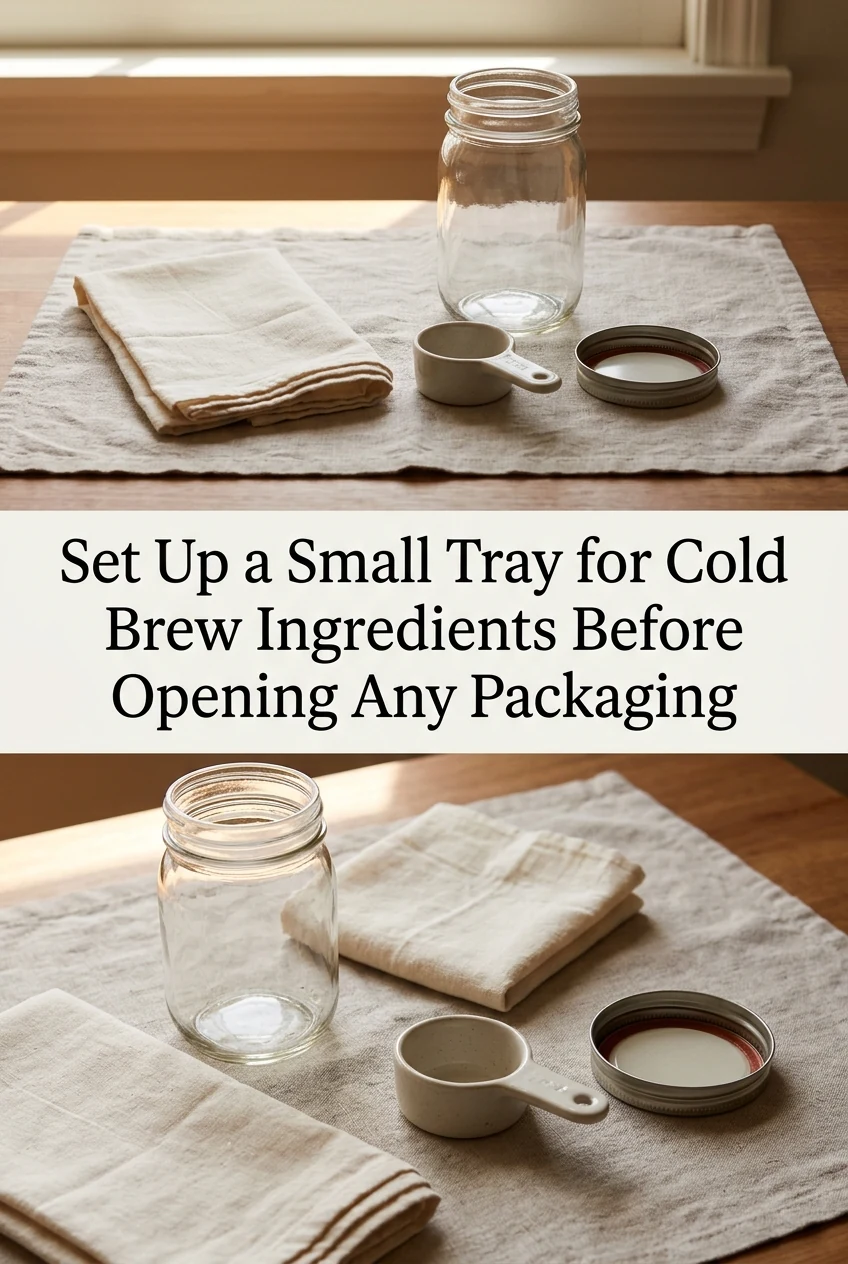
AI-generated editorial concept created for this article. The image is not a technical diagram or a tested result.
What to Place on the Tray Before Starting
Set out the jar or container you will brew in, its lid, the filter you plan to use, your coffee bag still sealed, a measuring scoop or kitchen scale, and a small bowl or cup to rest the used filter in after steeping. If you are using a rubber band to secure a cloth filter, place that on the tray too. Having every item visible before opening anything means you will notice immediately if the lid is missing or the filter is the wrong size for the jar mouth.
Why the Tray Boundary Matters
A tray creates a defined edge that keeps loose items from migrating across the counter. Coffee grounds are fine and spread easily; if the bag opens while the counter is cluttered, grounds settle into gaps around other items and are difficult to recover. The tray also catches any grounds that spill during measuring, making cleanup a single wipe rather than a counter-wide sweep. A standard kitchen tray of around 30 by 40 centimetres accommodates a one-litre jar and all associated tools without crowding.
Checking Filter Fit Before Opening Coffee
Place the filter over the jar mouth before opening the coffee bag. A paper filter should sit inside the jar neck without collapsing, and a cloth filter should drape over the rim with enough excess to fold down and secure. If the filter does not fit, you can swap it out without any coffee exposed. Discovering a filter mismatch after the grounds are measured means either finding a workaround quickly or leaving measured coffee exposed while you search for an alternative.
Measuring Coffee on the Tray
Open the coffee bag over the tray, not over the jar. Measure your coffee into the jar or directly onto the filter while keeping the bag low and close to the measuring tool. Resting the open bag flat on the tray between scoops prevents it from tipping. Once you have added the coffee, set the bag aside on the tray and add your cold water slowly. Pouring water against the side of the jar rather than directly onto the grounds reduces splashing and keeps grounds from floating unevenly.
Securing the Lid and Moving to the Refrigerator
After adding water, secure the lid firmly before lifting the jar. Check that the filter is fully submerged or properly positioned according to your filter type. Move the jar to the refrigerator promptly. Cold brew steeps at refrigerator temperature, typically 4 degrees Celsius, for a period specified by your coffee's instructions or your preferred method. Do not steep at room temperature for extended periods. Once the jar is in the refrigerator, clear the tray, reseal the coffee bag, and wipe any grounds from the tray surface.
A little more
to know.
Is there a risk of the jar lid not sealing properly if grounds get on the rim?
Yes. Coffee grounds on the jar rim can prevent a complete seal, allowing air in or liquid to seep out during refrigeration. Wipe the rim with a clean damp cloth before securing the lid if any grounds land there.
Should the tray itself be clean and dry before setup?
A dry tray prevents moisture from softening paper filters before use and stops the jar from sitting in residual liquid. A quick wipe before setup takes very little time and keeps the workspace genuinely contained rather than just relocated.
Original editorial guidance and recipe formulations, not independently kitchen-tested. Times are estimates and depend on equipment and product directions. Cooked bases need additional cooling and refrigeration before cold serving. Images are AI-generated illustrations; appearance and yield may vary. Check actual ingredient labels, allergens, and any certification you require. We do not certify products. Read our approach.
Save to Pinterest ↗ANOTHER IDEA FOR THE COUNTER