Set Up a Rinse Cup for the Matcha Whisk So It Does Not Dry Between Drinks
A bamboo matcha whisk, called a chasen, is made from a single piece of bamboo split into dozens of fine tines. Those tines are what create the fine foam that defines a well-made matcha drink. When matcha paste dries on them between uses, it hardens and can cause tines to snap during the next whisking session. A simple rinse cup stationed beside your matcha setup solves this without interrupting your workflow between back-to-back orders.
Read the note ↓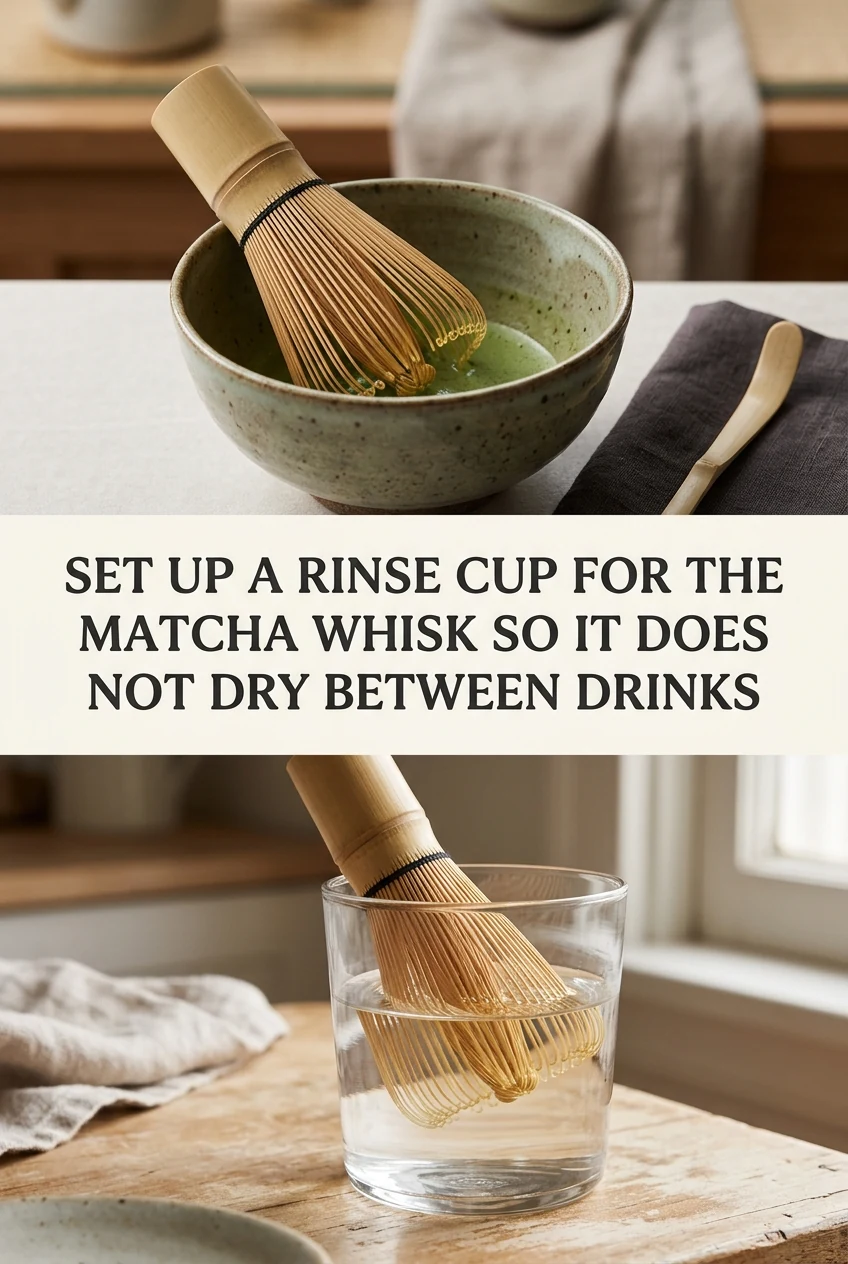
AI-generated editorial concept created for this article. The image is not a technical diagram or a tested result.
What Happens When a Chasen Dries Between Uses
Matcha powder mixed with water forms a thick paste that adheres to bamboo surfaces quickly. At room temperature, this paste begins to dry within a few minutes. Once dry, it bonds to the tines and requires force to remove, which stresses the bamboo. Over repeated cycles of drying and forced cleaning, tines become brittle and eventually break off. A broken tine in a finished drink is both a quality problem and a practical concern for the person drinking it.
Choosing the Right Rinse Cup
Select a cup or small bowl wide enough to submerge the whisk head fully without the handle touching the rim at an awkward angle. A ceramic bowl around 10 cm in diameter works well for most standard chasen sizes. Fill it with cool or room-temperature tap water. There is no need for hot water in the rinse cup; cool water is fully effective at keeping residual matcha paste soft between drink orders and avoids keeping a standing container of hot water on your station.
Where to Position the Cup on Your Station
Place the rinse cup on the same side as your dominant hand, between the matcha bowl and the edge of the counter. This positioning means you can move the whisk from the finished drink directly into the rinse cup in one motion without reaching across your workspace. Keep a small folded cloth nearby to blot the whisk handle before setting it down, preventing water from pooling on the counter surface and creating a slip hazard.
The Rinse Step Between Each Drink
After completing each matcha drink, submerge the whisk head in the rinse cup and swirl it gently for about five seconds. Lift it out and let it drip briefly over the cup. Do not shake it vigorously or press it against the cup wall, as lateral force stresses the tines at their base. This brief rinse removes the majority of matcha residue and keeps the tines pliable for the next use. Replace the rinse water when it turns noticeably green and cloudy.
End-of-Session Cleaning and Drying
At the end of a service session, rinse the chasen under cool running water, again without pressing the tines against any surface. Shake off excess water gently and place the whisk upright on a chasen holder if you have one, or rest it tine-side up in an empty cup so air can circulate around the head. Allow it to dry fully before storing. Storing a damp chasen in an enclosed space encourages mold growth on the bamboo.
A little more
to know.
Is it necessary to pre-wet the chasen before the first drink of the day?
Yes. Submerging the dry chasen in cool water for about one minute before first use rehydrates the bamboo tines, making them more flexible. This reduces the chance of tines snapping during the initial whisking motion, particularly on a chasen that dried overnight.
Can a chasen be cleaned in a dishwasher to save time during service?
No. Dishwasher water jets, harsh detergents, and high-heat drying cycles rapidly warp and split the delicate bamboo tines and unravel the binding thread at the base. Gentle hand rinsing with water is the only appropriate cleaning method and takes only seconds between drink orders.
Original editorial guidance and recipe formulations, not independently kitchen-tested. Times are estimates and depend on equipment and product directions. Cooked bases need additional cooling and refrigeration before cold serving. Images are AI-generated illustrations; appearance and yield may vary. Check actual ingredient labels, allergens, and any certification you require. We do not certify products. Read our approach.
Save to Pinterest ↗ANOTHER IDEA FOR THE COUNTER