Set Up a Dry Pantry Drawer for Drink Ingredients
Half-open packets of cocoa, tea, oats and sugar scattered across a shelf make every drink preparation slower and messier than it needs to be. A single organised drawer changes this by grouping items by how you actually use them and keeping strong-smelling ingredients from affecting delicate ones like tea. The approach does not require buying a set of matching containers; it requires making deliberate decisions about what goes where and keeping labels current.
Read the note ↓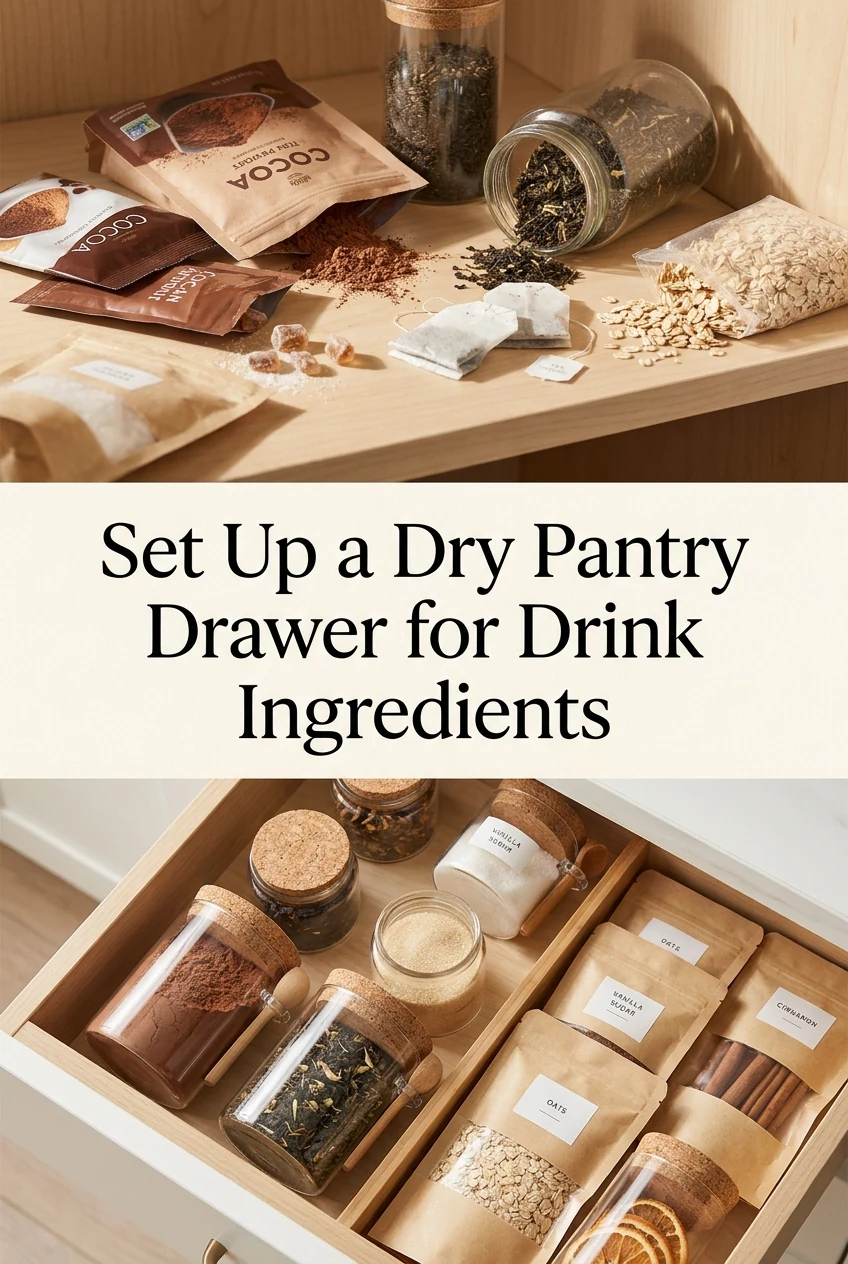
AI-generated editorial concept created for this article. The image is not a technical diagram or a tested result.
Assess What You Actually Use for Drinks
Before reorganising, pull out every dry ingredient you use for hot and cold drinks and set them on the counter. Common items include tea bags or loose leaf tea, ground coffee, cocoa powder, sugar, oats for oat milk preparation and any powdered drink mixes. Discard anything past its best-before date or with an off smell. What remains is your actual working inventory. Organising around what you genuinely use prevents the drawer from filling with items that belong in a different part of the kitchen.
Decide When to Transfer to a New Container
Move a product into a clean, dry, lidded container only when its original packaging is not resealable. A tea box with a closing flap can stay in its box. A paper bag of cocoa with no clip or seal benefits from a tin or jar with a lid. Do not transfer products unnecessarily, as the original packaging carries the maker's storage instructions, best-before date and any specific handling notes. If you do transfer, write the product name and the date you opened it on a label and attach it to the new container.
Keep Strong-Smelling Items Away from Tea
Cocoa, ground coffee and any powdered spice blends should sit at the opposite end of the drawer from tea. Tea absorbs surrounding odours through even a loosely closed box, and a tea stored next to ground coffee for several days will begin to carry that smell into the cup. A physical gap of a few centimetres is not sufficient if both containers are open; the separation needs to be a sealed container on at least one side. This is the single most common reason home tea tastes unexpectedly different from the same tea brewed elsewhere.
Arrange by Use Sequence, Not Alphabetically
Place items you reach for first at the front of the drawer. If you make tea before coffee every morning, the tea box sits at the front left and the coffee at the front right, with sugar and cocoa behind them. A measuring spoon set kept in the drawer rather than in a utensil pot saves the step of fetching it from another location. A shallow drawer works better than a deep one for this purpose because everything remains visible without lifting items out. A worked example: a drawer 40 centimetres wide holds a tea box, a cocoa tin and a sugar jar side by side with a spoon set in the remaining space.
Follow Maker Instructions and Review the Drawer Monthly
Each product's original packaging specifies its storage conditions, and those instructions take priority over any general pantry rule. Some cocoas specify a cool, dry location away from direct light; some teas note a maximum storage period after opening. A monthly check of the drawer takes two minutes: confirm that labels are still readable, that containers are fully closed, and that nothing has passed its date. Remove anything that has been open longer than the maker recommends. This keeps the drawer functional rather than becoming another version of the cluttered shelf it replaced.
A little more
to know.
Do I need airtight containers for sugar kept in a dry drawer?
Sugar kept in a consistently dry environment does not strictly require an airtight container, but a lidded jar prevents it from absorbing moisture on humid days and keeps measuring spoons clean. Follow any specific storage note on the original packaging.
What should I do if the drawer itself smells of a previous spill?
Wipe the drawer interior with a damp cloth and allow it to dry completely before returning any containers. Do not use strongly scented cleaning products near tea storage, as residual fragrance can transfer to the tea through its packaging.
Original editorial guidance and recipe formulations, not independently kitchen-tested. Times are estimates and depend on equipment and product directions. Cooked bases need additional cooling and refrigeration before cold serving. Images are AI-generated illustrations; appearance and yield may vary. Check actual ingredient labels, allergens, and any certification you require. We do not certify products. Read our approach.
Save to Pinterest ↗ANOTHER IDEA FOR THE COUNTER