Savory Cheese and Chive Mini Quiches for a Café Plate
Mini quiches sit naturally on a café sharing plate, but the small format makes even filling a genuine challenge. Custard that looks level in the bowl can overflow one tin while leaving another half empty, and a pastry case that is too thick crowds out the filling entirely. This article walks through lining shallow tins, mixing a straightforward custard base, portioning each case to a workable level, and reading the visual cues that tell you the quiches are set before you attempt to unmould them. Every step described here is an illustrative plan based on standard baking principles, not a claim of tested or guaranteed results.
Read the note ↓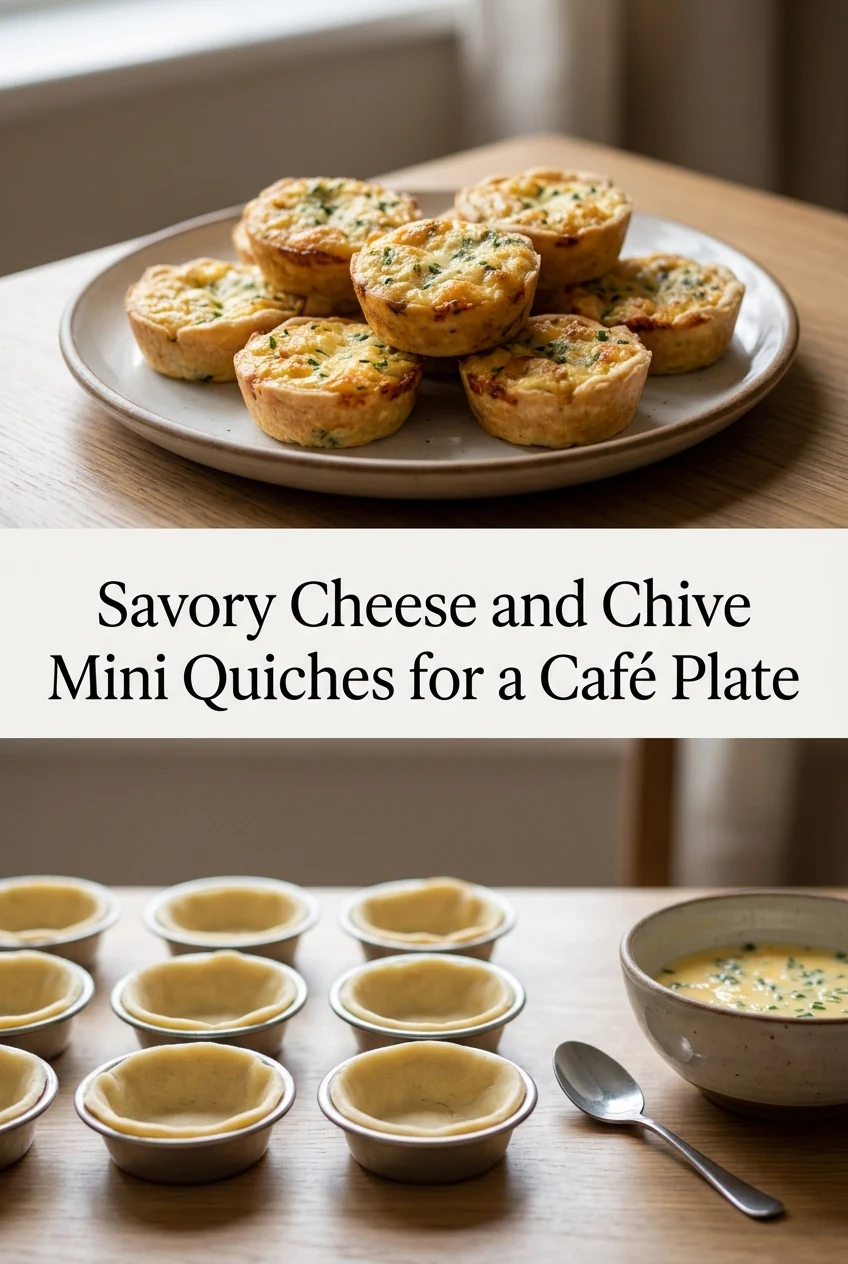
AI-generated editorial concept created for this article. The image is not a technical diagram or a tested result.
Choosing and Preparing Your Tins
Shallow loose-bottomed tartlet tins with a diameter of roughly 8 cm and a depth of around 2 cm are a practical starting point for a café-style mini quiche. At those dimensions each tin holds approximately 100 ml of volume, though the pastry lining will reduce usable space. Gather six tins of the same size so baking time stays consistent across the batch. Brush each tin lightly with a neutral oil or softened butter, working the fat into the fluted edges with a pastry brush so the baked shell releases cleanly. Place the greased tins on a flat baking sheet before you begin lining; moving them once filled risks spilling the custard.
Rolling and Lining the Pastry Cases
Use a short-crust pastry, either homemade or a good-quality ready-made block, chilled until firm. On a lightly floured surface, roll the pastry to a thickness of approximately 3 mm. Cut rounds using a cutter or upturned bowl roughly 4 to 5 cm wider in diameter than your tin—about 12 to 13 cm across for an 8 cm tin—to cover the base and the 2 cm sides with a small trimming margin. Press each round gently into a tin, easing the pastry into the base angle without stretching it, then trim the overhang flush with the rim using a small knife. Prick the base several times with a fork. Line each case with a small square of baking paper and fill with ceramic baking beans or dried pulses, then blind-bake according to your pastry recipe's guidance until the edges are pale gold. Remove the paper and weights, return the cases to the oven briefly to dry the base, then allow them to cool before filling.
Mixing the Custard Base
A simple custard for six 8 cm cases can be built from two medium eggs, 120 ml of whole milk, and 60 ml of double cream whisked together until fully combined. Season with a small pinch of fine salt and a little white pepper. Stir in 60 g of finely grated mature cheddar or a firm cheese of your choice, along with two tablespoons of finely snipped fresh chives. Whisk once more so the cheese is distributed evenly through the liquid. Pour the mixture into a jug with a narrow spout; the spout gives you far more control than ladling directly from a bowl and is the single most practical step for avoiding overflow.
Filling Each Case to a Safe Level
With the blind-baked cases still sitting on the baking sheet, pour the custard from the jug slowly into the first tin. Stop when the liquid sits approximately 3 mm below the pastry rim. That gap matters: custard puffs slightly as it heats and then settles, and a case filled flush to the rim is likely to spill before it sets. For the six-tin batch described here, the two eggs, milk, and cream combine with the cheese to produce roughly 270 to 300 ml of filling in total, giving about 45 to 50 ml per tin, which fits comfortably within the lined shells. After filling all six, check that no tin is visibly higher than the others; use a teaspoon to transfer a small amount from any overfull case to one that is slightly low.
Checking Doneness and Unmoulding
Bake the filled cases following your oven's actual behaviour rather than a fixed universal temperature, since domestic ovens vary. A set mini quiche will show a surface that no longer looks wet or shiny at the centre, and when you nudge the baking sheet gently the filling will move as a single unit rather than rippling like liquid. The pastry edges should be a deeper gold than after blind-baking. Allow the quiches to rest on the sheet for at least five minutes before unmoulding; attempting to push the base of a loose-bottomed tin while the filling is still very hot increases the risk of cracking the custard. Once rested, place the tin on a small upturned bowl or a wide jar, let the outer ring drop away, then slide a palette knife under the base and transfer each quiche to a serving plate. Scatter a few extra snipped chives across the tops before serving.
A little more
to know.
Can I use a different cheese instead of cheddar?
Yes. Any firm cheese that melts smoothly and has a flavour you enjoy can work in this custard. Gruyère, comté, or a mild gouda are common alternatives. Crumblier cheeses such as feta can be used but may not distribute as evenly through the liquid, so stir the mixture well before pouring.
What should I do if the custard is still wobbly after the expected baking time?
Return the tins to the oven and check again in short intervals, watching for the visual cues described in the doneness section rather than relying on a fixed time. A slight wobble at the very centre that firms up on resting is normal, but visible liquid movement across the whole surface means the quiches need more time. Oven temperatures vary, so treat any timing figure as a starting point rather than a guarantee.
Original editorial guidance and recipe formulations, not independently kitchen-tested. Times are estimates and depend on equipment and product directions. Cooked bases need additional cooling and refrigeration before cold serving. Images are AI-generated illustrations; appearance and yield may vary. Check actual ingredient labels, allergens, and any certification you require. We do not certify products. Read our approach.
Save to Pinterest ↗ANOTHER IDEA FOR THE COUNTER