Rinse Fresh Raspberries and Dry Them Before Weighing for a Fruit Base
Fresh raspberries carry surface moisture from cold storage and handling. When you place wet berries directly on a scale, that clinging water registers alongside the fruit, so a recipe calling for 150 g of raspberry base may actually contain noticeably less fruit than intended. Rinsing first and then drying the berries before the scale reading removes that variable and gives you a consistent, repeatable fruit portion every time you build the base.
Read the note ↓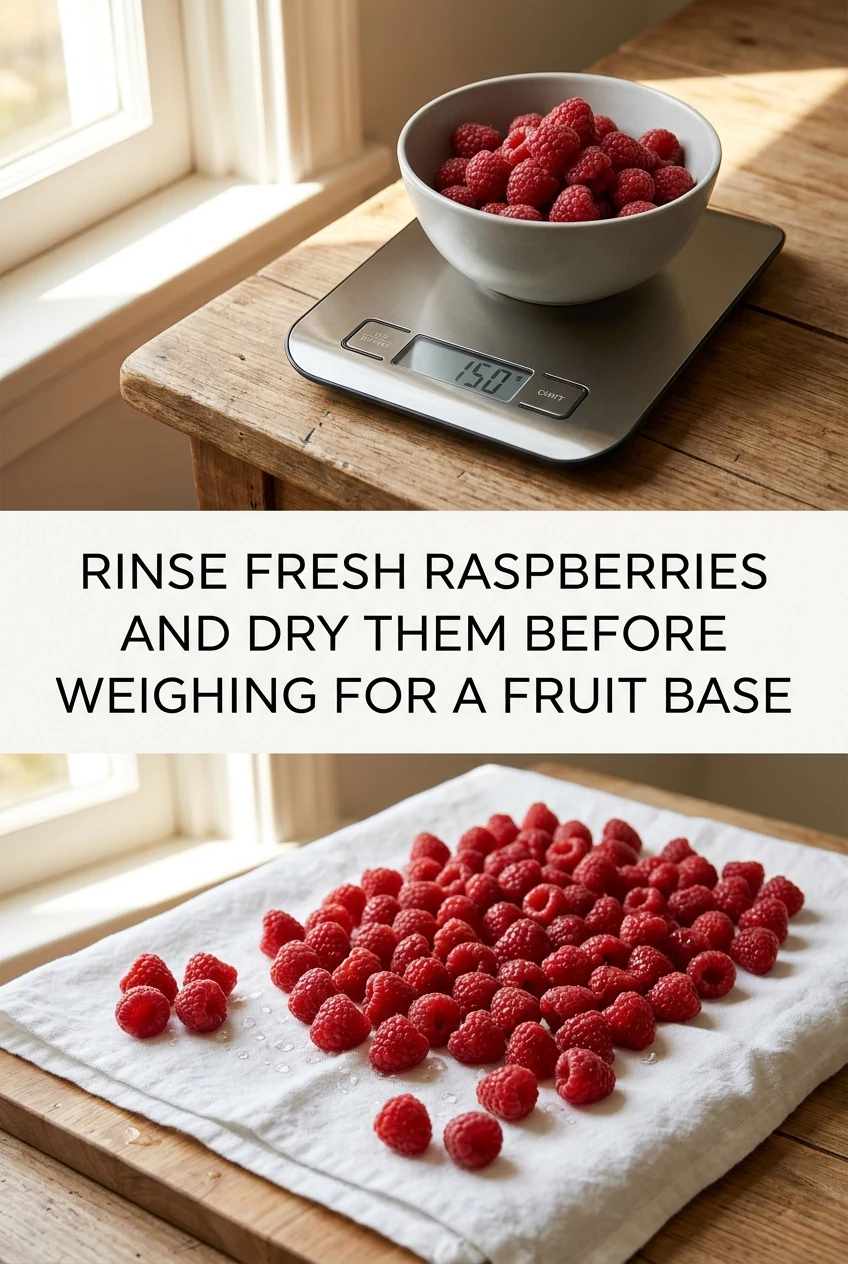
AI-generated editorial concept created for this article. The image is not a technical diagram or a tested result.
Why Surface Water Skews the Scale Reading
Each raspberry has a hollow core and a textured surface that traps water between the drupelets. A small handful of wet berries can carry several grams of free moisture. For a recipe using 150 g of fruit, even 5 g of water weight represents roughly a 3 percent error. That shift changes the fruit-to-liquid ratio in a cooler or syrup base, producing a slightly thinner result than the recipe intends.
How to Rinse Without Bruising the Fruit
Place the raspberries in a colander and run cool water gently over them for about 20 seconds. Avoid pressing or agitating the fruit; raspberries bruise easily and release juice when crushed, which defeats the purpose of drying them afterward. Once rinsed, lift the colander clear of the sink and let gravity drain the bulk of the water before moving to the drying step. This keeps the berries structurally intact for weighing.
Spreading the Berries to Dry Evenly
Lay a clean, dry kitchen cloth or several layers of paper towel flat on the counter. Tip the drained berries onto it in a single layer so they are not stacked. Gently roll a second cloth over the top without pressing down. Leave them for three to five minutes. A single layer matters because stacked berries trap moisture between them and the bottom layer stays wet while the top appears dry.
Taking the Weight Reading Accurately
Tare your scale with the empty bowl or container on it, then transfer the dried berries into that container. For illustration, if your recipe calls for 150 g and your first reading after drying shows 148 g, add two or three berries rather than pouring in liquid to compensate. Adjusting with fruit keeps the ratio honest. Avoid weighing directly on the cloth because the cloth absorbs residual juice and its own weight fluctuates slightly when damp.
Timing the Dry Step Within Your Workflow
Build the drying step into your prep sequence rather than treating it as an afterthought. Rinse the berries first, then measure your other ingredients while the fruit dries. By the time your syrup is portioned and your glasses are set out, the berries are ready to weigh. Refrigerate any unused dried berries promptly, returning them to 4 degrees Celsius or below within two hours of rinsing, or within one hour if your kitchen is above 32 degrees Celsius.
A little more
to know.
Can I use frozen raspberries and apply the same drying method?
Frozen raspberries release far more liquid as they thaw than fresh ones do from rinsing. Weigh them while still frozen for the most accurate reading, then thaw the measured portion separately before using it in your base.
Does the drying step matter if I am cooking the raspberries down into a syrup?
It still matters because extra water changes the cooking time and the final concentration of the syrup. Starting with a known dry weight lets you predict the yield more reliably and adjust added water deliberately rather than by accident.
Original editorial guidance and recipe formulations, not independently kitchen-tested. Times are estimates and depend on equipment and product directions. Cooked bases need additional cooling and refrigeration before cold serving. Images are AI-generated illustrations; appearance and yield may vary. Check actual ingredient labels, allergens, and any certification you require. We do not certify products. Read our approach.
Save to Pinterest ↗ANOTHER IDEA FOR THE COUNTER