Read a Matcha Tin Before Choosing It for Lattes or Baking
Matcha tins carry words like ceremonial, premium and culinary without any shared industry definition behind them. Price alone does not settle the question of which tin works in a warm latte and which disappears into a baked loaf. Reading the label carefully, tasting a small amount plain, and keeping brief notes across two or three tins gives you a practical basis for choosing, without relying on marketing language you cannot verify.
Read the note ↓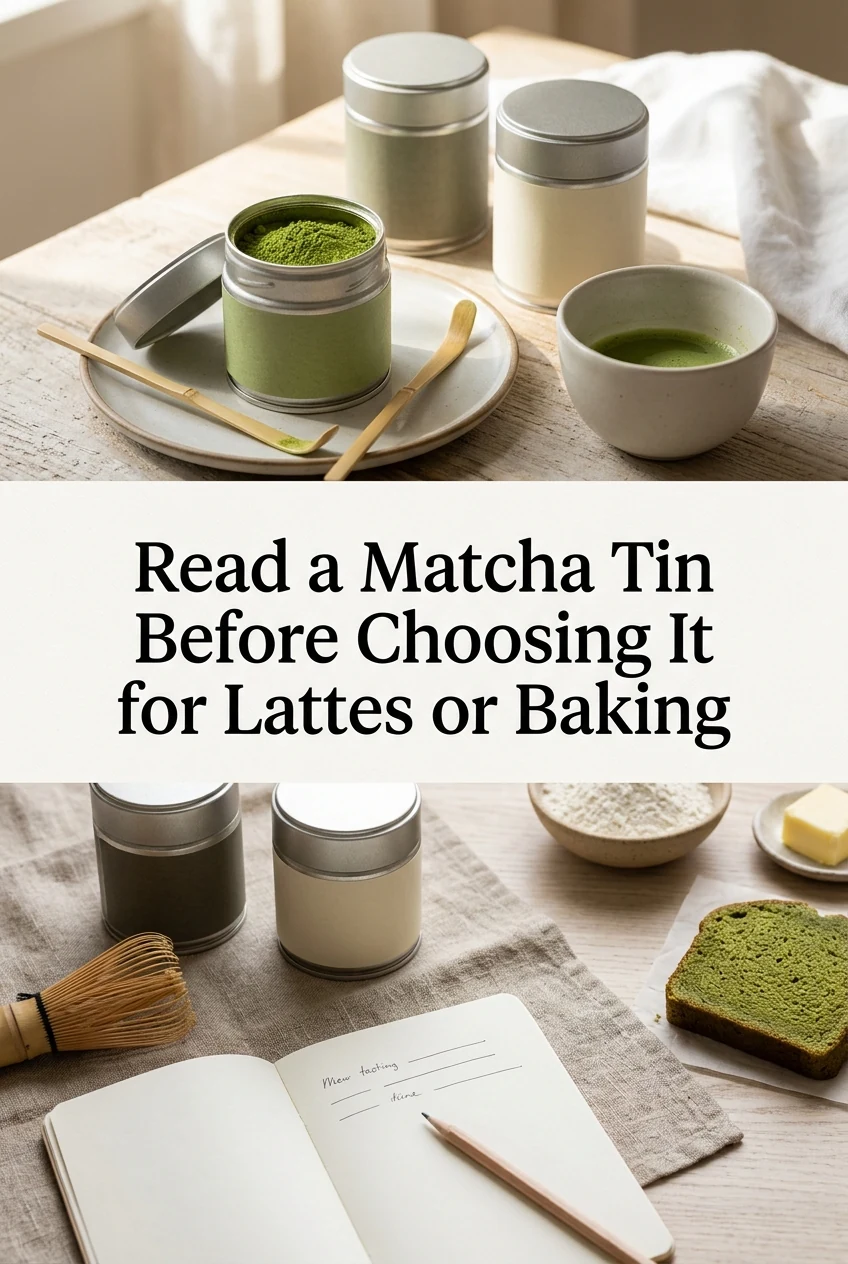
AI-generated editorial concept created for this article. The image is not a technical diagram or a tested result.
Start with the Ingredient List and Origin Statement
A tin containing only stone-ground green tea powder is the baseline. If sugar, creamer or flavouring appears, the product is a blend and will behave differently in both a latte and a baked good. An origin statement naming a specific region is useful context, but it is a claim from the maker, not a certification you can check at the shop. Note what the label says and treat it as a starting point rather than a guarantee.
Find the Maker's Suggested Use
Many tins print a suggested use on the side panel or lid. A maker who writes drinking or whisking is signalling a product intended to dissolve smoothly in liquid and taste balanced without added sugar. A maker who writes baking or cooking is signalling a product with a stronger, sometimes more bitter profile designed to hold up against butter, flour and sweetener. Following the maker's own suggestion is more reliable than trusting grade words alone.
Check Storage Directions and the Best-Before Date
Matcha oxidises and loses its green colour and fresh taste once opened. Most makers ask for a cool, dry, dark location and recommend using the tin within four to eight weeks of opening, though the exact window varies by brand. Check the best-before date before buying, and choose the tin with the longest remaining shelf life if you plan to use it slowly. Refrigerating an opened tin in an airtight container can help, but follow the maker's direction first.
Taste It Plain Before Committing to a Recipe
Whisk half a teaspoon of the matcha with two tablespoons of hot water cooled to around 80 degrees Celsius, until no dry clumps remain. Taste it without sweetener. A tin intended for lattes should taste grassy and slightly sweet with a clean finish. A tin that tastes sharply bitter or flat at this stage will likely taste the same in milk. This plain test, done before you open a second tin, tells you more than any label word.
Compare Two Tins Side by Side with a Simple Example
Open both tins on the same day. Prepare each with half a teaspoon whisked into 150 millilitres of warm oat milk. Write one or two words about colour, bitterness and finish for each. Then stir one teaspoon of each into a small batch of plain shortbread dough and bake two cookies. The latte test and the bake test together show you which tin suits which use. This is an illustrative method, not a guaranteed outcome, because results vary by tin and palate.
A little more
to know.
Does a higher price always mean a better latte result?
Not reliably. Price reflects many factors including packaging and import costs. A mid-priced tin labelled for drinking that you have tasted plain and enjoyed in milk is a more useful guide than price alone.
Can I use a baking-labelled tin in a latte if I run out of the other?
You can, but expect a more bitter, less smooth result. Adding a small amount of sweetener can balance it. Taste first and adjust the quantity downward slightly, since baking tins are often more concentrated in flavour.
Original editorial guidance and recipe formulations, not independently kitchen-tested. Times are estimates and depend on equipment and product directions. Cooked bases need additional cooling and refrigeration before cold serving. Images are AI-generated illustrations; appearance and yield may vary. Check actual ingredient labels, allergens, and any certification you require. We do not certify products. Read our approach.
Save to Pinterest ↗ANOTHER IDEA FOR THE COUNTER