Read a Matcha Label to Understand Culinary Versus Ceremonial Grade
Matcha tins in a shop or online listing carry grade labels that reflect the intended application of the powder rather than a single regulated quality standard. Buying ceremonial grade for everyday baking or culinary grade for a delicate whisked drink leads either to unnecessary expense or to a noticeably inferior result. Reading the label carefully and understanding what the terms describe in practical terms helps you make a deliberate choice rather than defaulting to the most expensive option as a proxy for quality.
Read the note ↓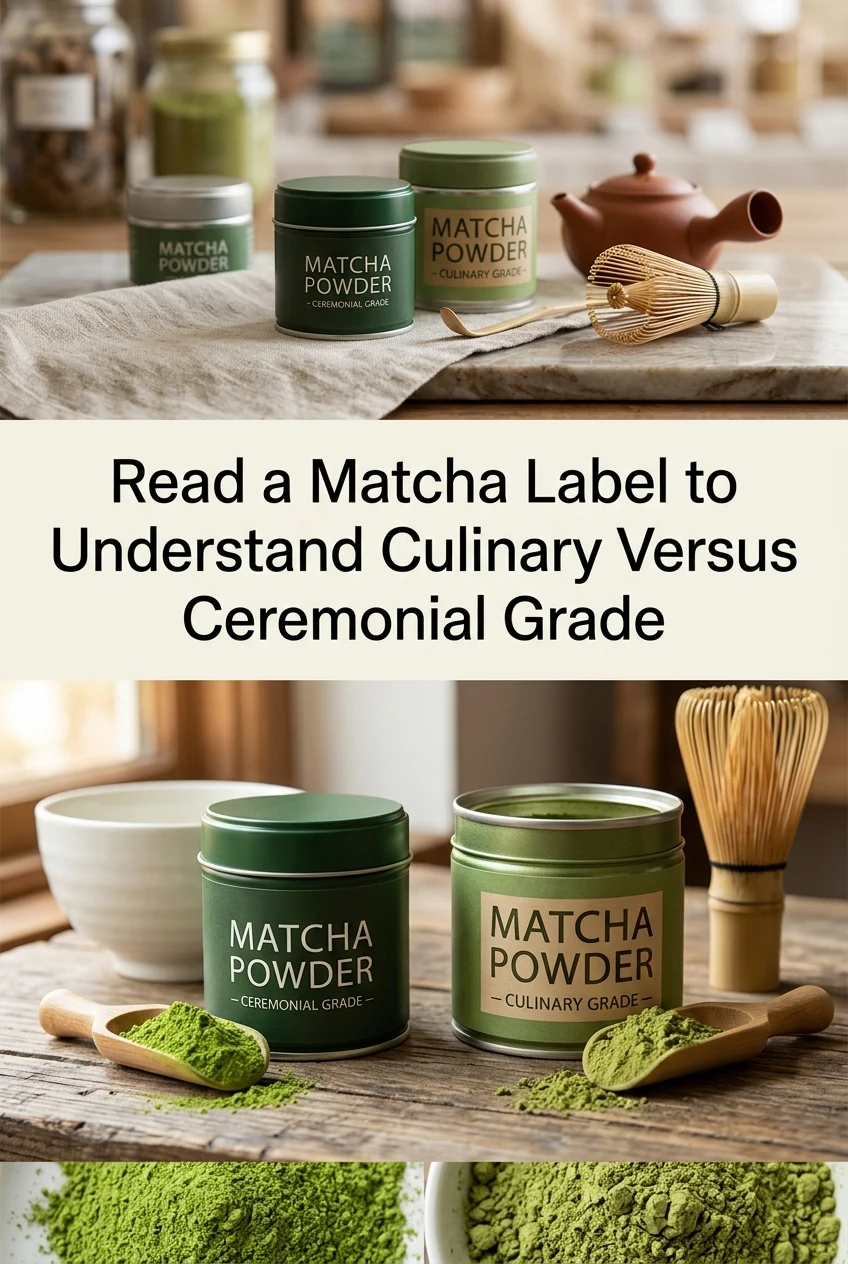
AI-generated editorial concept created for this article. The image is not a technical diagram or a tested result.
What Culinary Grade Describes on the Label
Culinary grade matcha is produced from leaves that are typically harvested later in the season or from lower canopy positions on the plant, where the leaves receive more direct sunlight. This results in a more robust, slightly more bitter flavour and a deeper, sometimes olive-tinged green colour. The powder is intended to hold its character when mixed with other strong ingredients such as sugar, dairy, flour or cocoa. It is the practical and cost-appropriate choice for baked goods, smoothies and milk-based lattes.
What Ceremonial Grade Describes on the Label
Ceremonial grade matcha is typically made from younger, shade-grown leaves harvested earlier in the season. The resulting powder is finer, brighter green and less bitter, with a more delicate umami quality. It is designed to be whisked with a small amount of hot water and consumed without added sweetener or milk, where its nuance can be appreciated directly. Using it in a baked good or a heavily sweetened latte means those subtle qualities are masked entirely, making the higher cost difficult to justify for that application.
Specific Label Details Worth Checking
Beyond the grade label, look for the harvest season if it is listed, because first harvest, sometimes called first flush or ichibancha, generally indicates younger leaves regardless of grade. Check whether the origin region is named. Japan is a common and established producer, with regions such as Uji and Nishio associated with particular production methods, though this alone does not guarantee a specific quality outcome. A listed harvest or packaging date is more useful than a vague best-before date for assessing freshness.
Colour and Texture as a Practical Check
Once you open a tin, the powder itself gives information the label may not. Culinary grade tends toward a yellower or more muted green. Ceremonial grade is typically a vivid, almost electric green. Both should feel silky and extremely fine between your fingers, not gritty or clumping in large pieces. Clumping that does not break apart easily suggests moisture exposure during storage or transport. This is an illustrative observation, not a certified grading test, but it is a useful practical reference point when comparing products.
Matching the Grade to Your Actual Use Case
For a matcha latte made with steamed or frothed milk and a small amount of sweetener, culinary grade performs well and is the economical choice. For a whisked matcha prepared with water at around 70 to 80 degrees Celsius and consumed plain, ceremonial grade is the appropriate selection. If you bake matcha into a shortbread or swirl it into a cream filling, culinary grade is sufficient because the baking process and surrounding ingredients will dominate the flavour profile regardless of grade.
A little more
to know.
Is there a regulated international standard that defines ceremonial or culinary grade matcha?
No single universal regulatory standard governs these terms. They are marketing and trade descriptors used by producers and retailers. The practical distinctions in leaf age, harvest timing and intended use are real, but the labels themselves are not independently certified by a single governing body.
Can I use ceremonial grade matcha in a latte if that is all I have available?
Yes, it will produce a latte with a finer, less bitter flavour, though the difference is largely masked by milk and sweetener. The main practical consequence is cost, not a failed drink. Adjust sweetener downward slightly since ceremonial grade is less bitter.
Original editorial guidance and recipe formulations, not independently kitchen-tested. Times are estimates and depend on equipment and product directions. Cooked bases need additional cooling and refrigeration before cold serving. Images are AI-generated illustrations; appearance and yield may vary. Check actual ingredient labels, allergens, and any certification you require. We do not certify products. Read our approach.
Save to Pinterest ↗ANOTHER IDEA FOR THE COUNTER