Read a Coffee Bag Label to Understand Roast Level and Origin Notes
A coffee bag label carries more practical information than most home brewers stop to use. Roast level descriptions and origin tasting notes are not just marketing language; they give you a reasonable starting point for predicting how a coffee will behave in a particular brewer and what flavour direction to expect in the cup. Reading these details before you open the bag helps you make better decisions about water temperature, brew time and whether a coffee suits the method you already own.
Read the note ↓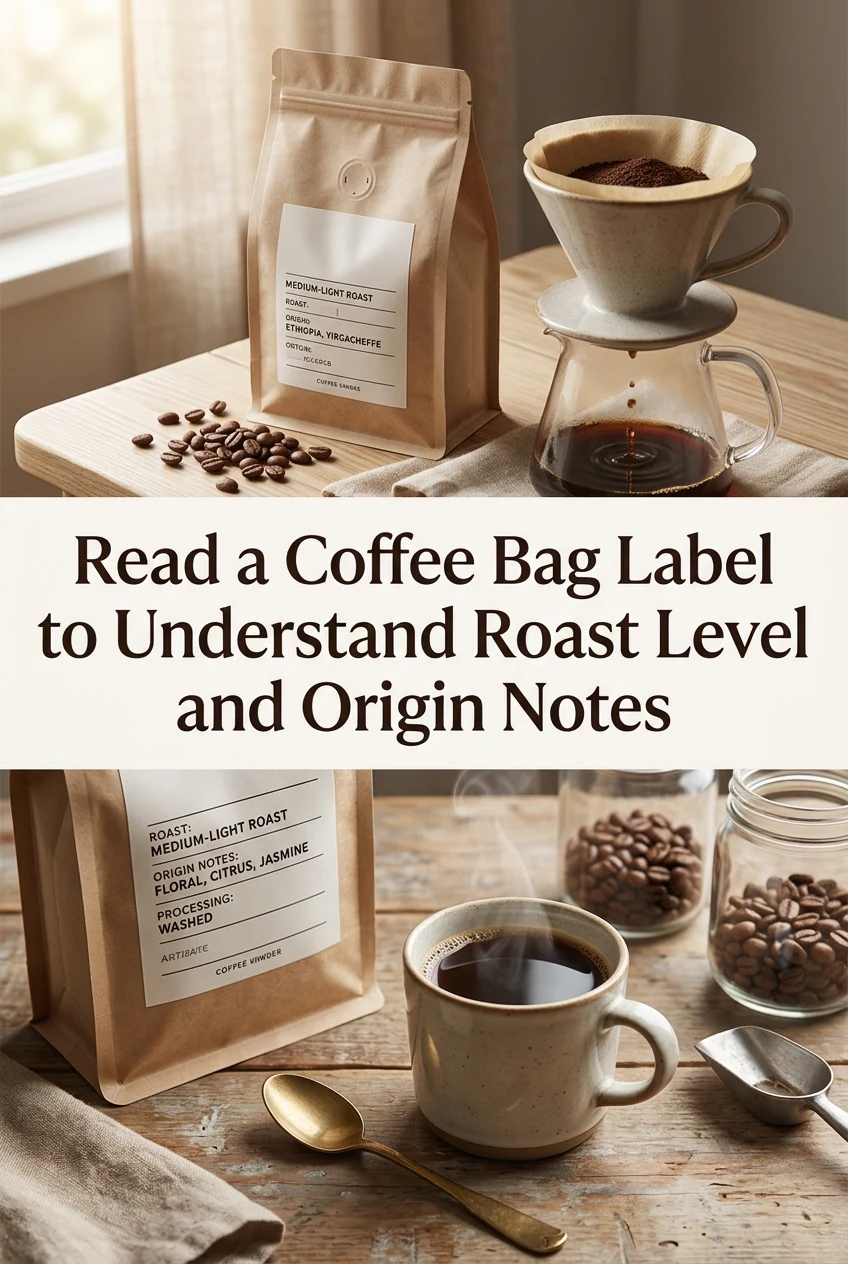
AI-generated editorial concept created for this article. The image is not a technical diagram or a tested result.
What Light Roast Labels Typically Signal
A light roast label generally indicates that the beans were taken to a lower internal temperature during roasting, preserving more of the compounds that express origin character. These coffees often show higher perceived acidity and more delicate or fruit-adjacent flavour notes in the cup. They also tend to be denser than darker roasts, which can affect how water moves through the grounds in filter brewing. This does not mean every light roast tastes the same; origin and processing method still vary the result considerably.
What Medium and Dark Roast Labels Typically Signal
Medium roast labels suggest a balance point where some origin character remains but roast-driven flavours, such as caramel or toasted grain, become more prominent. Dark roast labels indicate longer or hotter roasting that shifts the flavour profile toward bittersweet, smoky or chocolatey notes, with origin character largely receding. Dark roasts also lose more moisture during roasting, making the beans less dense. This affects how they extract in espresso machines and immersion brewers differently than lighter roasts do.
How to Read Origin Tasting Notes Practically
Tasting notes on a bag, such as stone fruit, brown sugar or citrus, describe the flavour direction a roaster perceived during cupping under controlled conditions. They are useful as a general guide rather than a precise promise. If a bag notes bright citrus and you prefer a less acidic cup, that signal helps you decide before buying. If you already own the coffee, the notes suggest which brewer might suit it; a pour-over often highlights delicate notes more than a French press does, for example.
Roast Date Versus Best Before Date
Many specialty coffee bags print a roast date rather than or alongside a best before date. Freshly roasted coffee continues to off-gas carbon dioxide for several days after roasting, and brewing too soon after the roast date can produce an uneven extraction. Most roasters suggest waiting three to seven days after the roast date before brewing filter coffee, and slightly longer for espresso, though this varies by roaster recommendation. Check the specific bag for any guidance the roaster has printed directly.
Using Label Information to Match Coffee to Your Brewer
A light roast with delicate floral notes is likely to show more of those characteristics in a brewer that uses a paper filter and a controlled pour, such as a pour-over dripper. A dark roast described as full-bodied and low-acid may suit a French press or a stovetop moka pot where more oils and heavier compounds pass through to the cup. The label does not tell you exact grind settings, as those depend on your specific grinder and brewer, but roast level gives you a reasonable starting direction.
A little more
to know.
Are tasting notes on a bag a guarantee of what I will taste in my cup?
No. Tasting notes reflect the roaster's cupping experience under specific conditions. Your brewer, water quality, grind and personal taste perception all affect what you actually experience, so treat the notes as a directional guide rather than a fixed description.
Does country of origin on the label tell me much about the flavour?
Country of origin gives a broad geographic context, but region, farm altitude, processing method and variety within that country matter just as much. Two coffees from the same country can taste quite different. Look for more specific origin detail if the label provides it.
Original editorial guidance and recipe formulations, not independently kitchen-tested. Times are estimates and depend on equipment and product directions. Cooked bases need additional cooling and refrigeration before cold serving. Images are AI-generated illustrations; appearance and yield may vary. Check actual ingredient labels, allergens, and any certification you require. We do not certify products. Read our approach.
Save to Pinterest ↗ANOTHER IDEA FOR THE COUNTER