Read a Coconut Cream Can Versus a Coconut Milk Can Before Adding Either to a Cold Drink
Coconut cream and coconut milk are sold in nearly identical cans and are often shelved side by side, but their fat content and consistency differ enough to change a cold drink's texture entirely. Adding coconut cream where coconut milk is needed produces a heavy, almost pudding-like layer, while the reverse leaves a drink thinner than intended. Reading the label before opening takes less than a minute and prevents a batch that cannot be corrected once mixed.
Read the note ↓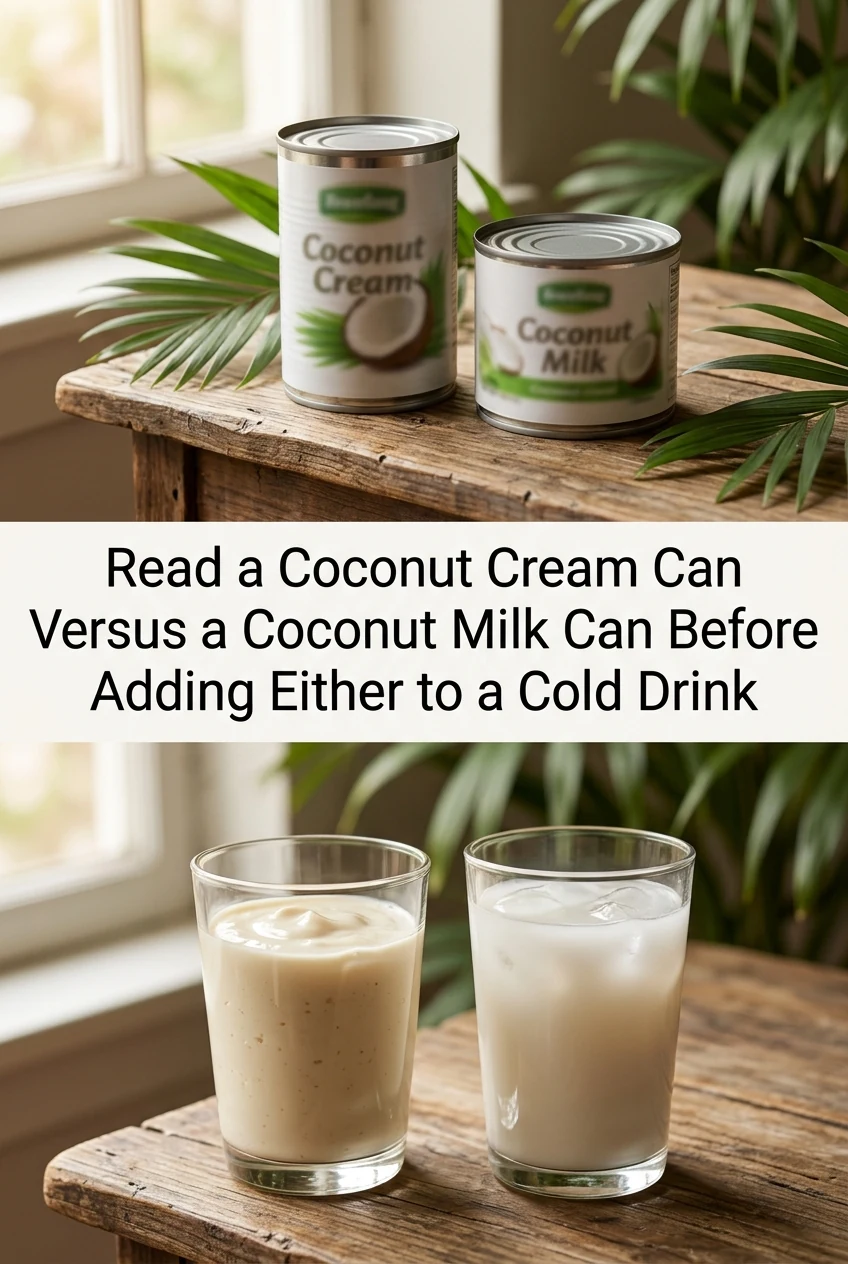
AI-generated editorial concept created for this article. The image is not a technical diagram or a tested result.
Find the fat content line on the nutrition panel
Turn the can to its nutrition facts panel and locate the total fat figure per 100 ml or per serving. Coconut cream typically lists a fat content in the range of 20 to 26 grams per 100 ml, while coconut milk usually falls between 14 and 17 grams per 100 ml, though exact figures vary by brand. These are illustrative ranges based on common product types, not a universal standard. The fat figure is the fastest single indicator of which product you are holding.
Check the ingredient list for added water
Coconut milk is made by blending coconut flesh with water, and water typically appears as the first or second ingredient. Coconut cream uses less added water, which is why it is thicker. Some brands also produce a sweetened cream of coconut, which is a different product again and contains significant added sugar. If sugar appears high on the ingredient list, you are likely holding a sweetened product rather than a plain cream, which will affect the drink's overall sweetness balance.
Shake the can and listen before opening
A can of coconut milk shaken gently produces a sloshing sound because the liquid is relatively fluid at room temperature. A can of coconut cream may sound more muted or may feel heavier for its size because the fat has solidified, particularly if the can has been stored in a cool environment. This is not a definitive test, but it provides a quick secondary confirmation before you open the can and commit the contents to your drink.
Decide which texture your drink requires
For a pourable cold fruit drink intended to flow easily through a straw, coconut milk is generally the more practical choice because it disperses into the liquid without clumping. Coconut cream suits drinks where a richer, thicker body is the goal, such as a layered drink where the cream sits visibly on top before stirring. If you want coconut cream to pour more easily, stir it thoroughly in the opened can first, as the fat and liquid separate during storage.
Measure before adding and adjust in small increments
Pour your chosen product into a measuring spoon or small jug before adding it to the drink rather than pouring directly from the can. Starting with a smaller amount, for example 30 ml, and tasting before adding more gives you control over the final texture and richness. This is especially useful when substituting one product for the other in a drink you have made before, because the difference in fat content means the same volume produces a noticeably different result.
A little more
to know.
Can I thin coconut cream down to behave like coconut milk by adding water?
You can stir in small amounts of cold water to loosen coconut cream, but the resulting mixture will not be identical to coconut milk because the fat structure differs. Add water a tablespoon at a time and stir thoroughly between additions to assess consistency before adding more.
Why does coconut cream sometimes look solid when I open the can?
The high fat content solidifies when the product is stored below room temperature. This is normal and not a sign of spoilage. Stir the contents firmly or gently warm the sealed can in warm water for a few minutes to return it to a pourable consistency before measuring.
Original editorial guidance and recipe formulations, not independently kitchen-tested. Times are estimates and depend on equipment and product directions. Cooked bases need additional cooling and refrigeration before cold serving. Images are AI-generated illustrations; appearance and yield may vary. Check actual ingredient labels, allergens, and any certification you require. We do not certify products. Read our approach.
Save to Pinterest ↗ANOTHER IDEA FOR THE COUNTER