Read a Cocoa Tin Label to Choose Between Drinks and Baking Uses
Cocoa tins on the same supermarket shelf can contain products that behave very differently in a cup or a baking tin. Fat content, whether the cocoa has been alkali-processed, and the presence of added sugar all affect flavour, colour, and how the powder interacts with liquid or leavening agents. Reading three specific sections of the label before buying takes less than a minute and prevents the common mistake of using a sweetened drinking cocoa in a brownie recipe or a low-fat cocoa in a stovetop drink.
Read the note ↓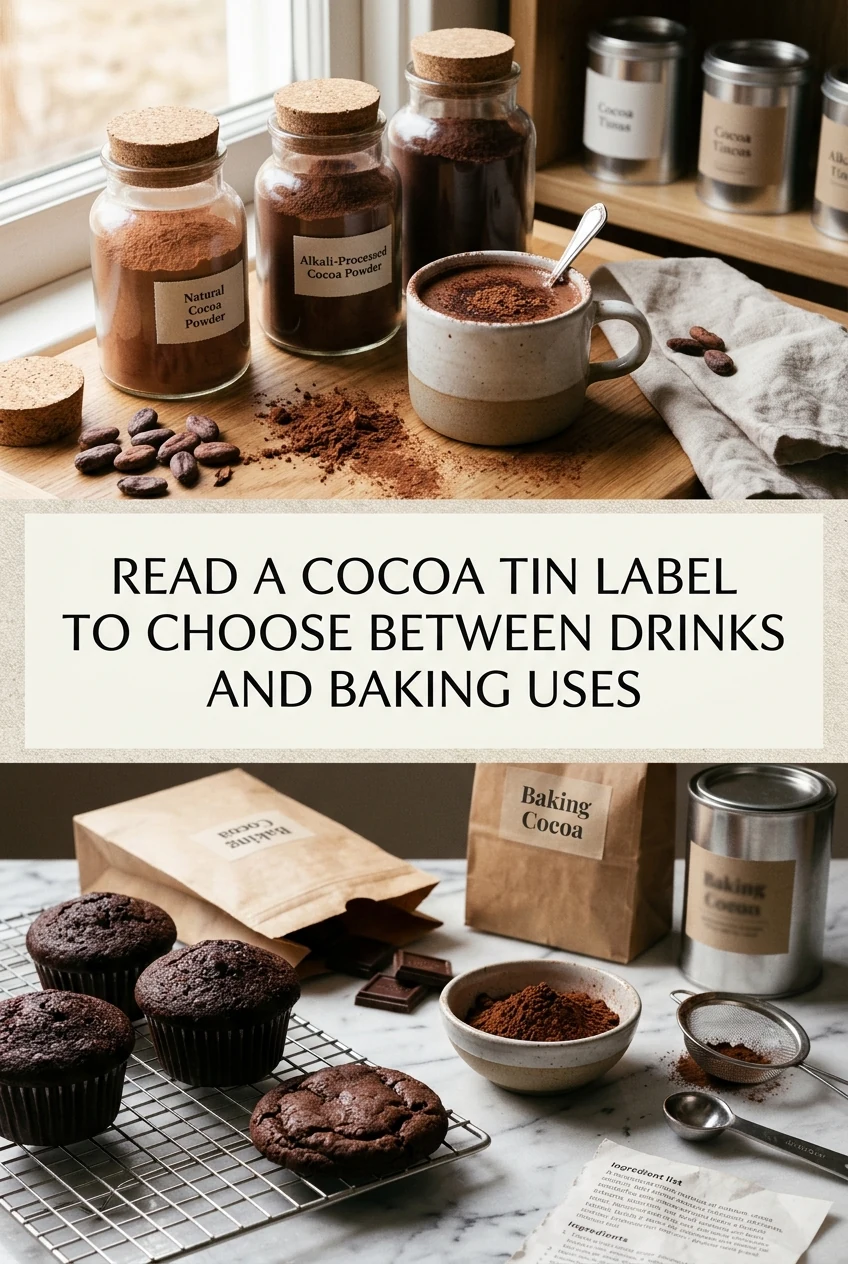
AI-generated editorial concept created for this article. The image is not a technical diagram or a tested result.
The Fat Content Line and What It Signals
The nutrition panel lists fat per serving, which reflects the cocoa butter remaining after processing. Natural cocoa powder typically contains 10 to 12 percent fat by weight, while some higher-fat baking cocoas reach 22 to 24 percent. Higher fat content produces a richer mouthfeel in a stovetop drinking chocolate and disperses more smoothly in warm milk. Lower-fat cocoa, while perfectly suitable for baking, can feel slightly chalky or thin when used as a drink without additional fat from cream or whole milk.
Alkali Processing and Its Effect on Flavour and Colour
The ingredients list will state whether the cocoa has been processed with alkali, sometimes labelled as Dutch-process. Alkali processing neutralises the natural acidity of cocoa, producing a darker colour, a milder and less sharp flavour, and reduced reaction with baking soda. Natural, non-alkalized cocoa is lighter in colour, more acidic, and reacts with baking soda to provide lift in baked goods. For a stovetop drinking chocolate, Dutch-process cocoa produces a smoother, less bitter cup. For brownies leavened with baking soda, natural cocoa is generally the more reliable choice.
Added Sugar and the Drinking Cocoa Category
Some tins marketed as drinking cocoa or hot chocolate mix contain significant added sugar, sometimes 10 to 15 grams per serving, along with dried milk solids or other additives. The ingredients list will show sugar near the top if it is a major component. These products are formulated to dissolve quickly in hot water or milk with minimal preparation, but they are not interchangeable with unsweetened cocoa in baking recipes. Using a pre-sweetened mix in a brownie recipe will alter the sugar balance and may affect texture noticeably.
Matching the Label to a Stovetop Drinking Chocolate
For a simple stovetop drinking chocolate, look for unsweetened cocoa with fat content above 20 percent if available, or a standard natural cocoa as a practical alternative. Combine 2 tablespoons of cocoa with 1 tablespoon of sugar and 2 tablespoons of whole milk in a small saucepan to form a paste, then whisk in 240 millilitres of whole milk gradually over low heat. This paste method prevents lumps regardless of fat content. Sweetness and richness can be adjusted at the end, which is easier than correcting a pre-sweetened mix.
Matching the Label to a Brownie Batch
For a standard home brownie batch using baking soda as the sole leavener, natural unsweetened cocoa is the practical choice because its acidity activates the soda. If a recipe specifies Dutch-process cocoa and uses baking powder rather than baking soda, follow that specification; substituting natural cocoa will change the lift and flavour. As an illustrative example, a batch using 50 grams of cocoa in a recipe written for Dutch-process will bake differently with natural cocoa, producing a slightly more acidic flavour and potentially uneven rise, though the result is not inedible.
A little more
to know.
Can I use the same tin of cocoa for both drinking chocolate and baking in the same week?
Yes, if the tin contains plain unsweetened natural cocoa without added sugar or milk solids. Natural unsweetened cocoa works acceptably in both applications, though it may not be the optimal choice for every specific recipe that calls for Dutch-process.
Does the country of origin on the label indicate cocoa quality?
Origin labelling on mass-market tins does not reliably indicate flavour quality for home use. Processing method and fat content, both readable on the label, have a more direct and predictable effect on how the cocoa performs in a drink or baked good.
Original editorial guidance and recipe formulations, not independently kitchen-tested. Times are estimates and depend on equipment and product directions. Cooked bases need additional cooling and refrigeration before cold serving. Images are AI-generated illustrations; appearance and yield may vary. Check actual ingredient labels, allergens, and any certification you require. We do not certify products. Read our approach.
Save to Pinterest ↗ANOTHER IDEA FOR THE COUNTER