Prevent Dilution Loss in Fresh Melon Pulp Coolers
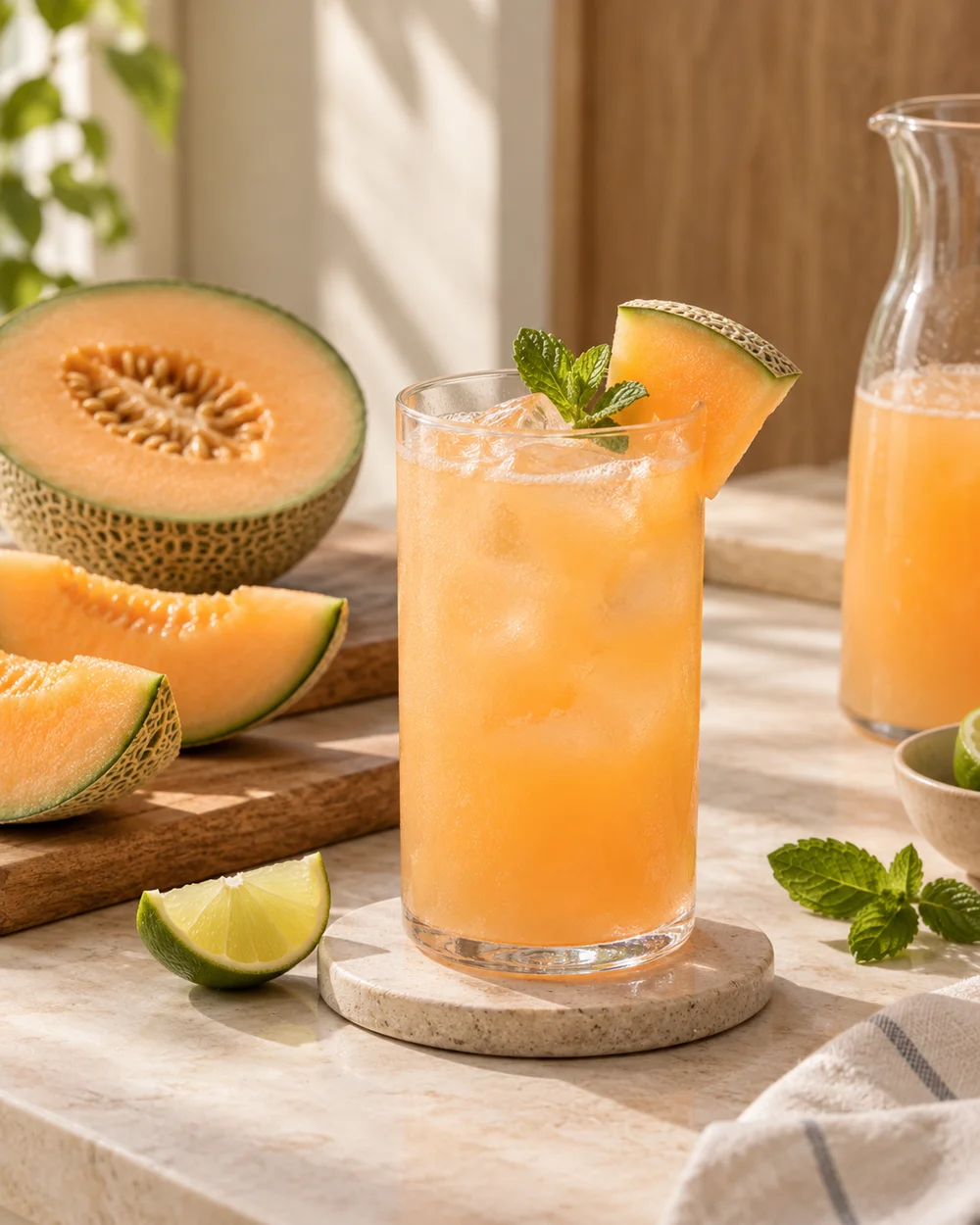
Fresh honeydew melons consist of roughly ninety percent water by weight, bound within delicate fruit cell walls. When pureeing melon for still summer coolers, many recipes call for added water to thin the mixture for drinking through a straw. Pouring too much plain water into the blender washes out the subtle floral sweetness of the fruit, leaving a watery, separated drink. Calculating the liquid balance correctly maintains genuine fruit texture and stable suspension in the glass.
Read the note ↓
Representative category illustration reused from our editorial library; it does not depict this specific project or a tested result.
Understanding Melon Water Ratios
Ripe honeydew flesh yields high liquid volume once cell walls rupture in a blender. For an illustrative batch of 200 grams of cubed honeydew, the fruit itself provides approximately 180 milliliters of natural melon juice bound with soft soluble pectin. Adding a standard cup of water adds 240 milliliters of external fluid, which easily overwhelms the natural sugar and aromatics. Minimizing supplemental liquid allows the natural sweetness and thick mouthfeel of the melon to dominate.
Controlled Liquid Incorporation
Begin blending melon chunks without any added water. Start the blender on a low pulse until the bottom blades catch a few cubes; the expressed juice quickly lubricates the remaining fruit. Once the puree flows smoothly, measure cold still water in conservative increments. For 200 grams of fruit, start with no more than 60 milliliters of cold water. This minor addition reduces excessive thickness without thinning the beverage into a flat, watery infusion.
Managing Phase Separation
Unstrained melon puree naturally stratifies over time as insoluble cellular fibers float above clarified juice. High dilution accelerates this split because lowered viscosity lets suspended solids migrate quickly. Maintaining a higher proportion of natural pulp slows separation. If serving the cooler over an extended period, gentle stirring with a bar spoon reincorporates the layers without frothing the drink. Serve immediately after preparation or store chilled below 4C to retard texture breakdown.
Balancing with Acid and Salt
Diluted melon tastes bland because melon contains low natural acidity compared to citrus. Rather than adding extra water or sugar to adjust the profile, add two milliliters of fresh lime juice and a minute pinch of fine salt per 200 grams of puree. The acid cuts through surface foam and sharpens the natural aroma, while trace sodium accentuates the intrinsic melon sugars, making the drink taste richer without adding heavy caloric syrups.
Chilling Without Melting Ice
Adding regular ice directly to the blender container introduces uncontrolled dilution as cubes shatter and melt during processing. Chill both the melon cubes and the measured still water in the refrigerator to 4C before blending. Pour the finished beverage into a chilled glass. If ice is desired for prolonged table service, use two large, solid cubes rather than crushed ice, which minimizes rapid melting and maintains stable flavor concentration.
A little more
to know.
Can I strain the melon puree through a fine sieve for a lighter texture?
Straining removes insoluble plant fibers, yielding a clear melon juice. If you strain the mixture, omit all added water completely, as pure melon juice is already thin and delicate; additional water will make the beverage taste flat.
How long can prepared honeydew cooler sit in the refrigerator?
Store the blended melon cooler in an airtight glass bottle at or below 4C for up to 24 hours. Consume promptly, as natural enzymatic activity gradually degrades the crisp melon aromatics and causes flavor fading after one day.
Original editorial guidance and recipe formulations, not independently kitchen-tested. Times are estimates and depend on equipment and product directions. Cooked bases need additional cooling and refrigeration before cold serving. Images are AI-generated illustrations; appearance and yield may vary. Check actual ingredient labels, allergens, and any certification you require. We do not certify products. Read our approach.
Save to Pinterest ↗ANOTHER IDEA FOR THE COUNTER