Prevent Cocoa Skin Formation on Warm Stovetop Drinks
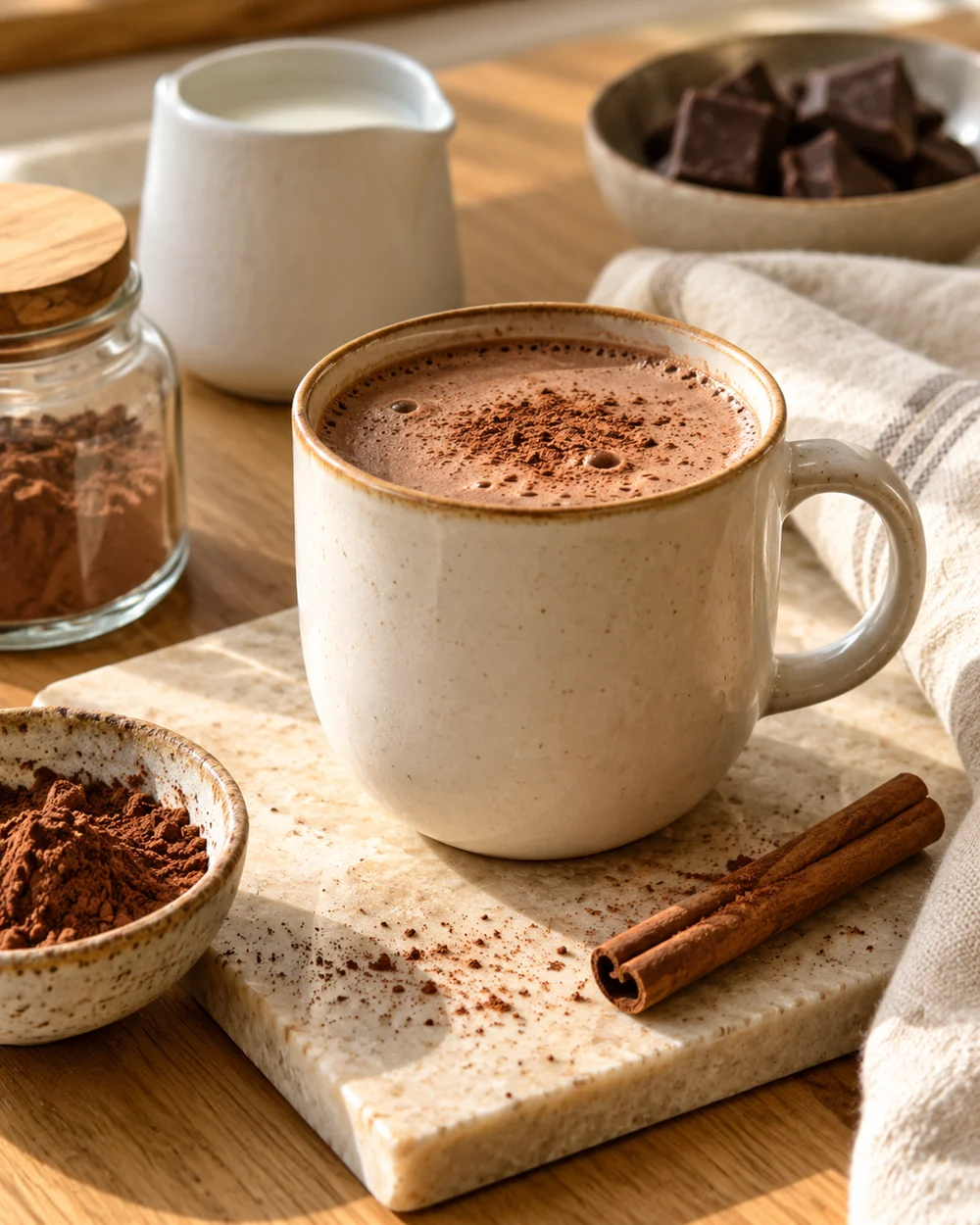
A thin film readily forms across the surface of hot dairy cocoa when moisture evaporates from the top layer of milk. This skin interferes with the smooth texture of the warm drink and can trap cocoa solids against the side of the saucepan. By pairing regular gentle stirring with low, steady stovetop heat, you limit surface drying and keep the cocoa solids evenly suspended without scorching the pot. Simple temperature moderation and moisture management help keep the beverage uniform, creamy, and free of surface sheets from the stove to the serving mug.
Read the note ↓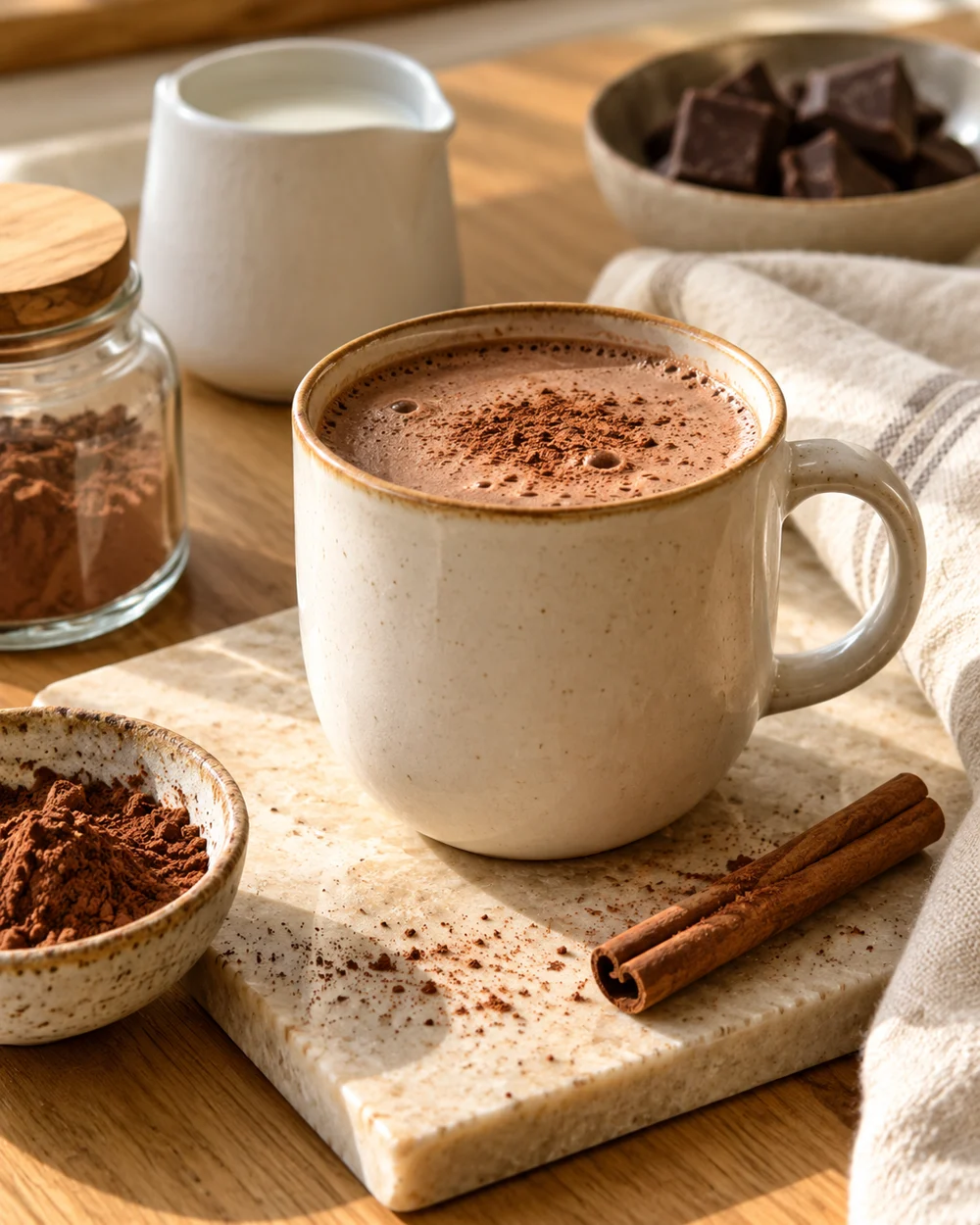
Representative category illustration reused from our editorial library; it does not depict this specific project or a tested result.
Thermal Boundaries for Dairy Proteins
Surface film develops on heated milk when moisture continuously evaporates from the open top, concentrating proteins and fats into a cohesive layer. Keeping the stovetop on a low setting warms the milk gently without accelerating this surface drying. You can use an instant-read probe thermometer to track the warming liquid and ensure it reaches a comfortable drinking temperature without overheating. If rapid bubbles begin forming along the interior perimeter of the pan, reduce the flame or slide the saucepan off the heat source temporarily to prevent the bottom from scorching and the surface from drying out.
Agitation Dynamics with Balloon Whisks
Regular agitation breaks up the drying surface before a continuous film has time to solidify. A wire balloon whisk is particularly effective for this task because it sweeps across a broad area and folds the top layer back into the warm liquid beneath. Whisk gently across the bottom and sides of the pan rather than beating the liquid into a heavy froth. Creating excessive foam leaves a layer of bubbles that dries quickly along the edges of the pot, making it harder to maintain a clean, smooth beverage.
Bounded Heat Transfer with a Base Buffer
Thin cookware often creates concentrated hot spots that warm the bottom of the milk too quickly while the surface sits still in the open air. Using a heavy-bottomed saucepan or placing a heat diffuser plate over the burner spreads the thermal output evenly across the base of the pot. In an illustrative home setup combining 250 milliliters of pasteurized whole milk with 20 grams of unsweetened cocoa powder, a low setting allows the mixture to warm steadily without scorching. Spreading the heat evenly makes it easier to maintain control while stirring.
Lid Placement and Vapor Retention
If you need to pause active stirring while warming the cocoa, place a snug lid over the saucepan. Covering the pot traps escaping steam above the liquid, keeping the air directly over the drink moist. When the air inside the pan cannot absorb more moisture, the liquid surface does not dry out into a tough skin. Keeping the saucepan covered during pauses maintains a consistent texture throughout the beverage and allows you to hold the cocoa warm for a few minutes before pouring.
Service Decanting and Rapid Handling
Once poured into mugs, warm cocoa will begin forming a surface skin within a few minutes if left standing in open room air. Pre-warming ceramic mugs with warm tap water before drying and filling them helps maintain the drink temperature without chilling the edges immediately. Serve the prepared hot chocolate promptly so it can be enjoyed while fresh and smooth. If any untouched cocoa remains in the saucepan, transfer it to a covered container and refrigerate it at or below 4°C within two hours of cooking.
A little more
to know.
Can I remove a skin once it has already formed on the pan?
Lift the skin away cleanly using the tines of a table fork. Never whisk a formed skin back into the beverage, as the coagulated protein will not redissolve and leaves stringy flecks throughout the cup.
Does adding granulated sugar early help prevent skin formation?
Adding sugar early sweetens the cocoa and helps disperse dry cocoa solids, but it does not stop a surface skin from forming on warm milk. Surface skin is driven primarily by moisture evaporating from the liquid into open air. Gentle heating on low, regular stirring with a whisk, and covering the pot when resting remain the most reliable ways to keep the surface smooth.
Original editorial guidance and recipe formulations, not independently kitchen-tested. Times are estimates and depend on equipment and product directions. Cooked bases need additional cooling and refrigeration before cold serving. Images are AI-generated illustrations; appearance and yield may vary. Check actual ingredient labels, allergens, and any certification you require. We do not certify products. Read our approach.
Save to Pinterest ↗ANOTHER IDEA FOR THE COUNTER