Prepare a Small Portion of Plain Hummus for Toast
This note describes one illustrative home-cafe approach to assembling a small batch of plain hummus from ready-cooked chickpeas, tahini, and measured liquid. It is written as a preparation guide, not a kitchen-tested result. Quantities, textures, and outcomes will vary with the specific brands and equipment you have on hand. Treat every figure here as a starting point to adjust through your own observation.
Read the note ↓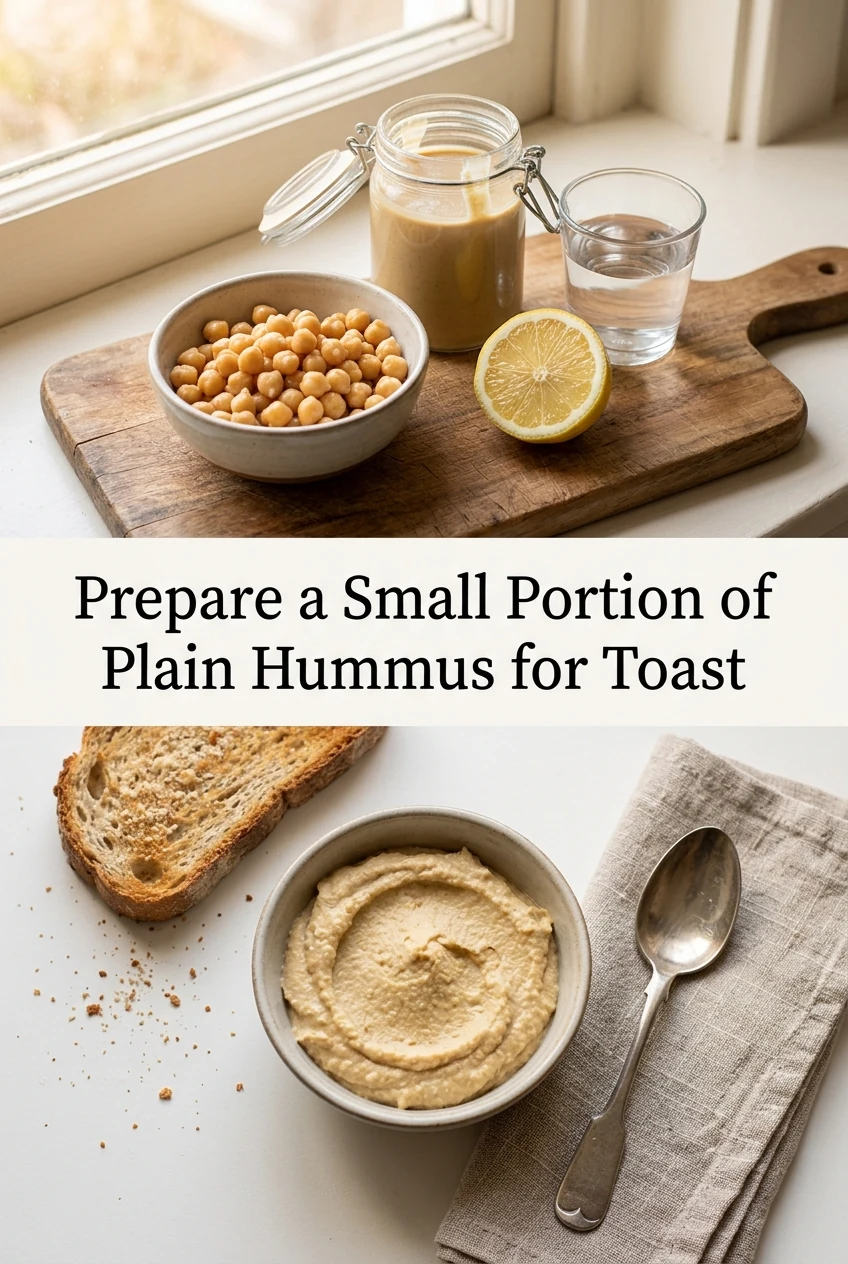
AI-generated editorial concept created for this article. The image is not a technical diagram or a tested result.
Gather Your Ingredients and Equipment
For a small portion sized to spread across roughly four slices of toast, plan to start with approximately 240 grams of ready-cooked chickpeas, drained and rinsed from a can or pouch. You will also need two tablespoons of tahini, two tablespoons of cold water, one tablespoon of fresh lemon juice, and a small pinch of fine salt. Confirm that your tahini is labeled halal and that any flavoring additions you consider are explicitly alcohol-free. For equipment, a compact food processor or a hand blender with a tall beaker works well for this batch size. Have a clean airtight container ready before you begin, since the finished hummus is a perishable chilled food and should move into refrigeration promptly.
Prepare the Chickpeas
Drain the chickpeas into a colander and rinse them under cold running water until the water runs clear. This removes the canning liquid, which can affect the final flavor. If you notice any chickpeas that look discolored or feel unusually soft, set them aside. Pat the rinsed chickpeas loosely with a clean kitchen towel to remove surface water. Removing excess surface moisture before blending helps you control how much additional liquid you add later, giving you more predictable influence over the consistency. Place the prepared chickpeas into the bowl of your food processor or into the blender beaker.
Combine and Blend in Stages
Add the two tablespoons of tahini and one tablespoon of lemon juice to the chickpeas. Blend briefly, then pause and scrape down the sides of the bowl with a spatula. Add one tablespoon of cold water and blend again. Assess the texture at this point. If the mixture looks very thick and the blender is laboring, add the second tablespoon of cold water gradually, blending between small additions. The goal for a toast spread is a consistency that holds its shape when spooned but is smooth enough to spread without tearing the bread. Add the pinch of salt, blend once more briefly, and taste. Adjust salt or lemon juice in very small increments according to your preference. This is an illustrative sequence; your actual result depends on your specific chickpeas, tahini brand, and blender.
Transfer and Chill Without Delay
Spoon the finished hummus into your clean airtight container immediately after blending. Do not leave it sitting at room temperature while you prepare other things. Smooth the surface lightly with the back of a spoon, press a piece of food-safe cling film directly against the surface if you wish to limit air contact, then seal the container lid. Place the container in the refrigerator straight away. Chilled food handling requires that perishable items like freshly made hummus are refrigerated promptly. Do not assign a specific number of days to how long this batch will keep, as that depends on your refrigerator conditions, the freshness of your ingredients, and how the container is handled. Use your own judgment and discard any portion that smells off or shows visible change.
Assemble the Toast Portion
When you are ready to serve, remove only the amount of hummus you intend to use immediately and return the container to the refrigerator. Toast your bread to your preferred level using your toaster according to its own manufacturer instructions. Spoon a measured amount of chilled hummus onto the warm toast and spread it with the back of a spoon or a small palette knife. For a simple finish, a light drizzle of olive oil and a pinch of ground cumin work well. This assembly note covers one worked example using four slices as a reference point. Scale the chickpea quantity up or down proportionally if your portion size differs, keeping the ratio of tahini and liquid roughly consistent relative to the chickpea weight.
A little more
to know.
Can I use dried chickpeas instead of ready-cooked ones for this approach?
This guide is written specifically around ready-cooked chickpeas because they remove the soaking and cooking steps, keeping the process straightforward for a small home-cafe batch. Dried chickpeas require soaking and cooking times that vary considerably and are outside the scope of this particular note. If you choose to use dried chickpeas, follow the preparation instructions provided by your chickpea supplier before proceeding with the blending steps described here.
Why is cold water suggested rather than warm water for blending?
Cold water is a commonly used choice in hummus preparation because it can help the mixture emulsify smoothly when combined with tahini. This note reflects that general practice as an illustrative starting point. It is not a tested performance claim, and the outcome will depend on your specific ingredients and equipment. If you find a different liquid temperature works better with your setup, adjust accordingly based on your own observation.
Original editorial guidance and recipe formulations, not independently kitchen-tested. Times are estimates and depend on equipment and product directions. Cooked bases need additional cooling and refrigeration before cold serving. Images are AI-generated illustrations; appearance and yield may vary. Check actual ingredient labels, allergens, and any certification you require. We do not certify products. Read our approach.
Save to Pinterest ↗ANOTHER IDEA FOR THE COUNTER