Prepare a Small Oat Shortbread Batch Sized to Fit One Standard Baking Tray
Shortbread dough portions placed too close together on a tray spread into each other during baking, producing soft edges and uneven browning. The fix is not a different recipe but a deliberate decision made before mixing: count how many cookies your tray can hold with proper spacing, then scale the dough quantity to match that number exactly. One standard half-sheet tray measuring roughly 30 by 40 centimeters is a practical target for a small home batch and gives you a concrete number to work backward from.
Read the note ↓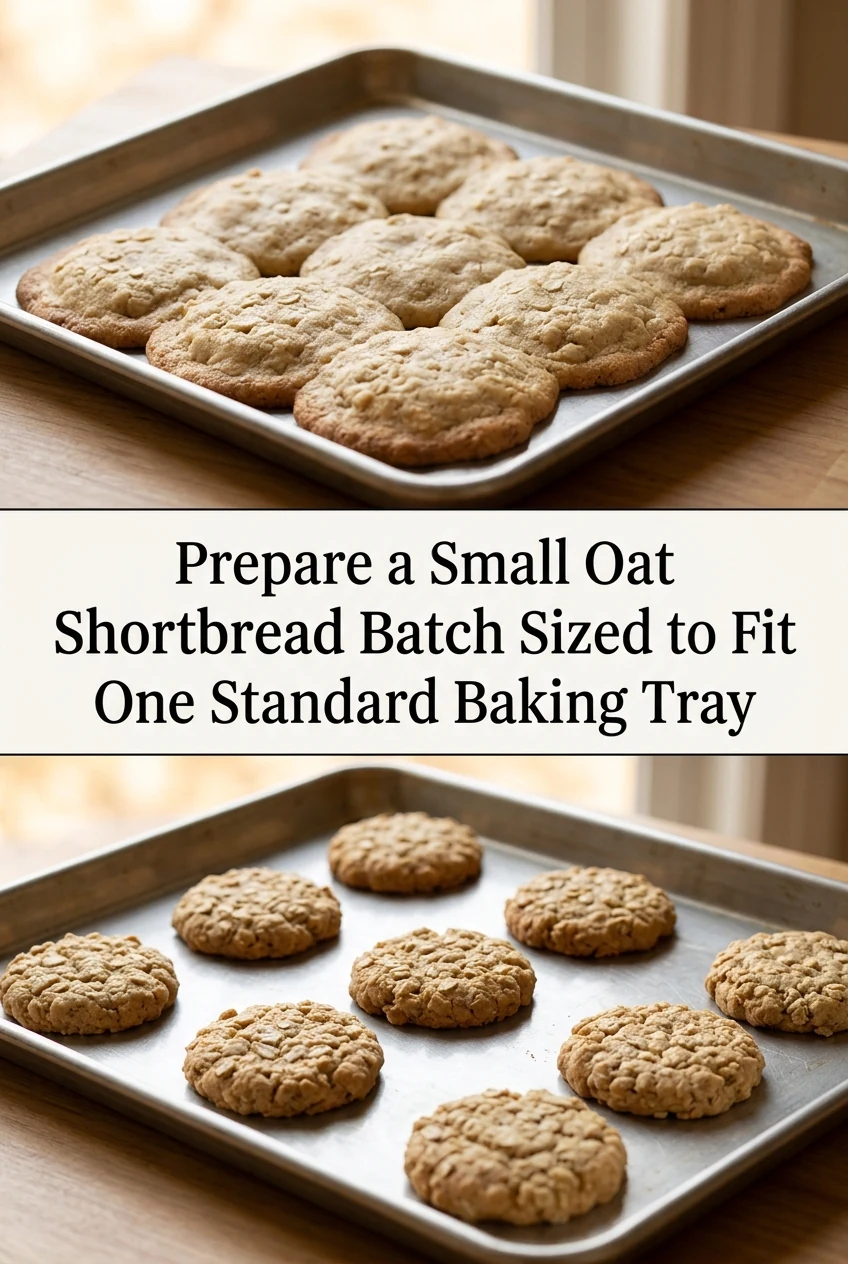
AI-generated editorial concept created for this article. The image is not a technical diagram or a tested result.
Measuring the Tray Before Mixing Dough
Place your baking tray on the counter and measure its interior dimensions. A common half-sheet tray has an interior of approximately 30 by 40 centimeters. Shortbread rounds cut to 5 centimeters in diameter need at least 2 centimeters of space on all sides to bake without touching. Laid out in a four-by-three grid, that tray holds twelve portions comfortably. Knowing this number before you mix means you scale ingredients for exactly twelve cookies rather than guessing and crowding the tray.
Scaling the Dough to Match the Portion Count
A simple oat shortbread formula for twelve 5-centimeter rounds uses 120 grams of plain flour, 40 grams of rolled oats, 80 grams of cold unsalted butter cut into small cubes, and 40 grams of icing sugar. These are illustrative quantities for a single tray and not a verified tested recipe; adjust to your own trusted source. The point is to start from the tray capacity and work backward to the ingredient amounts rather than mixing a full batch and hoping it fits.
Portioning Dough Consistently
After mixing and chilling the dough for at least 30 minutes in the refrigerator, roll it to a uniform thickness of roughly 8 millimeters on a lightly floured surface. Use a round cutter of consistent diameter and press straight down without twisting, which keeps the edges clean. Gather scraps, re-roll once, and cut remaining portions. Lay each round on the lined tray as you cut it so you can see immediately whether all twelve fit within the spacing you planned.
Spacing and Oven Position for Even Baking
Place the tray on the middle rack of the oven. The middle position allows heat to circulate above and below the cookies without the bottom browning faster than the top. If your oven runs hotter at the back, rotate the tray halfway through the baking time. Shortbread is done when the edges are just beginning to turn a pale golden color and the surface looks dry and set. The center may feel slightly soft but will firm as the cookies cool on the tray.
Cooling and Storing the Batch
Leave the cookies on the tray for five minutes after removing from the oven before transferring to a wire rack. Moving them too soon risks breaking the still-fragile structure. Once fully cooled to room temperature, store in an airtight container. Shortbread contains butter and should not be left at room temperature for extended periods in a warm kitchen. Consume within a few days and refrigerate if your kitchen is consistently warm, bringing cookies back to room temperature before serving.
A little more
to know.
Why does my shortbread spread more than expected even with correct spacing?
Butter that is too warm before baking is the most common cause. If the dough feels soft or greasy after cutting, return the entire tray to the refrigerator for 15 minutes before placing it in the oven. Cold butter holds its shape longer during the initial heat exposure.
Can I use quick oats instead of rolled oats in this type of shortbread?
Quick oats are more finely milled and absorb moisture faster, which can make the dough slightly stickier and the baked texture less distinct. Rolled oats provide a more noticeable texture contrast. Either can work, but expect a slightly different result and adjust chilling time if the dough feels too soft.
Original editorial guidance and recipe formulations, not independently kitchen-tested. Times are estimates and depend on equipment and product directions. Cooked bases need additional cooling and refrigeration before cold serving. Images are AI-generated illustrations; appearance and yield may vary. Check actual ingredient labels, allergens, and any certification you require. We do not certify products. Read our approach.
Save to Pinterest ↗ANOTHER IDEA FOR THE COUNTER