Prepare a Small Dish of Plain Whipped Cream for Immediate Service
A small portion of freshly whipped cream made just before service adds a simple, clean finish to a hot drink or dessert plate. This note describes one illustrative approach for preparing a modest quantity at home using chilled pasteurized heavy whipping cream, a hand whisk or a handheld electric mixer, and a cold bowl. It is written as a practical preparation guide rather than a laboratory-tested result, and every step reflects the understanding that whipped cream is a perishable dairy product that should be served promptly and refrigerated without delay when not in use.
Read the note ↓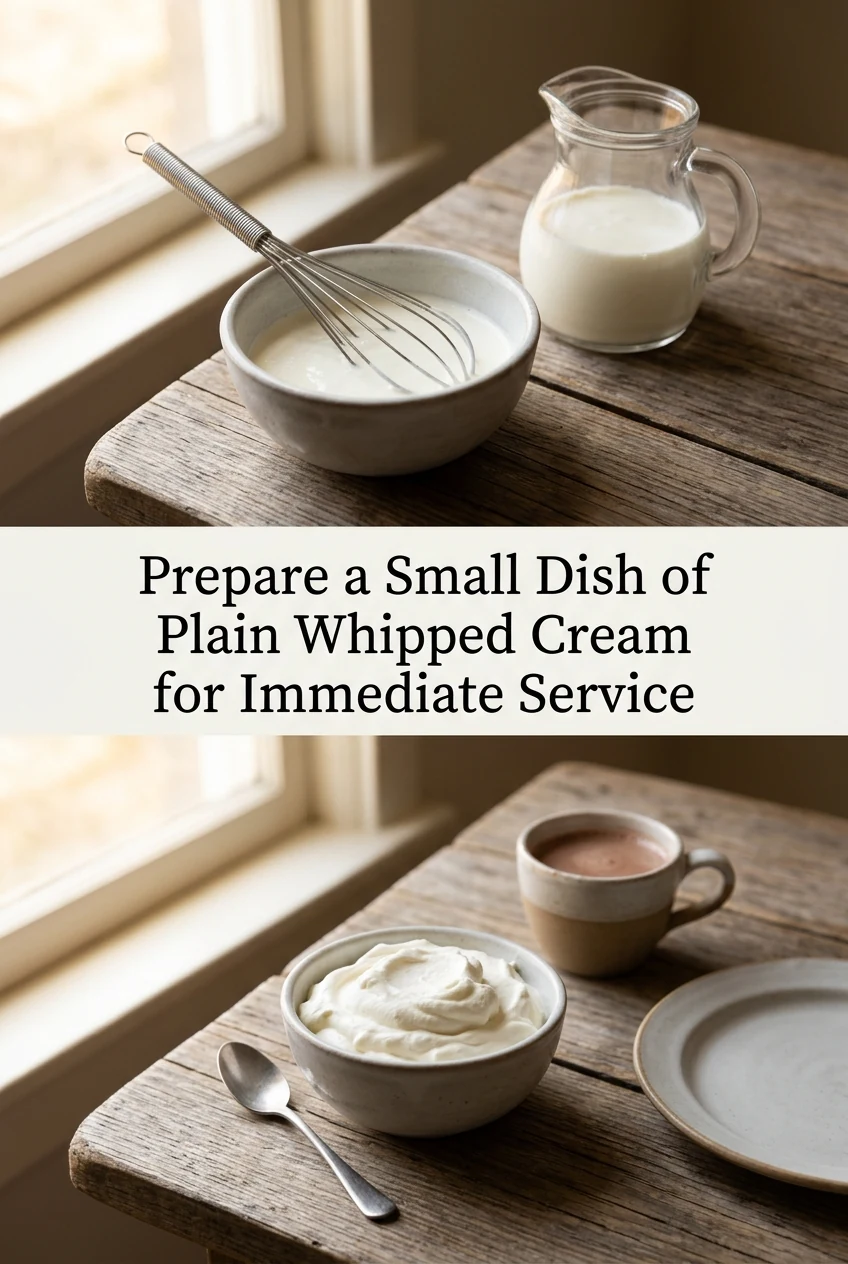
AI-generated editorial concept created for this article. The image is not a technical diagram or a tested result.
Gather Ingredients and Check Labels
You will need pasteurized heavy whipping cream with a fat content of at least 35 percent, which is the range that allows cream to hold a whipped structure. Check the carton date before you begin and confirm the cream has been kept continuously refrigerated. If you plan to add any flavoring, use only a product explicitly labeled as alcohol-free vanilla flavoring, not a standard vanilla extract, which typically contains alcohol. For a lightly sweetened version, plain caster sugar or icing sugar works well. For a single serving, a starting quantity of 60 milliliters of cold cream is a reasonable illustrative amount; this volume roughly doubles in bulk during whipping, yielding approximately 120 milliliters of finished cream, enough for one or two drinks or a small dessert portion.
Chill Your Bowl and Tools Before You Start
Cold equipment helps cream whip more efficiently because fat in the cream stays firm and traps air more readily when everything is cold. Place your mixing bowl and whisk attachment or whisk in the refrigerator for at least 15 minutes before you begin. A stainless steel or glass bowl works well because both materials hold a chill. Do not use a warm bowl that has just come from the dishwasher. While the bowl chills, keep the cream carton in the refrigerator rather than leaving it on the counter. This is a practical preparation habit rather than a guaranteed performance formula, and results can vary depending on your specific cream, room temperature, and equipment.
Whip the Cream in Short Stages
Pour the cold cream into the chilled bowl. If you are using a handheld electric mixer, begin on a low speed setting according to your mixer's own instructions, then increase gradually. If you are using a hand whisk, use a steady circular motion. Work in a cool part of your kitchen if possible. Watch the cream rather than timing it by the clock, because the time needed varies. The cream will first look frothy, then thicker, and eventually it will form soft peaks that hold their shape briefly when the whisk is lifted but curl gently at the tip. For a plain topping intended for immediate service, soft to medium peaks are appropriate. Stop before the cream becomes grainy or begins to separate, as over-whipped cream cannot be corrected by further mixing. If you are adding a small amount of caster sugar or alcohol-free vanilla flavoring, fold it in gently at the soft-peak stage.
Portion and Serve Without Delay
Spoon the whipped cream directly onto the drink or plate you are serving. Because this is a perishable dairy preparation with no added stabilizers, it is intended for immediate consumption. Do not leave whipped cream sitting at room temperature while you prepare other items. If a brief wait is unavoidable before the guest receives the dish, keep the portioned cream in the refrigerator. Any unused whipped cream should be transferred to a clean covered container and refrigerated promptly. It will begin to weep liquid and lose its structure over time, so it is best used as soon as possible rather than stored with an expectation of lasting freshness. Discard any cream that has been left unrefrigerated for an extended period.
Clean Up and Store Remaining Cream Correctly
Rinse your bowl and whisk with cold water before washing, as hot water can make dairy residue harder to remove. Wash all equipment thoroughly with warm soapy water and allow it to dry completely before storing. Return any unused pasteurized cream to the refrigerator immediately in its original sealed carton. Do not transfer cream to an open container for refrigerator storage, as it will absorb odors and may spoil faster. Follow the storage guidance printed on the cream carton by the manufacturer rather than relying on a general estimate.
A little more
to know.
Can I prepare the whipped cream an hour before I need it?
Whipped cream without stabilizers is best made as close to service time as possible. If you must prepare it slightly ahead, spoon it into a small covered dish and keep it in the refrigerator. Expect some weeping and softening even over a short period. This guide is written for immediate service, so advance preparation is outside its intended scope.
What should I do if the cream is not thickening?
Check that your cream, bowl, and whisk are all cold. Warm equipment or cream that has sat at room temperature is a common reason whipping takes longer or does not progress well. Return everything to the refrigerator for a few minutes, then try again. Also confirm that your cream has a fat content of at least 35 percent, as lower-fat products such as single cream or half-and-half are not designed to whip to a stable peak.
Original editorial guidance and recipe formulations, not independently kitchen-tested. Times are estimates and depend on equipment and product directions. Cooked bases need additional cooling and refrigeration before cold serving. Images are AI-generated illustrations; appearance and yield may vary. Check actual ingredient labels, allergens, and any certification you require. We do not certify products. Read our approach.
Save to Pinterest ↗ANOTHER IDEA FOR THE COUNTER