Prepare a Small Cocoa and Hazelnut Paste Sauce for Drizzling Over Warm Drinks
A drizzle sauce made from cocoa powder and finely ground roasted hazelnuts dissolves cleanly into a warm cup without the dry lumps that appear when cocoa is added directly to liquid. The method relies on sifting, fine grinding and controlled water temperature rather than any specialist equipment. This guide walks through making a small batch of roughly 60 ml, enough to decorate four to six drinks, with notes on consistency and short-term storage.
Read the note ↓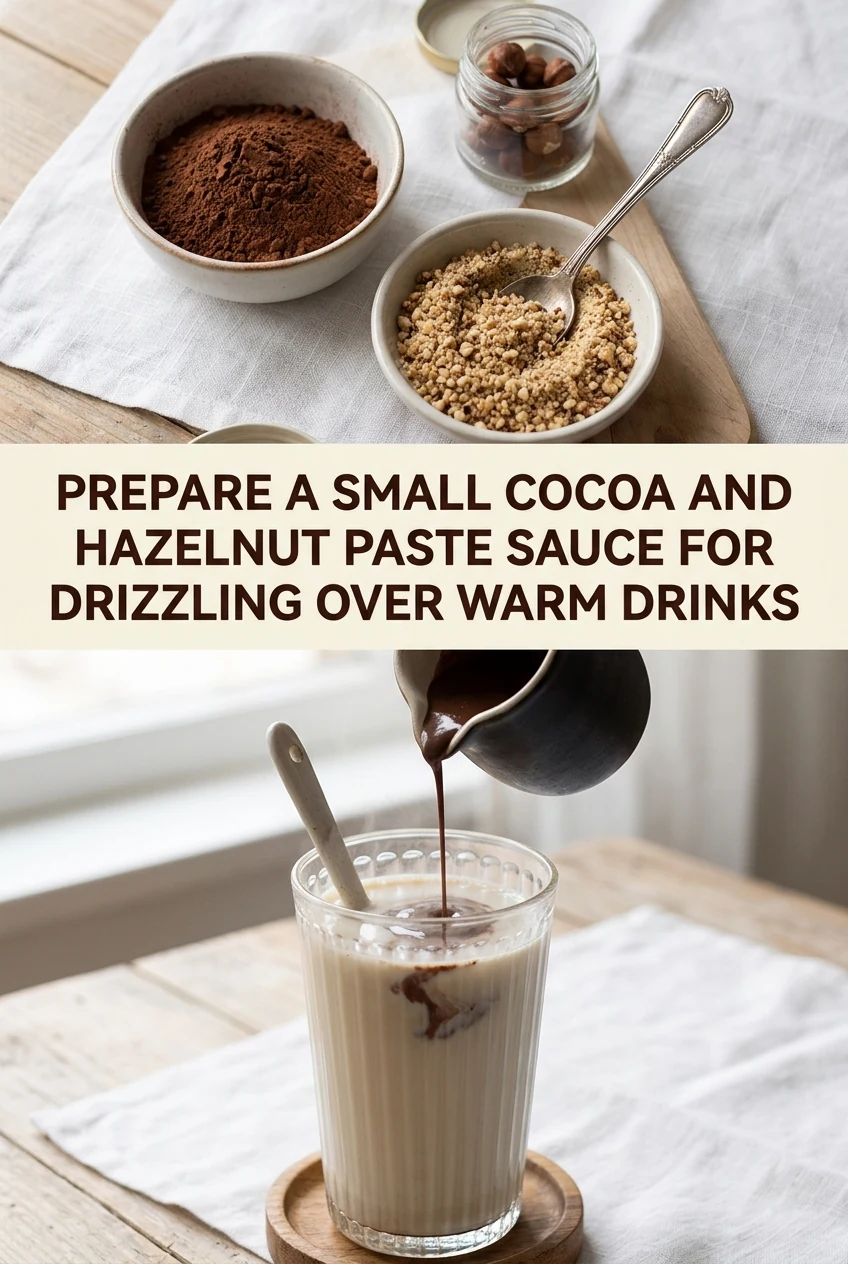
AI-generated editorial concept created for this article. The image is not a technical diagram or a tested result.
Grind and Sift the Dry Ingredients
Measure 15 g of unsweetened cocoa powder and 20 g of dry-roasted hazelnuts with skins removed. Pulse the hazelnuts in a small food processor or spice grinder until they reach a fine, sandy texture with no visible large pieces. Sift the cocoa powder through a fine-mesh sieve into a small bowl, pressing any soft lumps through the mesh with the back of a spoon to retain the full measured amount. Combine the sifted cocoa and ground hazelnuts in the bowl and stir briefly to distribute them evenly before adding any liquid.
Dissolve Sugar Into Warm Water
Measure 30 ml of water and heat it in a small saucepan over low heat until steam begins to rise, without letting it boil. Stir in 20 g of caster sugar until fully dissolved into a clear syrup. Removing the pan from heat before the water boils prevents rapid evaporation, which would make the final sauce thicker than intended and harder to control when drizzling. The dissolved sugar provides necessary viscosity and body, helping the sauce rest neatly atop textured milk foam rather than bleeding immediately into the drink.
Combine Wet and Dry Ingredients
Pour the warm sugar water gradually into the dry mixture in three small additions, stirring vigorously after each pour. Adding all the liquid at once can create a lumpy paste that is difficult to smooth out. After the third addition, the sauce should look glossy and flow slowly off the spoon in a thin ribbon. If it looks grainy, stir for another 30 seconds; the residual heat and steady stirring finish hydrating the cocoa and evenly dispersing the hazelnut particles into a smooth suspension. The finished volume is approximately 55 to 65 ml.
Test Consistency Before Using
Dip a teaspoon into the sauce and hold it horizontally over the bowl. The sauce should drip in a slow, steady stream rather than dropping in blobs or running off instantly. If it is too thick, stir in 5 ml of warm water and test again. If it is too thin, allow it to cool slightly so the cocoa solids and nut fats settle into a thicker consistency, or whisk in a tiny pinch of extra sifted cocoa. Consistency matters because a sauce that is too thin sinks through milk foam rather than sitting on the surface.
Drizzle and Store the Remainder
Transfer the sauce to a small squeeze bottle or a piping bag with a fine tip for controlled drizzling over a warm flat white, hot chocolate or chai. Work quickly while the sauce is warm and fluid. Pour any unused sauce into a small airtight jar, press a piece of parchment or cling film directly onto the surface to prevent a skin forming, and store it in the refrigerator for prompt use. Rewarm gently by placing the sealed jar in a bowl of warm water, stirring until fluid again.
A little more
to know.
Can I use hazelnut flour instead of grinding whole hazelnuts?
Hazelnut flour works if it is finely milled and dry. Check that it has no added oil or salt, as both affect how the sauce emulsifies. Measure the same 20 g by weight and sift it together with the cocoa before adding liquid.
Why does the sauce sometimes separate in the refrigerator?
Natural oils from the hazelnuts can rise to the surface when cold. Stir the sauce thoroughly after rewarming and before use. If separation is severe, whisk briefly while rewarming over the bain-marie to re-emulsify it.
Original editorial guidance and recipe formulations, not independently kitchen-tested. Times are estimates and depend on equipment and product directions. Cooked bases need additional cooling and refrigeration before cold serving. Images are AI-generated illustrations; appearance and yield may vary. Check actual ingredient labels, allergens, and any certification you require. We do not certify products. Read our approach.
Save to Pinterest ↗ANOTHER IDEA FOR THE COUNTER