Prepare a Small Batch of Sesame and Honey Shortbread for a Warm Café Tray
A small batch of sesame and honey shortbread produces twelve to fourteen rounds from a single mixing session, which is a practical quantity for a café tray without excess. The technique depends on chilling the dough before slicing, which firms the butter and keeps the rounds from spreading unevenly in the oven. This guide covers mixing, chilling, slicing and baking in sequence, with attention to the steps where shortbread most commonly fails to hold its shape or brown evenly.
Read the note ↓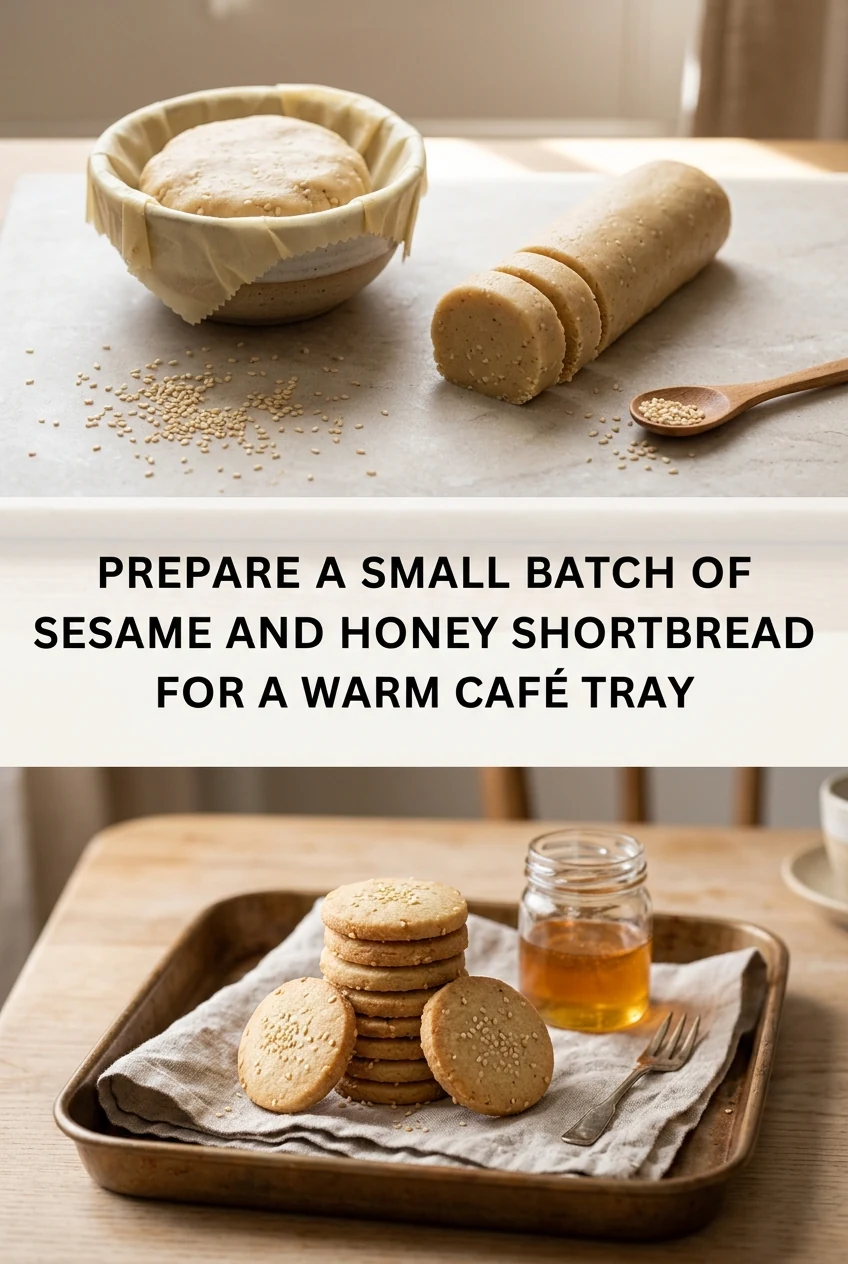
AI-generated editorial concept created for this article. The image is not a technical diagram or a tested result.
Mixing the dough without overworking it
Combine 100 grams of plain flour, 50 grams of cold unsalted butter cut into small cubes, 20 grams of icing sugar and 15 grams of toasted sesame seeds in a bowl. Rub the butter into the flour with your fingertips until the mixture resembles coarse crumbs, then add the 20 grams of honey and press the dough together. Work quickly and stop as soon as the dough holds when squeezed. Overworking develops gluten and produces a tough, less crumbly result rather than the sandy texture shortbread requires.
Shaping and chilling the dough log before slicing
Turn the dough onto a lightly floured surface and shape it into a log roughly 4 centimetres in diameter and 12 to 14 centimetres long. Wrap it tightly in cling film and refrigerate for at least 45 minutes. Chilling firms the butter so the log slices cleanly without crumbling or distorting. If you slice warm dough, the rounds compress unevenly and the sesame seeds can push through the surface, creating weak points that break during baking or lifting.
Slicing and spacing on the baking tray
Remove the log from the refrigerator and slice into rounds approximately 1 centimetre thick using a sharp knife in a single downward motion rather than a sawing action. A sawing motion drags the sesame seeds and distorts the cut edge. Place slices on a baking tray lined with parchment paper, leaving at least 2 centimetres between each piece. Shortbread spreads modestly during baking, and crowded pieces can merge at the edges, making them difficult to separate cleanly once cooled.
Baking at the temperature your recipe specifies
Follow the temperature stated in your specific recipe, as oven calibration varies between models. A common range for shortbread rounds is 160 to 170 degrees Celsius in a conventional oven, but this is a general reference rather than a guaranteed setting for your appliance. Bake until the edges are lightly golden and the surface looks dry and set, which typically takes 14 to 18 minutes depending on thickness and your oven. Check at the lower end of the time range to avoid over-browning the honey, which darkens faster than plain shortbread.
Cooling before lifting onto the serving plate
Leave the shortbread on the tray for at least 10 minutes after removing from the oven. Shortbread is fragile when hot because the butter is still fluid inside the crumb structure. Lifting pieces too soon causes them to crack or bend. Once cooled to the point where they feel firm when gently pressed, transfer them to a wire rack or directly onto the café serving plate. Store any remaining pieces in an airtight container at room temperature.
A little more
to know.
Can the dough log be prepared the night before and sliced the next morning?
Yes. The wrapped log keeps well in the refrigerator overnight. Remove it 5 minutes before slicing to take the edge off the chill, which makes cutting slightly easier without softening the butter enough to cause distortion during slicing.
Why does honey sometimes cause the shortbread to spread more than expected?
Honey adds moisture and sugar that liquefy during baking, which can increase spread if the dough was not chilled adequately or if the honey quantity exceeds the recipe. Chilling the dough log fully before baking is the most reliable way to control spread with honey-containing shortbread.
Original editorial guidance and recipe formulations, not independently kitchen-tested. Times are estimates and depend on equipment and product directions. Cooked bases need additional cooling and refrigeration before cold serving. Images are AI-generated illustrations; appearance and yield may vary. Check actual ingredient labels, allergens, and any certification you require. We do not certify products. Read our approach.
Save to Pinterest ↗ANOTHER IDEA FOR THE COUNTER