Prepare a Small Batch of Quince and Vanilla Syrup for Warm Milk Drinks
Quince is a harder, more fibrous fruit than pear or apple, and it needs longer simmering before its flavour fully transfers into a syrup base. Rushing the process leaves a thin, faintly flavoured liquid that does not hold up in warm milk. Knowing how to judge the right reduction point and how to strain out the pulp without pressing cloudiness back into the syrup makes the difference between a clear, aromatic result and one that looks murky in the cup.
Read the note ↓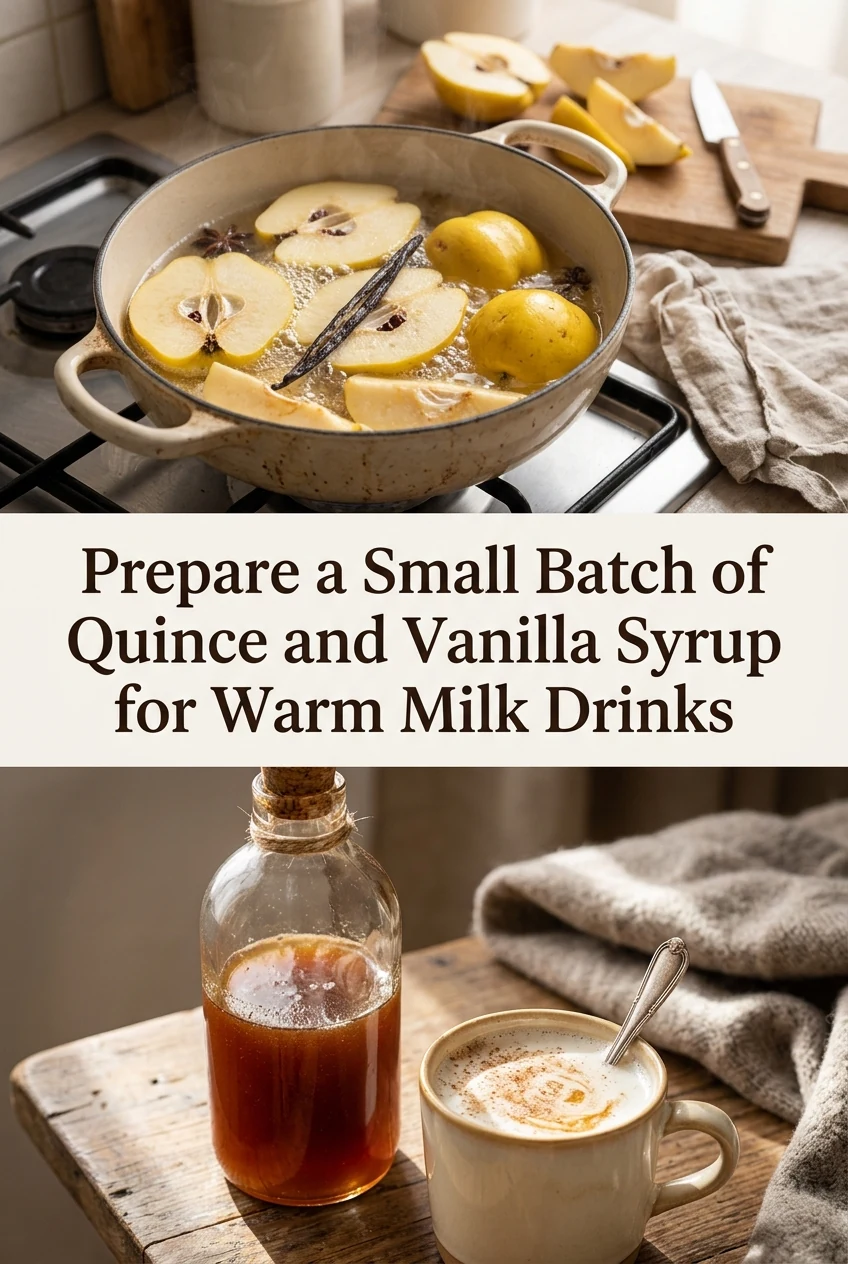
AI-generated editorial concept created for this article. The image is not a technical diagram or a tested result.
Preparing the quince before simmering
Peel, core, and dice one medium quince, approximately 250 grams prepared weight, into pieces no larger than 2 centimetres. Smaller pieces increase the surface area in contact with the liquid and shorten the time needed to extract flavour. Place the pieces in a small saucepan with 200 millilitres of water and 150 grams of white sugar. The sugar dissolves into the water quickly and begins drawing moisture from the quince as the temperature rises.
Simmering time and what to watch for
Bring the mixture to a gentle simmer over medium-low heat and maintain it there for 35 to 45 minutes. Quince flesh softens slowly and the liquid will gradually take on a pale golden or rose colour as the fruit cooks. Do not increase the heat to speed the process; a rapid boil can cause the syrup to reduce unevenly and may scorch the sugar at the base of the pan. The quince pieces should be completely tender and translucent when the simmering time is sufficient.
Adding vanilla without alcohol-based extract
Add one vanilla pod, split lengthwise and seeds scraped, to the saucepan at the start of simmering so the flavour has the full cooking time to infuse. If using alcohol-free vanilla flavoring, add it only after removing the pan from the heat, following the quantity stated on the product label, since heat can diminish some of its character. Do not use standard vanilla extract, which typically contains alcohol. The vanilla should be a background note that complements the quince rather than competing with it.
Straining the syrup cleanly
Set a fine-mesh sieve over a heatproof bowl or jug and pour the cooked mixture through it. Allow the syrup to drain under its own weight for several minutes. Do not press the quince pulp into the sieve; pressing forces fine particles through the mesh and clouds the syrup. Once the free-draining liquid has collected, discard the pulp and vanilla pod. The finished syrup should be clear enough to see through when held up to light, though a slight golden tint is normal.
Yield, consistency check, and storage
This quantity typically yields around 180 to 220 millilitres of finished syrup, though yield varies with the water content of the fruit. To check consistency, place a small amount on a cold plate; it should flow slowly and coat the surface lightly rather than running thin like water. Transfer the cooled syrup to a clean jar, seal it, and refrigerate at 4 degrees Celsius or below. Use within one week and do not treat it as shelf-stable once opened.
A little more
to know.
How much syrup should I add to a warm milk drink?
A starting point is 20 to 30 millilitres of syrup per 200 millilitres of warm milk, stirred in after the milk is heated. Taste and adjust from there, since quince flavour intensity varies between batches and individual fruit ripeness affects the final concentration.
Can I use quince paste instead of fresh quince to save time?
Quince paste is already heavily reduced and sweetened, making it difficult to control the sugar level and consistency of the syrup. The flavour profile also differs from fresh-simmered fruit. Fresh or frozen quince pieces give a more predictable and adjustable result for syrup making.
Original editorial guidance and recipe formulations, not independently kitchen-tested. Times are estimates and depend on equipment and product directions. Cooked bases need additional cooling and refrigeration before cold serving. Images are AI-generated illustrations; appearance and yield may vary. Check actual ingredient labels, allergens, and any certification you require. We do not certify products. Read our approach.
Save to Pinterest ↗ANOTHER IDEA FOR THE COUNTER