Prepare a Small Batch of Pomegranate and Lemon Syrup for Cold Drinks
Pomegranate syrup thickens quickly as its dissolved sugars concentrate on the stovetop, which means a syrup that looks thin in the pan can set surprisingly firm once it cools in the jar. This guide walks through a small stovetop batch using 250 ml of juice, explains how to read the consistency at the right moment, and covers storage decisions so the syrup stays pourable rather than turning into a jelly block.
Read the note ↓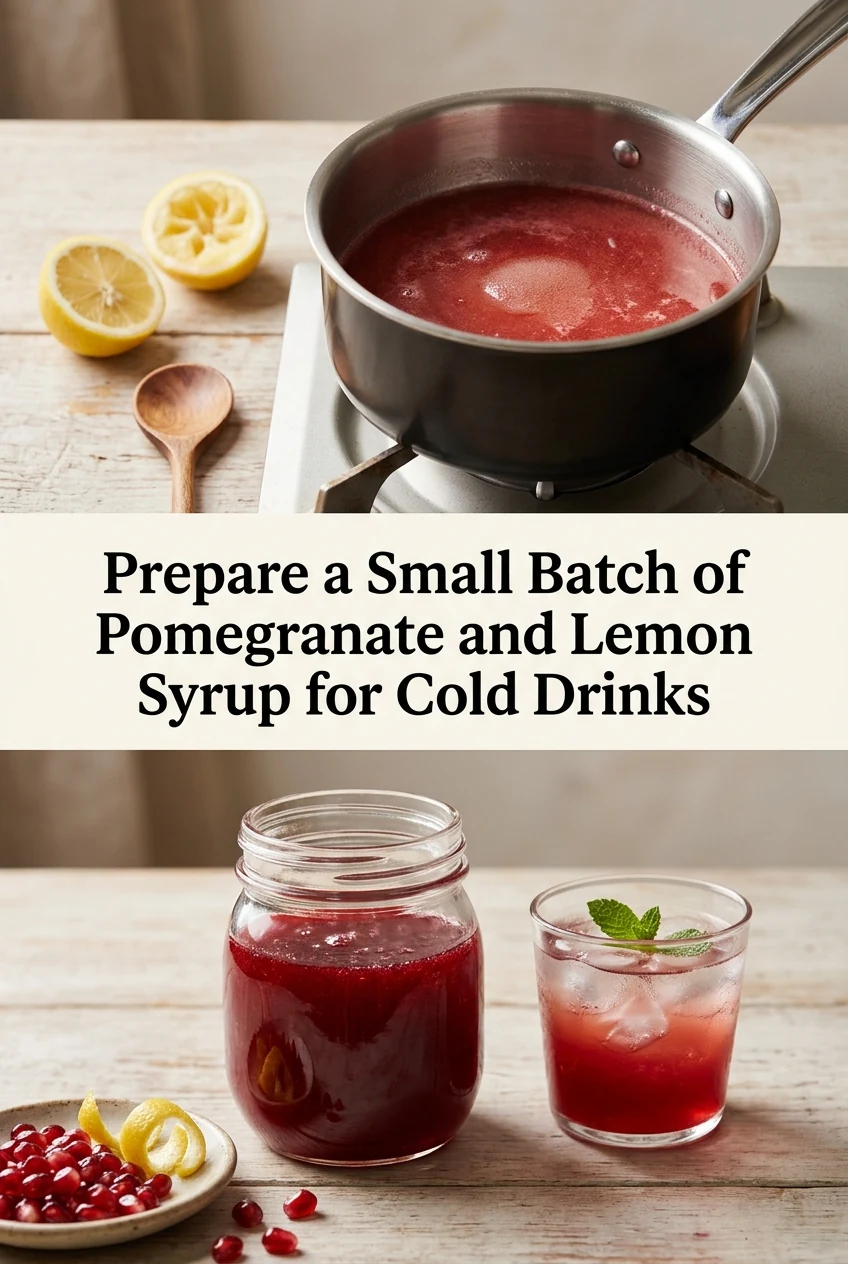
AI-generated editorial concept created for this article. The image is not a technical diagram or a tested result.
Gather your ingredients and equipment
You need 250 ml of 100 percent pomegranate juice with no added pectin or thickeners, 150 g of white granulated sugar, the finely grated zest of one unwaxed lemon, and the juice of half that lemon. Use a small heavy-based saucepan, a silicone spatula, a fine-mesh strainer, and a clean glass jar with a lid. A kitchen thermometer is helpful but not required if you watch the spoon test carefully.
Combine and dissolve before raising the heat
Add the pomegranate juice and sugar to the cold saucepan. Stir over low heat until every grain of sugar has dissolved before you increase the flame. Rushing this step leaves undissolved sugar on the pan walls, which can cause graininess later. Once the liquid is clear and you see no sugar crystals when you tilt the pan, add the lemon zest and raise the heat to medium.
Watch the reduction and test the consistency
Bring the mixture to a gentle, steady simmer and stir occasionally. After about eight to ten minutes the volume will reduce noticeably. To test, dip a cold metal spoon into the syrup and let it cool for fifteen seconds. The syrup should coat the back of the spoon and run off in a slow, even sheet rather than dripping freely. At this point add the lemon juice, stir once, and remove the pan from the heat immediately.
Strain and jar while still warm
Pour the hot syrup through the fine-mesh strainer into your jar to remove the zest. The syrup will appear thinner than expected while warm. Do not return it to the heat to thicken it further. As an illustrative example, a batch reduced to roughly 180 ml at the spoon-coat stage typically pours easily from the refrigerator the next day. Results vary with juice brand and pan width, so treat this as a reference point, not a guaranteed outcome.
Cool, store, and use within a practical window
Leave the jar uncapped until the syrup reaches room temperature, then seal and refrigerate promptly. Refrigerate at 4 degrees Celsius or below within two hours of cooking. Because this syrup contains no preservatives beyond sugar and lemon, use it within two weeks and always use a clean spoon when measuring. To serve, stir one to two tablespoons into sparkling water or still water over ice, adjusting to taste.
A little more
to know.
Can I use bottled pomegranate juice blend instead of 100 percent juice?
Blends with added grape or apple juice contain different sugar and pectin levels, so the reduction time and final thickness will differ. If you use a blend, start testing the spoon-coat stage two minutes earlier than the guide suggests.
Why does the syrup sometimes look cloudy after refrigeration?
Natural compounds in pomegranate juice can precipitate at cold temperatures, creating a slight haze. This does not indicate spoilage. Swirl the jar gently before measuring and the cloudiness disperses without affecting the flavour.
Original editorial guidance and recipe formulations, not independently kitchen-tested. Times are estimates and depend on equipment and product directions. Cooked bases need additional cooling and refrigeration before cold serving. Images are AI-generated illustrations; appearance and yield may vary. Check actual ingredient labels, allergens, and any certification you require. We do not certify products. Read our approach.
Save to Pinterest ↗ANOTHER IDEA FOR THE COUNTER