Prepare a Small Batch of Plain Oat and Sesame Bars for a Café Plate
Oat and sesame bars fail on the plate for one of two reasons: too little binder and they crumble when sliced, or too much and they turn dense and sticky. Getting the ratio right for a small tin means understanding how sesame seeds and rolled oats absorb the binder differently, and why chilling time matters as much as the mixture itself. This guide covers a batch sized for a 15 by 10 centimetre tin.
Read the note ↓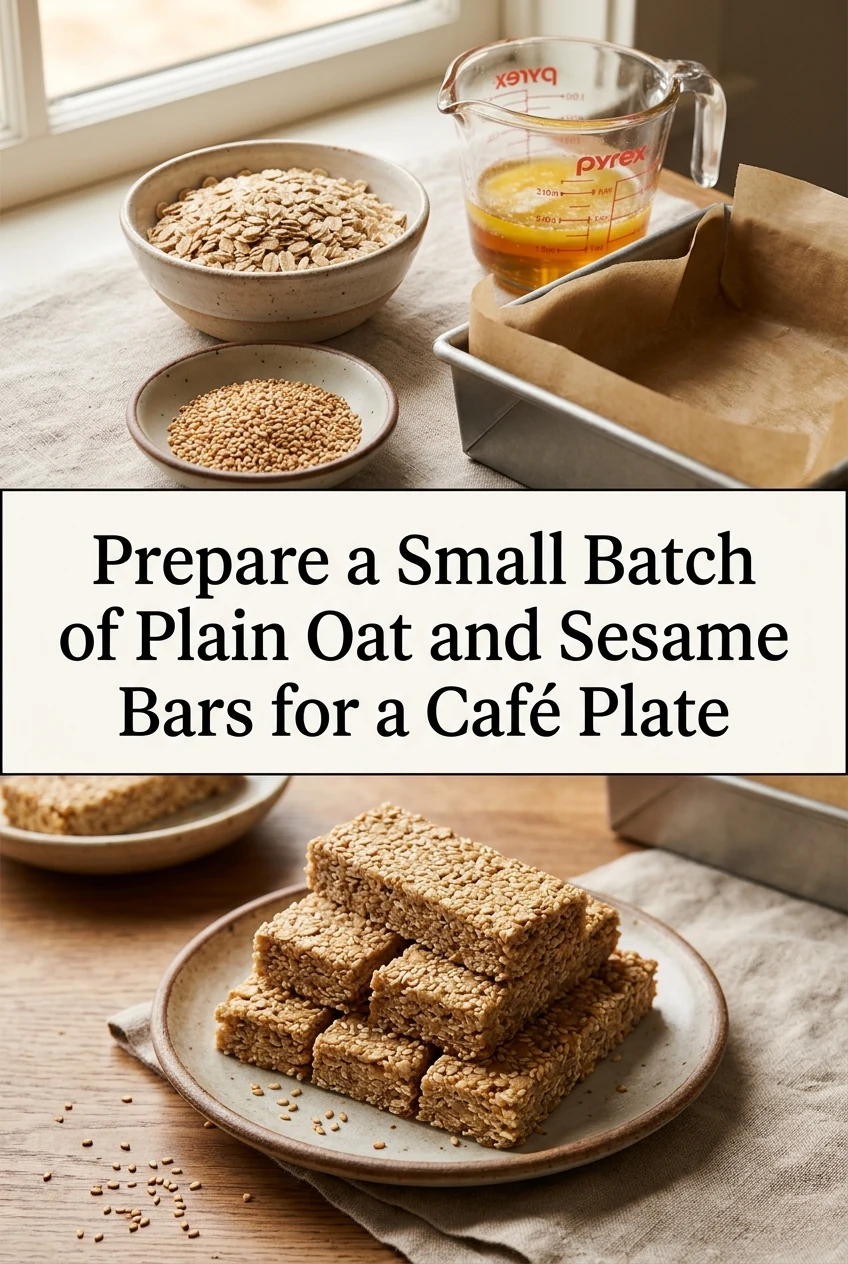
AI-generated editorial concept created for this article. The image is not a technical diagram or a tested result.
Understand the binder role before you measure
The binder here is a combination of honey and tahini, which together provide both stickiness and fat. For 120 g of rolled oats and 40 g of sesame seeds, use 60 g of honey and 40 g of tahini. This ratio gives enough adhesion for clean slicing without making the bars greasy. Tahini varies in thickness between brands, so stir it thoroughly from the bottom of the jar before measuring to ensure consistent fat distribution.
Toast the oats and sesame seeds separately
Spread the rolled oats on a dry baking tray and toast in an oven preheated to 170 degrees Celsius for eight minutes. Toast the sesame seeds in a dry pan over medium-low heat for three to four minutes, stirring constantly, until pale gold. Toast them separately because sesame seeds colour and burn faster than oats. Allow both to cool for five minutes before combining, since adding warm ingredients to the binder can make the honey too runny.
Warm the binder and combine quickly
Gently warm the honey and tahini together in a small saucepan over low heat, stirring until just combined and fluid. Do not boil. Pour the warm binder over the cooled oats and sesame seeds in a mixing bowl and stir immediately with a spatula until every oat is coated. Work quickly because the mixture becomes harder to press evenly as it cools. Add a small pinch of salt and stir once more.
Press firmly and chill before cutting
Line the tin with baking paper, leaving an overhang on two sides for lifting. Transfer the mixture and press it down firmly and evenly using the flat base of a glass or measuring cup. Uneven pressing is the most common reason bars crumble at one end. Refrigerate for at least two hours before cutting. Use a sharp knife and cut with a single downward press rather than a sawing motion to keep the edges clean.
Slice, plate, and hold correctly
A 15 by 10 centimetre tin pressed to roughly one centimetre depth yields approximately eight bars when cut into four columns and two rows. This is an illustrative example based on that tin size; actual yield depends on your pressing depth. Keep cut bars refrigerated on a lined tray and bring to room temperature for ten minutes before plating. Bars left at room temperature for more than two hours should not be returned to the refrigerator for extended storage.
A little more
to know.
Can I use quick oats instead of rolled oats?
Quick oats absorb the binder faster and produce a denser, more compact bar with less texture. They work, but reduce the toasting time to five minutes and expect a slightly softer result that may need an extra thirty minutes of chilling.
How do I keep bars from sticking to the knife during slicing?
Wipe the knife blade with a damp cloth between each cut. A cold blade from rinsing under cold water also helps. Avoid pressing down and dragging, which pulls the bar apart rather than cutting through it cleanly.
Original editorial guidance and recipe formulations, not independently kitchen-tested. Times are estimates and depend on equipment and product directions. Cooked bases need additional cooling and refrigeration before cold serving. Images are AI-generated illustrations; appearance and yield may vary. Check actual ingredient labels, allergens, and any certification you require. We do not certify products. Read our approach.
Save to Pinterest ↗ANOTHER IDEA FOR THE COUNTER