Prepare a Small Batch of Plain Oat and Coconut Biscuits for a Tea Tray
Oat and coconut biscuits spread more than plain flour biscuits because rolled oats absorb fat slowly and desiccated coconut adds extra moisture during baking. A small batch of ten to twelve biscuits suits a tea tray without requiring large equipment. Understanding how these ingredients behave separately before mixing helps you avoid flat, greasy results and gives you a repeatable process for a consistent bake each time.
Read the note ↓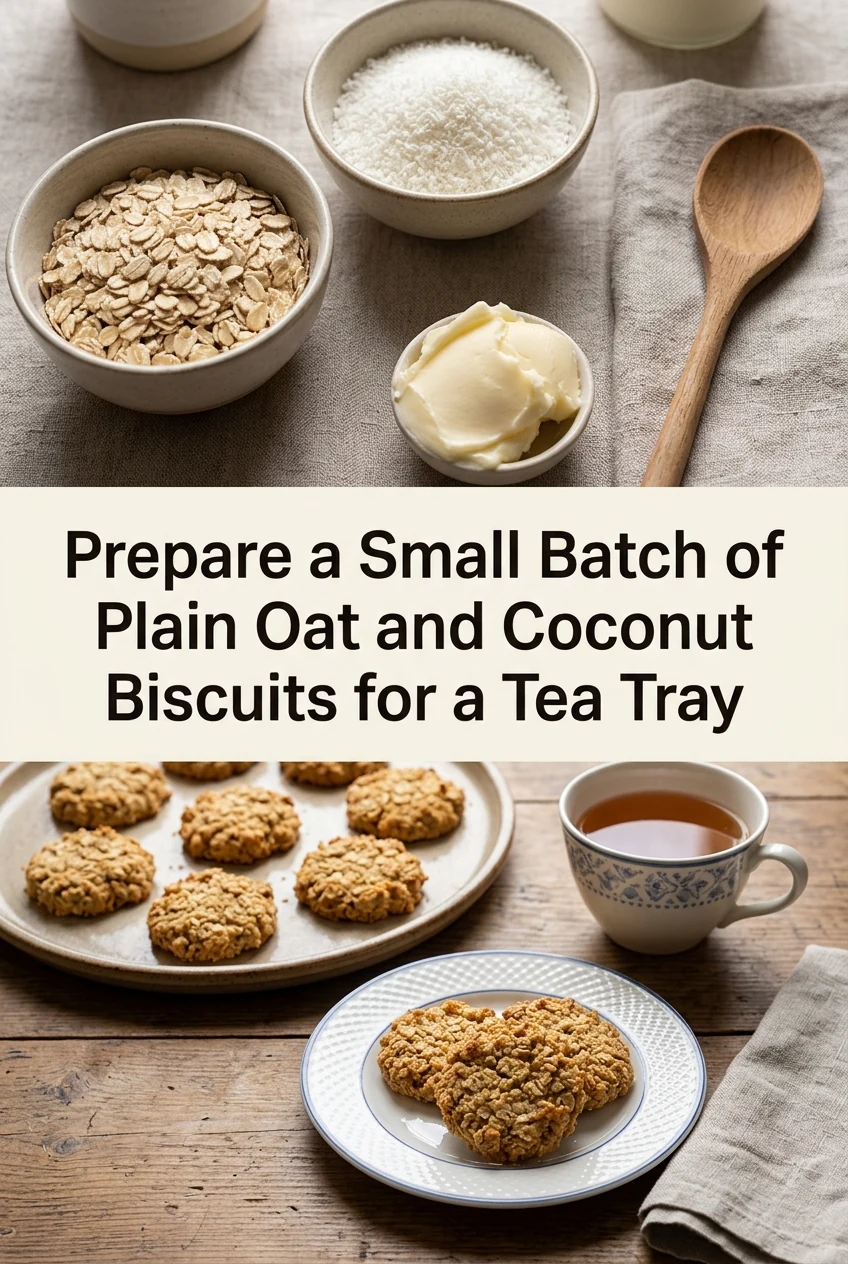
AI-generated editorial concept created for this article. The image is not a technical diagram or a tested result.
Measure Dry Ingredients Before Anything Else
Combine 90 g rolled oats, 40 g desiccated coconut, 75 g plain flour, 90 g caster sugar and a quarter teaspoon of fine salt in one bowl. Stir them together with a fork until evenly distributed. Measuring dry ingredients first keeps fat and liquid from clumping the oats prematurely. Desiccated coconut varies in moisture content between brands, so use the unsweetened, finely shredded type for the most predictable texture in the finished biscuit.
Combine Wet Ingredients Separately
Melt 85 g unsalted butter in a small saucepan over low heat, then remove from heat. Stir in one tablespoon of golden syrup and one tablespoon of water. Dissolve half a teaspoon of bicarbonate of soda into the warm mixture and stir until it foams slightly. This reaction is brief. Pour the wet mixture into the dry bowl immediately and stir until a cohesive dough forms. The dough will feel slightly sticky but should hold its shape when pressed.
Portion and Space Dough on a Lined Tray
Line a flat baking tray with baking paper. Roll portions of dough into balls roughly 35 to 40 g each, which yields ten to twelve biscuits approximately the size of a walnut. Place them at least 5 cm apart in every direction. Oat and coconut biscuits spread noticeably during baking, and crowding causes them to merge at the edges. Flatten each ball very lightly with two fingers. This is an illustrative spacing guide; your oven and tray size will affect the final spread.
Bake and Check Doneness Correctly
Bake at 170 degrees Celsius in a conventional oven for 12 to 14 minutes. The biscuits are ready when the edges turn a deep golden brown and the centres still look slightly underdone. They firm up considerably as they cool on the tray, so pulling them out while the centre appears soft is correct. Leaving them in until the centre looks set usually produces an overbaked, brittle result. Allow at least 10 minutes on the tray before moving them.
Cool and Store Before Placing on the Tea Tray
Transfer cooled biscuits to a wire rack and allow them to reach room temperature fully before stacking or covering. Stacking warm biscuits traps steam and softens the base. Once completely cool, store in an airtight tin at room temperature and use within three days for best texture. Do not refrigerate, as cold air draws moisture into the biscuit. Arrange on the tea tray just before serving so they remain crisp when they reach the guest.
A little more
to know.
Can I use quick oats instead of rolled oats?
Quick oats absorb liquid faster and produce a denser, less chewy biscuit. The spread will be slightly reduced. The bake time may shorten by one to two minutes, so check the edges earlier than you would with rolled oats.
Why did my biscuits come out very flat and greasy?
Flat, greasy biscuits usually mean the butter was too hot when added, which melted the sugar before baking. Let the butter mixture cool for two minutes before combining with dry ingredients to slow that process.
Original editorial guidance and recipe formulations, not independently kitchen-tested. Times are estimates and depend on equipment and product directions. Cooked bases need additional cooling and refrigeration before cold serving. Images are AI-generated illustrations; appearance and yield may vary. Check actual ingredient labels, allergens, and any certification you require. We do not certify products. Read our approach.
Save to Pinterest ↗ANOTHER IDEA FOR THE COUNTER