Prepare a Small Batch of Plain Digestive-Style Biscuits for a Coffee Plate
A small tray of plain wholemeal digestive-style biscuits alongside a coffee requires only a handful of ingredients and one baking sheet, but the results depend heavily on two mechanical steps: rolling the dough to a consistent thickness and docking each round before it goes into the oven. Skip either step and the biscuits either bake unevenly or puff in the centre and lose the flat, crisp texture that makes them work on a coffee plate.
Read the note ↓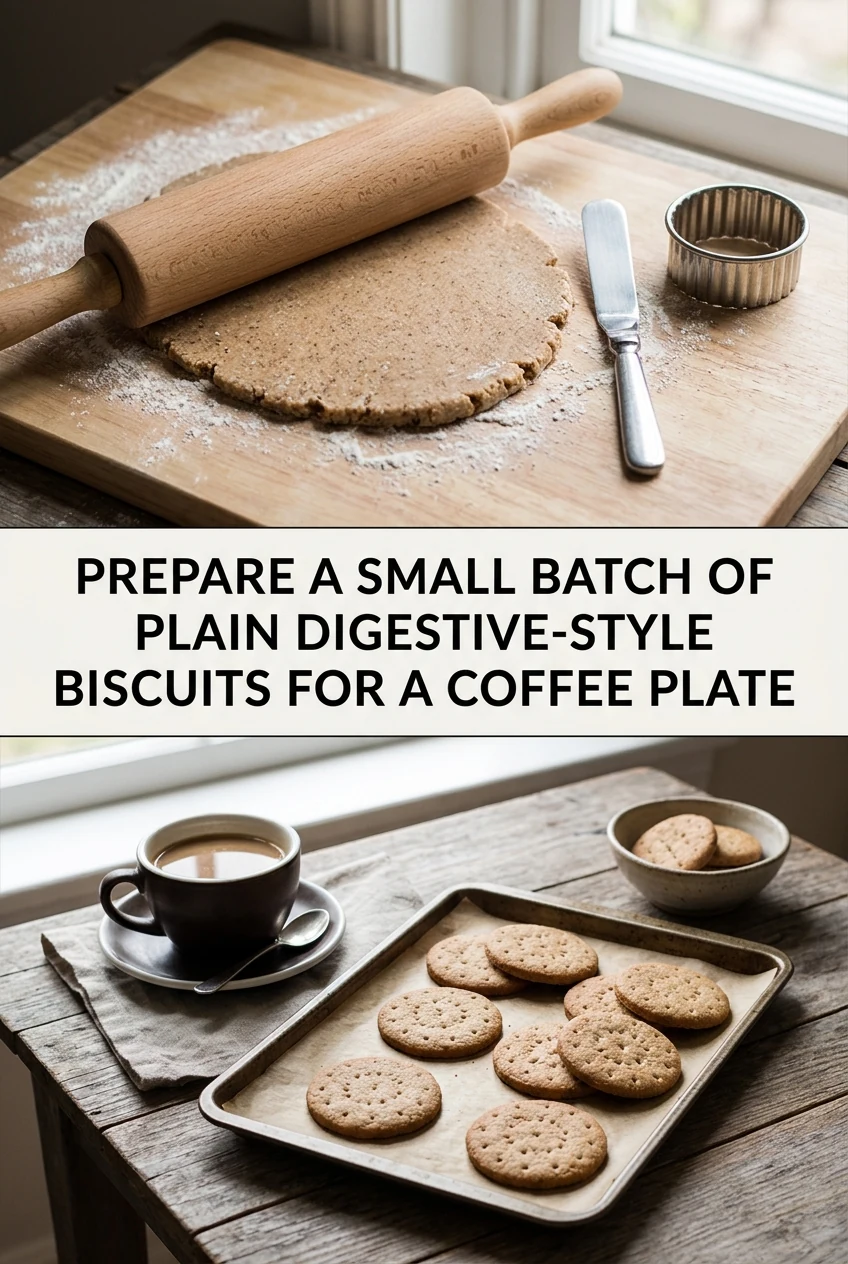
AI-generated editorial concept created for this article. The image is not a technical diagram or a tested result.
Mixing the dough to the right consistency
Combine 120 grams of wholemeal flour, 30 grams of plain white flour, 40 grams of cold unsalted butter cut into small cubes, 30 grams of caster sugar and a pinch of salt. Rub the butter into the flours until the mixture resembles coarse breadcrumbs. Add two to three tablespoons of cold milk one at a time, pressing the dough together until it just holds. It should not be sticky. Overworking develops gluten and makes the biscuits tough rather than short and crisp.
Chilling the dough before rolling
Flatten the dough into a disc, wrap it and refrigerate for at least 20 minutes. Cold dough rolls more evenly because the butter remains firm and does not smear into the flour. Warm dough sticks to the rolling pin and tears, which forces you to add extra flour and alters the final texture. This rest period also relaxes any gluten developed during mixing, which helps the biscuits hold their shape without shrinking back when cut.
Rolling to a consistent thickness
Roll the chilled dough between two sheets of baking paper to approximately 4 millimetres thick. Using two wooden dowels or rulers of equal height on either side of the dough as guides gives you a reliable even thickness across the whole sheet. Uneven rolling means thinner areas overbake and brown before thicker areas are cooked through. A 6 centimetre round cutter produces biscuits that fit neatly on a standard coffee saucer without overhanging.
Docking each biscuit before baking
Transfer the cut rounds to a lined baking sheet and use a fork or a docking roller to pierce each biscuit evenly across its surface. Docking creates small holes that allow steam to escape during baking rather than lifting the centre of the biscuit into a dome. Aim for roughly 12 to 16 evenly spaced holes per biscuit. Undocked biscuits puff unevenly and the centre remains softer than the edges, which affects both texture and appearance on the plate.
Baking and cooling for the right texture
Bake at 180 degrees Celsius, conventional heat, for 14 to 16 minutes until the edges are lightly golden and the surface looks dry. The biscuits will feel slightly soft when they come out of the oven; they firm as they cool. Transfer to a wire rack immediately rather than leaving them on the hot tray, which continues cooking the base. Allow them to cool completely before plating, as residual warmth can make them feel soft and cause condensation on the plate.
A little more
to know.
Can I use all wholemeal flour instead of a blend?
All wholemeal flour produces a denser, slightly more crumbly biscuit because the bran cuts through gluten strands. The blend of wholemeal and plain flour gives a sturdier texture that holds up better when picked up alongside a cup.
How long can the baked biscuits be kept before serving?
Store cooled biscuits in an airtight tin at room temperature and serve within two to three days for the best crispness. Humidity softens them quickly, so avoid storing them in the refrigerator, which introduces moisture.
Original editorial guidance and recipe formulations, not independently kitchen-tested. Times are estimates and depend on equipment and product directions. Cooked bases need additional cooling and refrigeration before cold serving. Images are AI-generated illustrations; appearance and yield may vary. Check actual ingredient labels, allergens, and any certification you require. We do not certify products. Read our approach.
Save to Pinterest ↗ANOTHER IDEA FOR THE COUNTER