Prepare a Small Batch of Pear and Vanilla Syrup for Cold Drink Bases
A pear and vanilla syrup made from ripe fruit, sugar, water, and alcohol-free vanilla flavoring gives you a measured cold drink base that portions cleanly with a jigger. The process is straightforward: simmer, strain, cool, and label. The result is a syrup with a consistent sweetness level you can adjust before the next batch. This guide covers quantities, the straining step that determines texture, and safe refrigerated storage for a small household batch.
Read the note ↓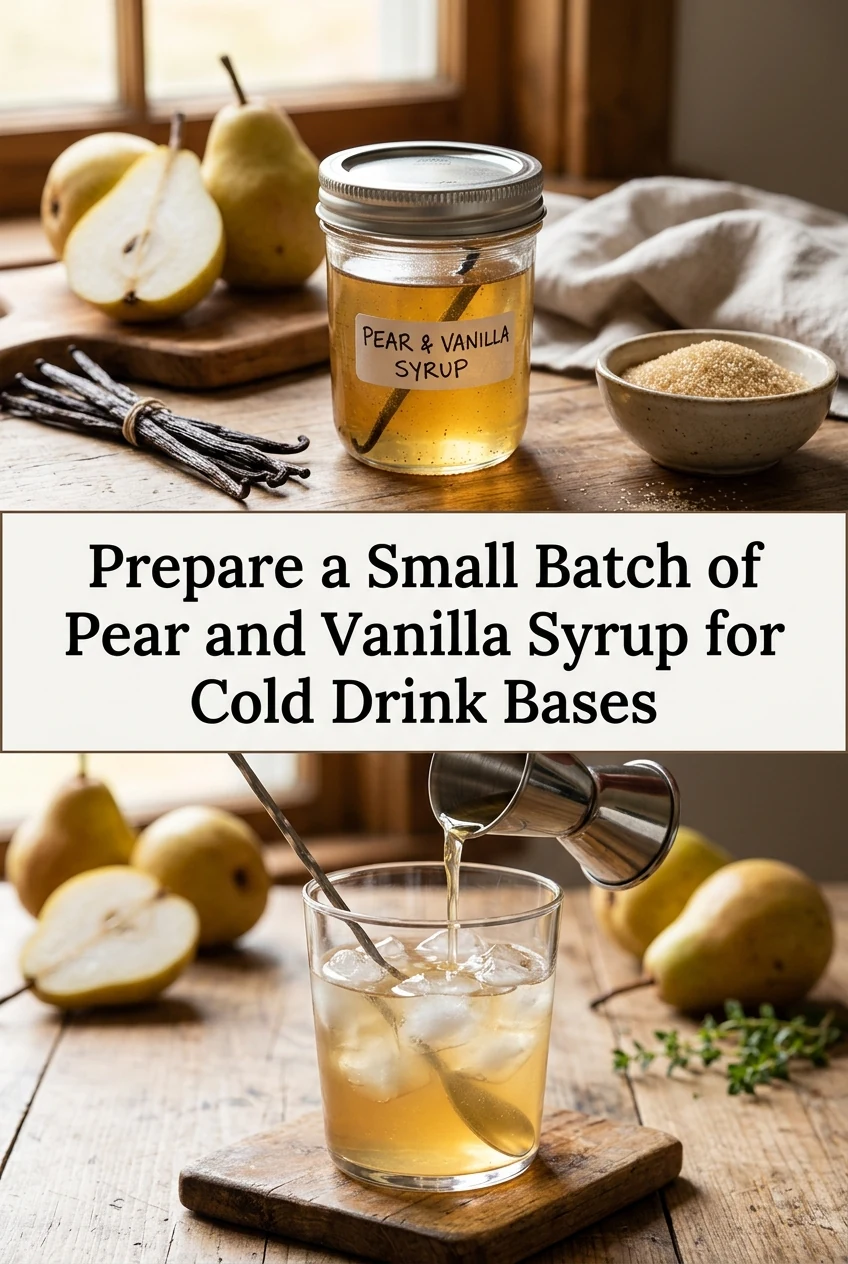
AI-generated editorial concept created for this article. The image is not a technical diagram or a tested result.
Gather Ingredients in Measured Quantities
For a small batch yielding approximately 300 ml of finished syrup, use 200 grams of peeled and roughly chopped ripe pear, 150 grams of white granulated sugar, 200 ml of cold water, and half a teaspoon of alcohol-free vanilla flavoring. Ripe pears release more natural sweetness and flavour than firm ones, so the batch character will vary slightly by fruit ripeness. These quantities are a working starting point, not a guaranteed fixed yield, as fruit water content differs.
Simmer Until the Pear Softens
Combine the pear pieces, sugar, and water in a small saucepan over medium heat. Stir until the sugar dissolves, then reduce the heat to a gentle simmer. Cook uncovered for 12 to 15 minutes until the pear pieces are completely soft and translucent. The liquid will reduce slightly and take on a pale golden colour. Remove from heat and stir in the alcohol-free vanilla flavoring at this point rather than during cooking to preserve the flavour note.
Strain for the Right Texture
Pour the cooked mixture through a fine mesh strainer into a heatproof jug, pressing the softened pear pulp gently with the back of a spoon to extract liquid. For a clearer syrup, pass the strained liquid through a second layer of cheesecloth without pressing. Pressing the pulp produces a slightly thicker, more opaque syrup that works well in still drinks. The clearer version disperses more evenly in sparkling water or cold tea without cloudiness.
Cool and Label Before Refrigerating
Allow the strained syrup to cool to room temperature, then transfer it to a clean, dry glass jar with a tight-fitting lid. Label the jar with the contents and the date it was made. Refrigerate at 4 degrees Celsius or below. Use within seven to ten days. Do not store at room temperature or attempt to extend shelf life through additional processing, as this is a fresh syrup without preservatives and is not shelf-stable.
Portion with a Jigger for Consistent Cold Drinks
A standard jigger measures 30 ml and 45 ml, which are practical portions for this syrup. As an illustrative example, 30 ml of syrup stirred into 180 ml of cold sparkling water over ice produces a lightly sweet drink. Adjust the syrup volume to taste in subsequent servings. Using a jigger rather than free-pouring keeps each drink consistent and helps you track how quickly the batch is being used before it reaches its storage limit.
A little more
to know.
Can I use canned pears instead of fresh?
Canned pears in juice or syrup can be used, but drain and rinse them first to control added sugar. Reduce the granulated sugar in the recipe by approximately 30 grams when using pears packed in syrup, then adjust to taste after cooling.
How do I know if the syrup has spoiled before the ten-day mark?
Discard the syrup if you notice an off smell, visible mould, or a fermented or sour taste. Always use a clean dry spoon or jigger when measuring to avoid introducing contaminants that shorten the usable period.
Original editorial guidance and recipe formulations, not independently kitchen-tested. Times are estimates and depend on equipment and product directions. Cooked bases need additional cooling and refrigeration before cold serving. Images are AI-generated illustrations; appearance and yield may vary. Check actual ingredient labels, allergens, and any certification you require. We do not certify products. Read our approach.
Save to Pinterest ↗ANOTHER IDEA FOR THE COUNTER