Prepare a Small Batch of Lemon and Thyme Syrup for Cold Drinks
A small-batch syrup made from fresh lemon juice, lemon zest, dried thyme, and sugar gives cold drinks a clean herbal citrus note without requiring large quantities that go unused. Keeping the batch sized to fit a 250 ml jar means you work through it while it is still fresh, and the straightforward saucepan method produces a consistent result without specialist equipment.
Read the note ↓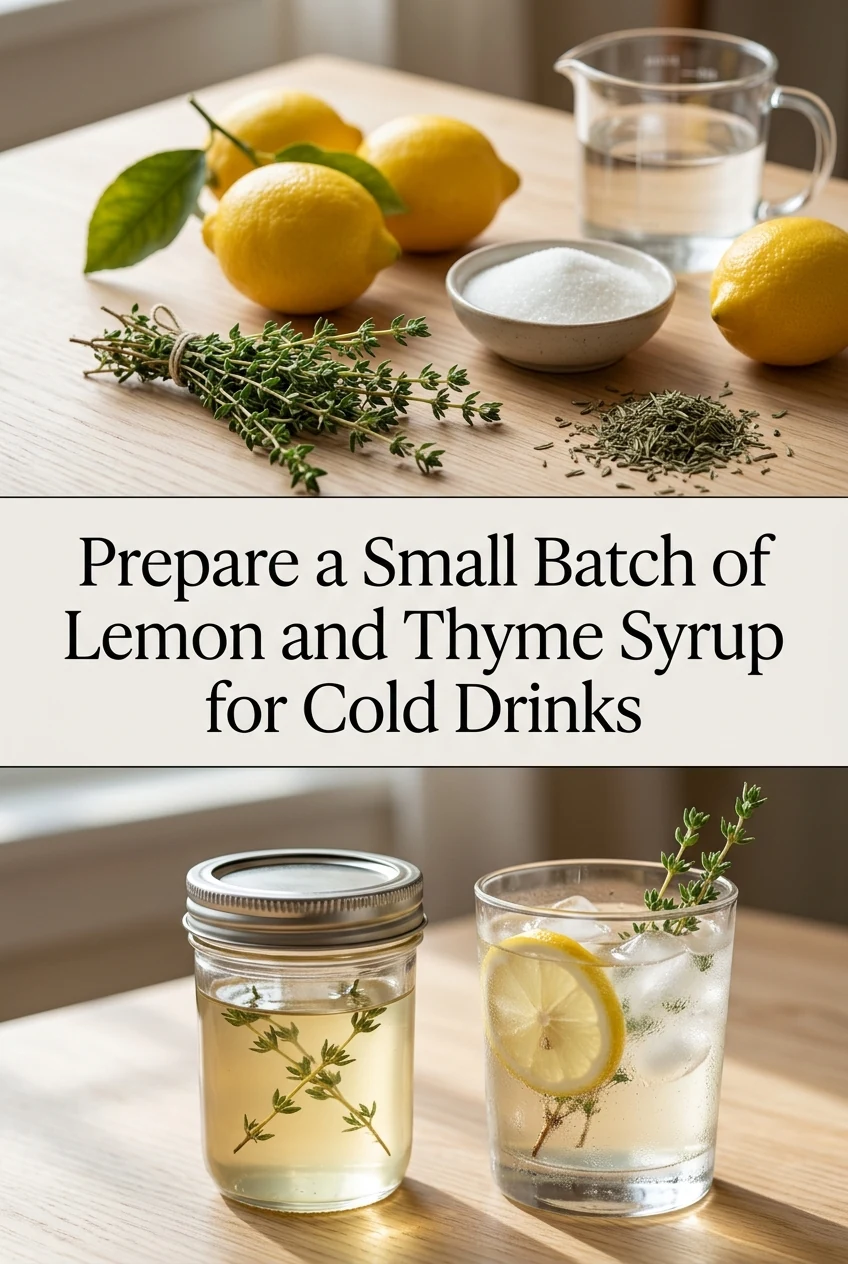
AI-generated editorial concept created for this article. The image is not a technical diagram or a tested result.
Gather and measure everything before the pan goes on
You will need 150 g white sugar, 120 ml fresh lemon juice (approximately three medium lemons), the zest of two of those lemons, 1 teaspoon dried thyme, and 60 ml cold water. Zest the lemons before juicing them as the skin is easier to work with whole. Having all components measured and ready prevents the syrup from over-reducing while you search for ingredients. A small saucepan with a 1-litre capacity is sufficient for this volume.
Dissolve the sugar gently before adding lemon juice
Combine the sugar and water in the saucepan over low to medium heat, stirring until the sugar fully dissolves. This takes roughly three to four minutes. Once the liquid is clear, add the lemon juice, zest, and dried thyme. Adding the juice after dissolution rather than at the start prevents the acid from interfering with even sugar uptake. The mixture will look slightly cloudy from the zest and thyme, which is expected.
Simmer briefly and watch the volume
Raise the heat slightly until the syrup reaches a gentle simmer. Hold it there for five minutes, stirring occasionally. You are not trying to reduce it heavily; the goal is to infuse the thyme and zest into a pourable syrup rather than a thick glaze. After five minutes, remove the pan from the heat. The syrup will still look thin at this stage and will thicken slightly as it cools.
Strain into a clean jar and cool before sealing
Set a fine mesh strainer over a heatproof measuring jug and pour the syrup through it, pressing the zest and thyme gently. Discard the solids. Allow the syrup to cool at room temperature for no more than 30 minutes, then pour it into a clean 250 ml glass jar. Do not seal a hot jar immediately, as trapped steam can affect the lid. Once cooled to room temperature, seal and refrigerate at 4 C or below.
Use the syrup across different cold drinks with measured pours
Start with 15 ml of syrup per 250 ml glass of still or sparkling water and adjust from there based on your preference for sweetness. In iced tea, 20 ml per 300 ml cup works as a starting point. The syrup is tart and herbal, so small additions go further than expected. Use the syrup within five days and keep it refrigerated between uses. Discard if you notice any off smell or visible changes.
A little more
to know.
Can I use fresh thyme instead of dried thyme in this syrup?
Fresh thyme works but releases flavour more slowly. If substituting, use three to four fresh sprigs and extend the simmer to eight minutes. Remove the sprigs before straining. The flavour will be slightly greener and less concentrated than dried thyme produces.
Why does the syrup sometimes crystallise in the jar after refrigeration?
Crystallisation can happen if the sugar concentration is high relative to the liquid volume. Warming the jar briefly in a bowl of hot water and stirring gently usually redissolves the crystals. Adding an extra 15 ml of water during cooking can reduce the tendency.
Original editorial guidance and recipe formulations, not independently kitchen-tested. Times are estimates and depend on equipment and product directions. Cooked bases need additional cooling and refrigeration before cold serving. Images are AI-generated illustrations; appearance and yield may vary. Check actual ingredient labels, allergens, and any certification you require. We do not certify products. Read our approach.
Save to Pinterest ↗ANOTHER IDEA FOR THE COUNTER