Prepare a Small Batch of Ginger Syrup and Divide It Between Two Labelled Jars
A single batch of ginger syrup used for both hot drinks and cold drinks creates a practical storage problem: the jar travels between different refrigerator zones and is opened repeatedly throughout the day, increasing the chance of cross-contamination and temperature fluctuation. Dividing the batch into two smaller jars at the point of bottling keeps one jar dedicated to each use, reduces how often each jar is handled, and makes labelling straightforward.
Read the note ↓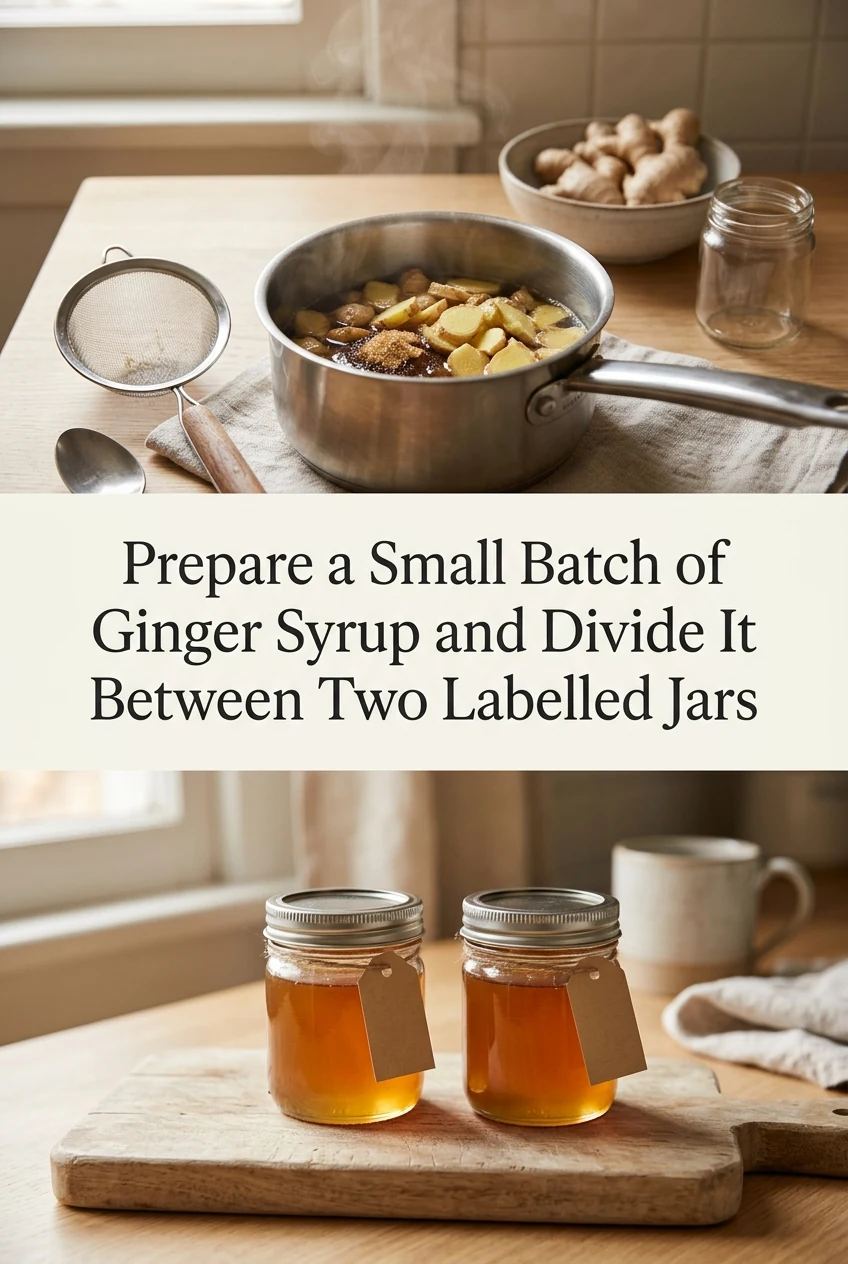
AI-generated editorial concept created for this article. The image is not a technical diagram or a tested result.
Make the syrup in one saucepan from start to finish
Combine 150 g of white sugar and 150 ml of water in a small saucepan. Add 40 g of fresh ginger, peeled and cut into thin coins. Bring to a gentle simmer over medium heat, stirring until the sugar dissolves completely, then reduce to low and hold for ten minutes without boiling hard. Remove from heat and allow to cool in the pan for fifteen minutes before straining through a fine mesh strainer into a clean pouring jug. This is an illustrative batch size, not a tested yield guarantee.
Choose two small jars of equal size
Two 150 ml glass jars with tight-fitting lids are a practical choice for this batch size because each jar will hold roughly half the strained syrup with a small headspace. Wash the jars and lids in hot soapy water, rinse thoroughly, and allow them to air-dry completely before use. Do not attempt homemade sterilization methods. The syrup must be refrigerated and used within a reasonable short period; it is not a shelf-stable product.
Divide the syrup equally using the pouring jug
Pour the cooled, strained syrup from the jug into the first jar until it reaches roughly half the total volume, then fill the second jar with the remainder. Using a jug with a spout rather than ladling directly from the saucepan gives better control and reduces spillage. Allow both jars to reach room temperature before sealing the lids, which prevents condensation from forming inside the sealed jar and diluting the syrup.
Label each jar with its intended use and the preparation date
Write directly on a piece of masking tape or use a small adhesive label. One jar might read: Hot drinks, prepared date. The second: Cold drinks, prepared date. The label content matters because it removes the decision about which jar to open during a busy café session and reminds you when the syrup was made. Refrigerate both jars promptly at 4 degrees Celsius or below within two hours of preparation.
Use a dedicated spoon for each jar during service
Keep a small spoon resting on a clean saucer beside each jar rather than sharing one spoon between both. A spoon used in a hot drink and then dipped into the cold-drink jar introduces temperature change and potential contamination from the drink itself. Using separate utensils is a simple habit that keeps each jar in better condition throughout the week and is particularly relevant when the jars are opened multiple times per day.
A little more
to know.
Can I use ground ginger instead of fresh ginger for this syrup?
Ground ginger produces a sharper, less bright flavor and does not strain out cleanly, leaving a slightly cloudy syrup. If you use it, reduce the quantity significantly and stir well before each pour, as the powder settles to the bottom of the jar.
How do I know if the syrup has spoiled before the label date?
Look for visible cloudiness that was not present when freshly made, an off or fermented smell, or any mold at the surface or lid. Discard the jar immediately if any of these signs appear, regardless of the date written on the label.
Original editorial guidance and recipe formulations, not independently kitchen-tested. Times are estimates and depend on equipment and product directions. Cooked bases need additional cooling and refrigeration before cold serving. Images are AI-generated illustrations; appearance and yield may vary. Check actual ingredient labels, allergens, and any certification you require. We do not certify products. Read our approach.
Save to Pinterest ↗ANOTHER IDEA FOR THE COUNTER