Prepare a Small Batch of Dried Mulberry and Vanilla Syrup for Warm Milk Drinks
A dried mulberry syrup adds deep, jammy sweetness to warm milk drinks without relying on artificial flavoring. The challenge is softening the fruit enough to release its color and flavor into the syrup, then straining it fine enough to pour cleanly. This guide uses alcohol-free vanilla flavoring and covers the full process from fruit softening to labelled refrigerator storage. The finished batch yields approximately 200 ml of syrup, enough for eight to ten single-serve drinks.
Read the note ↓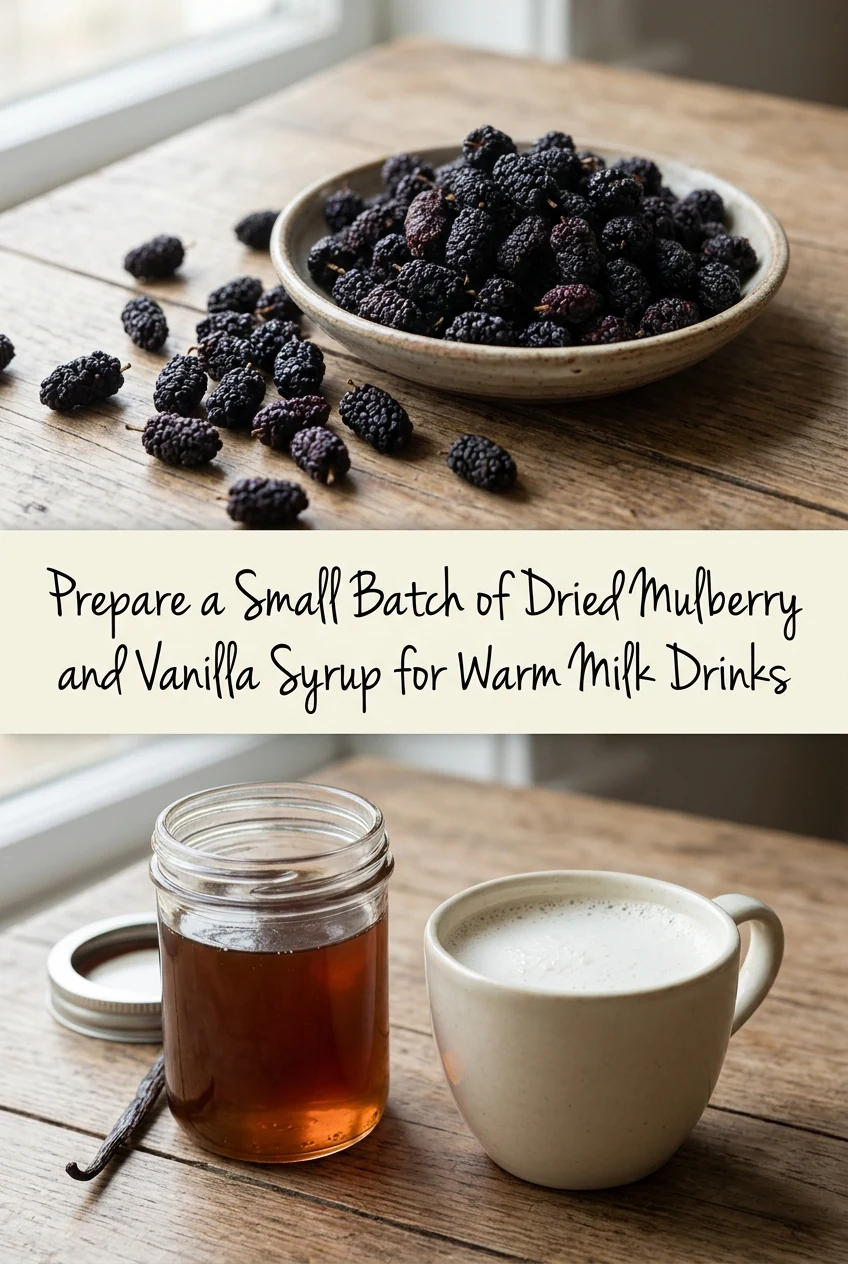
AI-generated editorial concept created for this article. The image is not a technical diagram or a tested result.
Soften the Dried Mulberries First
Weigh 80 g of dried mulberries and place them in a small saucepan with 250 ml of cold water. Bring to a gentle simmer over medium-low heat, then reduce to low and cook uncovered for 12 to 15 minutes, stirring occasionally. The berries should look swollen and the water should turn a deep burgundy. Do not boil vigorously, as this can make the syrup taste slightly bitter and reduces the liquid faster than intended. The fruit should press apart easily with a spoon when done.
Add Sugar and Reduce to Syrup Consistency
Add 120 g of white granulated sugar to the saucepan and stir until fully dissolved over low heat. Continue simmering uncovered for a further eight to ten minutes, stirring every two minutes. The mixture should reduce and thicken slightly, coating the back of a spoon lightly. As an illustrative example, starting with 250 ml of liquid and reducing for ten minutes typically yields around 180 to 210 ml of syrup before straining, though actual yield depends on your burner and pan width.
Add Vanilla and Strain Cleanly
Remove the pan from the heat and stir in one teaspoon of alcohol-free vanilla flavoring. Allow the mixture to cool for five minutes before straining, as pouring very hot liquid through a fine-mesh sieve can be difficult to control safely. Set a fine-mesh sieve over a heatproof measuring jug and pour the mixture through in one slow, steady pour. Press the softened fruit firmly with a spoon to extract all syrup. Discard the spent fruit pulp.
Label and Refrigerate Correctly
Allow the strained syrup to cool to room temperature, then transfer to a clean glass jar with a tight-fitting lid. Write the preparation date clearly on a label and attach it to the jar. Refrigerate at 4 C or below. Use within seven days. The syrup contains fruit solids and dairy-adjacent use means it will be added to milk; it is not a shelf-stable product. Do not store at room temperature or attempt to extend its life through additional boiling after jarring.
Use the Syrup in a Warm Milk Drink
To serve, warm 240 ml of whole pasteurized milk in a small saucepan over low heat until steaming. Add two tablespoons, approximately 30 ml, of mulberry vanilla syrup and stir to combine. Taste and add a second tablespoon if you prefer a stronger flavor. Pour into a warmed cup. The syrup settles slightly if the milk sits, so stir once before drinking. Refrigerate any unused prepared milk drink promptly and consume within 24 hours.
A little more
to know.
Can I use fresh mulberries instead of dried for this syrup?
Fresh mulberries release liquid faster and need less initial water, roughly 150 ml instead of 250 ml. The flavor is lighter and less concentrated. Reduce sugar slightly to 90 g and shorten the simmering time, checking consistency more frequently to avoid over-reducing.
How do I know if the syrup has gone off before the seven days are up?
Signs of spoilage include an off or sour smell, visible mold on the surface or jar rim, and a noticeably fermented taste. If any of these appear, discard the batch entirely. Always use a clean dry spoon each time you measure syrup from the jar.
Original editorial guidance and recipe formulations, not independently kitchen-tested. Times are estimates and depend on equipment and product directions. Cooked bases need additional cooling and refrigeration before cold serving. Images are AI-generated illustrations; appearance and yield may vary. Check actual ingredient labels, allergens, and any certification you require. We do not certify products. Read our approach.
Save to Pinterest ↗ANOTHER IDEA FOR THE COUNTER