Prepare a Small Batch of Dried Fig and Orange Syrup for Warm Milk Drinks
Dried figs release their sweetness slowly, so they need a soak and a gentle simmer before orange is introduced. Starting with weighed ingredients shows you exactly how much finished syrup a small batch produces, which helps you plan how many drinks it will cover. This guide walks through each stage in order, with one illustrative quantity set to anchor the process without presenting those numbers as the only workable ratio.
Read the note ↓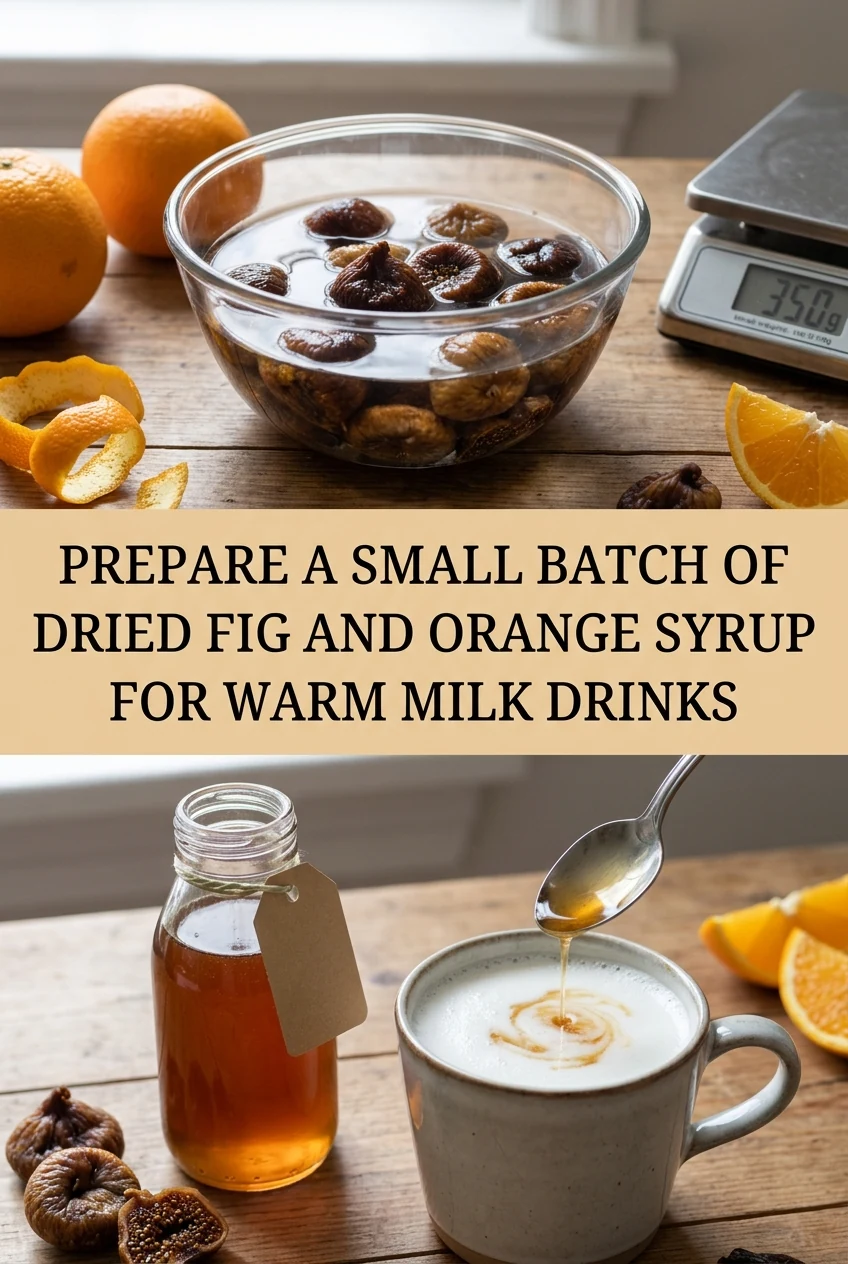
AI-generated editorial concept created for this article. The image is not a technical diagram or a tested result.
Weigh the Figs and Water Before You Start
Use a kitchen scale rather than a cup measure for dried figs because their density varies by dryness and variety. As an illustrative starting point, 80 g of dried figs and 300 g of cold water gives a workable small batch. Note both weights before soaking so you can compare the final strained volume against what you began with. That comparison tells you how much liquid the figs absorbed and how much syrup the batch actually yielded.
Soak the Figs in Cold Water First
Place the weighed figs in a small saucepan and cover with the measured cold water. Let them soak at room temperature for at least 30 minutes. Soaking softens the fruit so it releases flavour evenly during simmering rather than scorching on the outside while remaining dense inside. Do not add sugar or orange at this stage. The soak water stays in the pan and becomes part of the syrup base, so do not discard it.
Simmer Gently Before Adding Orange
Bring the soaked figs and their water to a low simmer over medium-low heat, then reduce to the lowest setting your hob allows. Simmer uncovered for 15 to 20 minutes until the figs are fully soft and the liquid has taken on a deep amber colour. Add orange only after this stage. Adding fresh orange zest or juice too early causes the citrus top notes to cook off, leaving a flat, bitter undertone rather than a bright finish.
Add Orange and Sweeten at the End
Remove the pan from heat once the figs are soft. Add the zest of half a medium orange and 40 g of white sugar, stirring until the sugar dissolves fully in the residual heat. Taste before adding juice; zest alone often provides enough citrus character for warm milk drinks where the milk itself adds sweetness. If you add juice, use no more than one tablespoon to avoid thinning the syrup significantly. Stir and allow to cool for five minutes before straining.
Strain, Measure the Yield and Store Promptly
Pour the mixture through a fine-mesh strainer into a clean jar, pressing the softened figs gently with a spoon to extract liquid without forcing pulp through. Measure the strained volume. The illustrative batch above typically yields roughly 180 to 220 ml, though your actual result will vary with fig dryness and simmer time. Seal the jar and refrigerate at 4 degrees Celsius or below within two hours of making. Use within five days and discard if any off smell develops.
A little more
to know.
Can I use fresh figs instead of dried for this syrup?
Fresh figs contain far more water and less concentrated sugar than dried, so the simmer time and final sweetness will differ noticeably. The soaking step is unnecessary with fresh figs, and you will likely need to adjust sugar upward to compensate for the lower natural sweetness.
How much syrup should I add to a single warm milk drink?
Start with one tablespoon per 200 ml of warm milk and taste before adding more. The syrup is moderately sweet and concentrated, so small additions are easier to adjust upward than to correct once the drink is already assembled and poured.
Original editorial guidance and recipe formulations, not independently kitchen-tested. Times are estimates and depend on equipment and product directions. Cooked bases need additional cooling and refrigeration before cold serving. Images are AI-generated illustrations; appearance and yield may vary. Check actual ingredient labels, allergens, and any certification you require. We do not certify products. Read our approach.
Save to Pinterest ↗ANOTHER IDEA FOR THE COUNTER