Prepare a Small Batch of Dried Fig and Anise Syrup for Warm Milk Drinks
Dried figs have dense, compressed flesh that releases flavour slowly compared with fresh fruit or spices. A short simmer is not enough to extract the deep, jammy sweetness that makes this syrup worthwhile. This guide covers softening the figs in water before combining them with sugar and a single anise pod, simmering the mixture to a light syrup consistency, and straining it into a small bottle for use in warm milk drinks over the following days.
Read the note ↓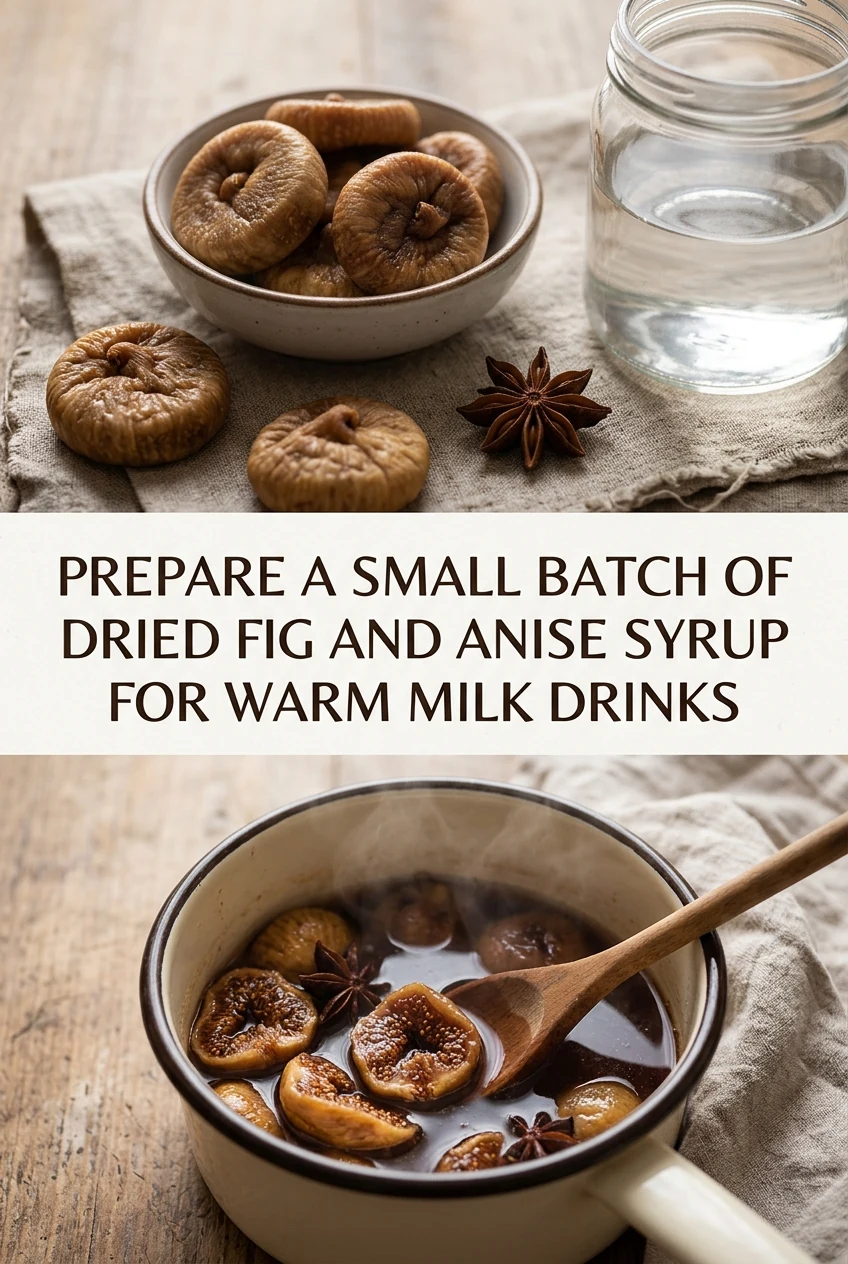
AI-generated editorial concept created for this article. The image is not a technical diagram or a tested result.
Measuring and pre-softening the figs
Weigh out 80 grams of dried figs, which is approximately five to six medium figs depending on size. Remove any tough stem ends with scissors and cut each fig into quarters to expose more surface area. Place them in a small saucepan with 200 millilitres of cold water and leave them to soak for 20 minutes before applying any heat. This pre-softening step shortens the simmering time and helps the fig flesh break down more evenly, releasing its natural sugars into the water more efficiently.
Adding sugar and the anise pod
After soaking, add 150 grams of white granulated sugar to the saucepan with the figs and their soaking water. Add one whole star anise pod, not a teaspoon of ground anise, which would make the syrup cloudy and difficult to strain cleanly. Stir gently to begin dissolving the sugar before turning on the heat. One pod is enough for a small batch; using two risks an anise flavour that overpowers the fig in a warm milk drink where the syrup is used in small quantities of 15 to 20 millilitres per cup.
Simmering to develop flavour and consistency
Bring the mixture to a gentle simmer over medium-low heat, then reduce to low. Simmer uncovered for 25 minutes, stirring occasionally. The figs will soften fully and begin to break apart, and the liquid will reduce and thicken slightly. Do not boil vigorously, as this can cause the syrup to become too thick before the fig flavour is fully extracted. After 25 minutes the liquid should coat the back of a spoon lightly. Remove the star anise pod before straining.
Straining and bottling the syrup
Set a fine mesh strainer over a heatproof jug and pour the hot mixture through it. Press the softened fig solids firmly with the back of a spoon to extract as much liquid as possible. Discard the solids. The strained syrup will be amber to dark brown and slightly viscous. Allow it to cool to room temperature before pouring into a clean, dry glass bottle or jar with a tight-fitting lid. A small batch from these quantities yields approximately 180 to 220 millilitres, though actual yield varies with simmer time.
Storing and using the syrup
Seal the bottle and refrigerate at 4 degrees Celsius or below. Use the syrup within five days and discard any remainder after that period. To use, stir 15 to 20 millilitres into a cup of warm steamed milk. The syrup blends smoothly into hot liquid without needing re-heating. Do not add it to boiling milk directly in the bottle. If the syrup thickens further in the refrigerator, stand the sealed bottle in warm water for a few minutes before measuring.
A little more
to know.
Can I use fresh figs instead of dried?
Fresh figs contain much more water and less concentrated sugar, so the syrup will be thinner and milder. The pre-softening soak is unnecessary, but you will need to simmer longer to reduce the extra liquid to a usable consistency.
Why remove the star anise before straining rather than leaving it in longer?
Anise continues to infuse as the syrup cools. Removing the pod before straining gives you control over the final intensity. Leaving it in during cooling can push the anise flavour past the fig, making the syrup one-dimensional in warm drinks.
Original editorial guidance and recipe formulations, not independently kitchen-tested. Times are estimates and depend on equipment and product directions. Cooked bases need additional cooling and refrigeration before cold serving. Images are AI-generated illustrations; appearance and yield may vary. Check actual ingredient labels, allergens, and any certification you require. We do not certify products. Read our approach.
Save to Pinterest ↗ANOTHER IDEA FOR THE COUNTER